India amasung Japan-na defence cooperation amasung military training hen-gatnaba November 19-da Tokyo-ta important agreement ama sign toure. India-gi Defence Minister Rajnath Singh amasung Japan-gi Defence Minister Shinjiro Koizumi-na defence ministers’ meeting pangthoklammi. Meeting asida anouba Letter of Intent (LOI) ama sign toure. Agreement asi matung-inna Japan Self-Defence Forces-na India-gi firing ranges-singda first time live-fire military training touba ngamgani, surface-to-ship missile training su include toui.
Meeting asida maritime security, defence technology, joint military exercises amasung information sharing-gi maramda su discussion toukhi. Japan amasung India-na Indo-Pacific region-da regional security, freedom of navigation amasung strategic cooperation hen-gatnaba hotnari. Agreement asi India-Japan defence partnership-gi marakta important development ama oiri.
Source: Japan Ministry of Defense – Official joint statement · Associated Press – India-Japan defence cooperation.
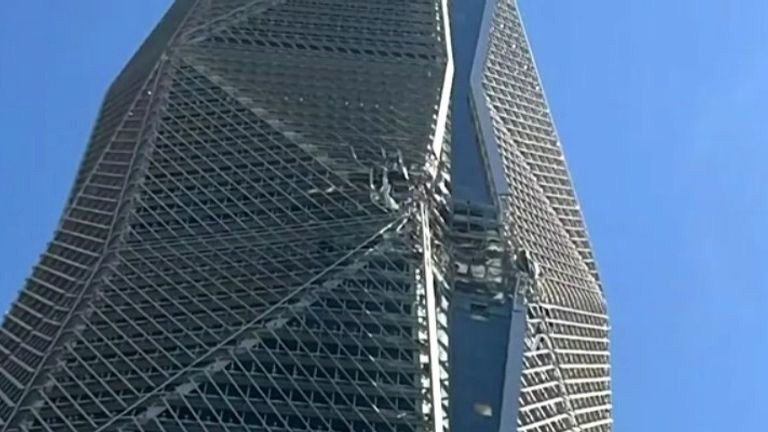
Saudi Arabia’s capital has witnessed another alarming security incident after its tallest skyscraper sustained damage in an attack reportedly carried out by Yemen’s Houthi movement. The incident involving the Public Investment Fund (PIF) Tower in Riyadh has heightened concerns about the security of major commercial properties as tensions across the Middle East continue to intensify.
The strike took place on Thursday, November 19, 2026, targeting the 80-storey building situated in Riyadh’s King Abdullah Financial District. The skyscraper serves as the headquarters of Saudi Arabia’s Public Investment Fund, a major financial institution responsible for supporting the kingdom’s ambitious economic development plans.
Saudi civil defence authorities reported that the incident caused material damage to the tower and surrounding buildings. Despite the impact, no casualties were immediately reported. Emergency personnel were sent to the area to assess the situation and ensure public safety.
Reports indicated that the attack shattered windows across several floors, with damage affecting approximately seven to eight levels of the skyscraper. Parts of its exterior metal facade were also reportedly bent or damaged by the impact.
Following the incident, security officials restricted access to sections of the King Abdullah Financial District and evacuated people from nearby buildings. Emergency response teams, including fire services and ambulances, were deployed as authorities began examining the extent of the destruction.
Sources familiar with the situation told Reuters that an incoming missile launched by the Houthis had struck the building. The Saudi-led coalition also reported responding to a missile threat directed towards Riyadh. Its preliminary assessment suggested that falling debris had contributed to the damage, although further investigations were required to establish the full circumstances.
The Houthi movement subsequently claimed responsibility for targeting Riyadh’s financial district on two occasions during Thursday. The group also announced attacks against additional Saudi locations, including King Khalid International Airport, a military airbase in the southern region and a petrochemical facility in Jubail. However, the additional claims were not immediately independently verified.
Saudi Arabia strongly criticised the incident, with its Foreign Ministry warning that the country would take necessary measures to defend its territory, protect its population and safeguard important national infrastructure. The government has also faced increasing pressure to strengthen security arrangements around strategically important locations.
The latest incident comes shortly after another building associated with Saudi Arabia’s oil industry reportedly sustained damage in a separate attack. On November 8, a Saudi Aramco property in Riyadh’s financial district was affected, raising further questions about the vulnerability of important business facilities.
The PIF Tower is particularly significant because of the institution headquartered inside it. Saudi Arabia’s Public Investment Fund manages substantial financial resources and serves as a central component of Crown Prince Mohammed bin Salman’s Vision 2030 initiative.
The economic transformation programme seeks to diversify the country’s economy beyond oil production by expanding sectors such as tourism, entertainment, technology, infrastructure and international investment. The fund supports numerous large-scale development projects designed to attract global businesses and strengthen Saudi Arabia’s position in international markets.
Damage to such a prominent financial institution’s headquarters therefore carries implications beyond the physical destruction of the building. The incident could also raise concerns among international investors about the security of operating businesses and infrastructure in the kingdom.
Saudi Arabia has invested heavily in developing Riyadh into a leading regional centre for finance, commerce and international events. The repeated targeting of prominent locations could complicate those ambitions and increase concerns about the wider economic consequences of regional instability.
The latest confrontation also reflects the continuing tensions surrounding Yemen’s conflict. The Houthis, an Iran-backed armed movement controlling significant parts of Yemen, have repeatedly carried out missile and drone operations targeting Saudi interests.
With the regional security situation remaining uncertain, authorities are continuing to assess the damage and monitor possible further threats. The strike on Riyadh’s landmark skyscraper has highlighted the challenges facing Saudi Arabia as it attempts to protect its economic infrastructure while navigating an increasingly unstable Middle East.
Manipur-gi dairy sector-gidamak khudol ama oina Manipur Dairy-na International Dairy Federation (IDF) Dairy Innovation Award 2026 phangre. Award asi November 17-da New Zealand-gi Auckland city-da pangthokpa IDF World Dairy Summit-da pithoklammi. Manipur Dairy-na “Innovation in Socio-Economic Sustainability in Farming” category-da award asi phangkhre. Award asi women-centric dairy cooperative system, sustainable livelihood development amasung rural farmers-singgi economic condition hen-gatnaba touba thabak-singgi maramda pikhre.
National Dairy Development Board (NDDB)-na April 2, 2025-dagi Manipur Milk Producers’ Co-operative Union Ltd.-gi management loukhi. Adudagi farmer-singda regular payment, subsidised cattle feed, milk production hen-gatnaba high-yielding cows amasung doorstep artificial insemination centres semgatpa thabak-sing chatthari. Award asi Manipur-gi women dairy farmers amasung cooperative sector-gi contribution international level-da recognition phangba ama oiri.
Source: Imphal Times – Manipur Dairy wins International Award.
A roofing contractor from Wales has been given a suspended prison sentence after being convicted of repeatedly dumping construction materials and other waste at unauthorised sites across Neath Port Talbot. The case highlights the continued efforts of local authorities to tackle fly-tipping and take action against individuals who disregard environmental regulations.
Jeremy Andrew John, aged 66, from Tonna near Neath, was sentenced at Swansea Crown Court on November 3, 2026, after admitting to six offences involving the illegal disposal of controlled waste. His actions were investigated by Neath Port Talbot Council following several complaints about rubbish being abandoned at different locations.
The investigation began when residents raised concerns about recurring incidents of fly-tipping in their communities. Council enforcement officers examined the reports and gradually identified evidence connecting the discarded construction materials to a roofing business operated by John.
As the investigation developed, officers discovered that the incidents appeared to involve repeated waste disposal rather than a single occurrence. This prompted authorities to carry out additional inquiries to establish who was responsible and how the materials were being transported.
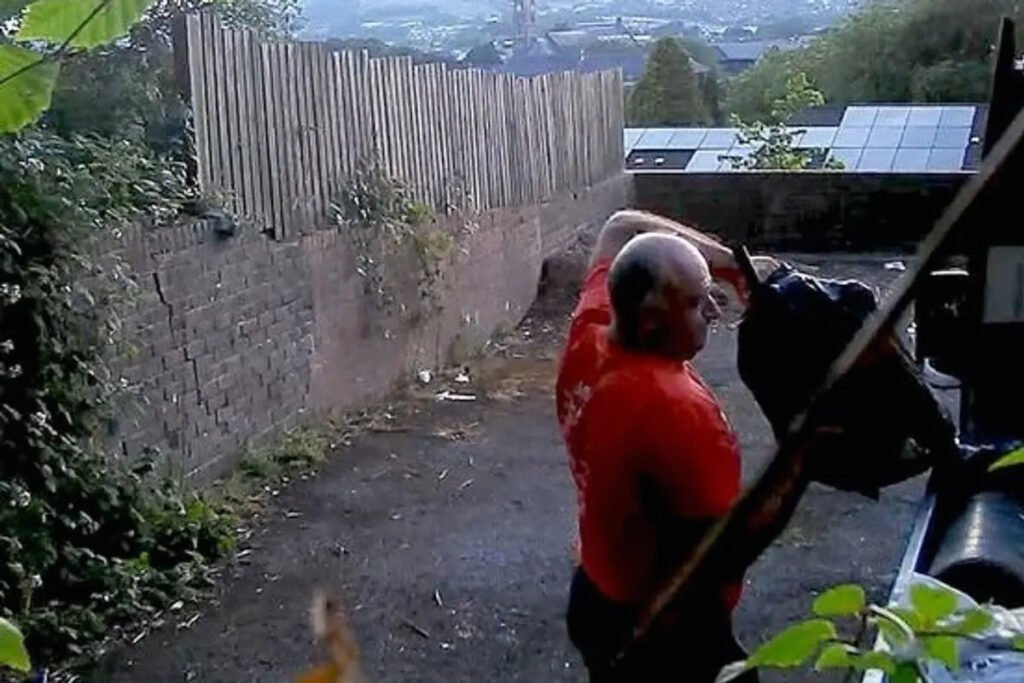
A surveillance operation was subsequently arranged at a location in Neath associated with illegal dumping. During the operation, enforcement officers gathered evidence linking John to a hired Ford Transit tipper truck and several incidents involving the unlawful disposal of waste.
The information collected during surveillance helped investigators establish a connection between the contractor and the discarded materials. Officers were able to use the evidence to strengthen their case and identify his involvement in the offences.
John initially denied responsibility when questioned under caution. However, he later acknowledged his involvement and pleaded guilty to six charges under Section 33 of the Environmental Protection Act 1990, legislation that makes it an offence to deposit controlled waste without the appropriate authorisation.
At Swansea Crown Court, Judge Paul Thomas KC described the repeated offences as environmental vandalism. The judge also expressed concern about the time taken to bring the proceedings to a conclusion, pointing to the defendant’s initial denial before he eventually admitted the charges.
The court imposed a 40-week prison sentence, suspended for 18 months. This means John will not be required to enter prison immediately, provided he meets the conditions attached to the suspended sentence throughout the specified period.
Alongside the prison term, he was ordered to reimburse Neath Port Talbot Council £3,600 towards its legal expenses. The court permitted the amount to be paid in monthly instalments of £100, spreading the repayment over approximately three years.
The council welcomed the outcome, describing it as an important demonstration of its commitment to investigating environmental offences and taking enforcement action against those responsible.
Councillor Carl Jordan, the authority’s Cabinet Member for Streetscene, stressed that the incidents represented more than an isolated mistake. He said repeated illegal dumping was deliberate behaviour that damages the local environment and places unnecessary financial pressure on communities.
Jordan also recognised the work of the enforcement team, praising the officers for conducting a detailed investigation and using surveillance technology to gather evidence against the contractor.
Fly-tipping remains a significant environmental concern throughout Wales and other parts of the United Kingdom. Unlawfully discarded building materials, household rubbish and commercial waste can spoil public spaces, create potential hazards and affect the quality of life for nearby residents.
Local councils often have to dedicate substantial resources to investigating complaints, removing abandoned rubbish and restoring affected locations. These responsibilities can place additional demands on public funds, particularly when illegal dumping occurs repeatedly.
Authorities continue to remind contractors and businesses that they are responsible for ensuring waste is handled and transported through properly authorised disposal facilities. Ignoring these requirements can result in prosecution, financial penalties and imprisonment, depending on the seriousness of the offence.
Neath Port Talbot Council has also encouraged members of the public to report suspicious dumping activities and provide relevant information, including vehicle details, photographs and precise incident locations.
The prosecution serves as a warning that repeated breaches of environmental legislation can carry serious consequences. Council officials have reaffirmed their commitment to tackling fly-tipping, protecting public spaces and holding those responsible for illegal waste disposal accountable.
Prince Harry and Meghan Markle have attracted renewed public attention after enjoying a rare family outing with their children, Prince Archie and Princess Lilibet, at London’s Winter Wonderland. The Duke and Duchess of Sussex attended the festive attraction at Hyde Park on Wednesday, November 18, giving royal followers an unusual glimpse of the family spending time together in public.
The appearance reportedly marked the first public family outing involving all four Sussexes since their return to the United Kingdom in August 2026. Their visit took place during a special preview of Winter Wonderland, shortly before the popular Christmas attraction officially opened its doors to visitors.
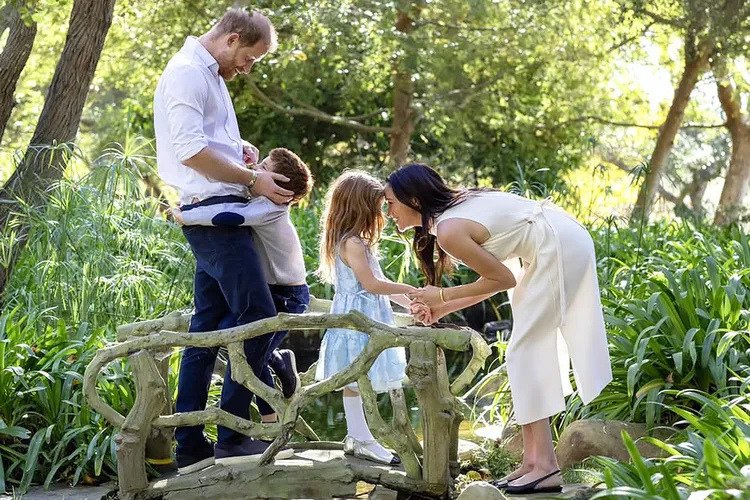
The family appeared to make the most of the occasion, enjoying several activities and attractions throughout the evening. Prince Harry was seen riding bumper cars with his seven-year-old son, Archie, sharing a playful moment with the young royal. Meghan, meanwhile, spent time with their five-year-old daughter, Lilibet, as they explored the festive surroundings and watched the activities.
Both children were dressed appropriately for the chilly London weather, accompanying their parents as they enjoyed the seasonal entertainment. Their appearance attracted interest from visitors and royal enthusiasts, particularly because Harry and Meghan have consistently tried to protect their children’s privacy.
The outing offered a glimpse into the couple’s approach to family life, which has largely remained outside the public spotlight since they stepped away from their official royal responsibilities in 2020. After relocating to California, the couple established a private family environment while continuing their charitable projects and other professional commitments.
Their reported return to Britain in August has generated curiosity about their future arrangements and how the family intends to spend the coming months. Although Harry and Meghan have made several public appearances, bringing both children along has remained uncommon.
The festive visit also comes as the Sussexes prepare for the holiday season in the UK. Reports indicate that the couple are considering spending Christmas at their new residence, with Meghan’s mother, Doria Ragland, expected to join the celebrations. The family is also reportedly planning to remain in Britain for Thanksgiving rather than travelling to the United States.
Despite their return, Harry and Meghan are not expected to join the traditional Christmas celebrations hosted by the royal family at Sandringham in Norfolk. Relations between the Duke and several members of the royal household have experienced difficulties since his departure from royal duties. Nevertheless, Harry has maintained contact with his father, King Charles III.
Meanwhile, both Harry and Meghan have continued supporting charitable causes and initiatives focused on social issues. The Duke remains involved with the Invictus Games, which supports wounded, injured and sick military personnel and veterans. Meghan has also continued pursuing projects connected to lifestyle, business and community engagement.
Winter Wonderland is among London’s best-known Christmas attractions, bringing a festive atmosphere to Hyde Park every year. The event features amusement rides, seasonal markets, live entertainment, food stalls and activities for visitors of different ages. It traditionally attracts large crowds throughout the holiday period.
The Sussexes’ appearance at the attraction has provided a rare look at their family interactions away from formal engagements and royal occasions. While the couple continue to maintain boundaries around their children’s public exposure, their latest outing demonstrated their interest in creating memorable family experiences.
As the festive season approaches, the family’s appearance has once again placed Harry and Meghan in the spotlight, with attention turning towards how they will celebrate Christmas and spend time together in Britain.
United Nations High Commissioner for Refugees (UNHCR)-na Malaysia-da refugee amasung asylum-seeker-singgi registration amasung documentation activities November 18-dagi stop toure. Malaysia government-na refugee registration amasung management-gidamak mahakki own government-led system ama louthoknaba decision loukhiba matungda UNHCR-na transition process asi support touba khanghanre. UNHCR-na Malaysia government-ga transition roadmap-gi maramda discussion chatthari, aduga refugee-singgi protection, proper communication amasung necessary safeguards leihannaba emphasis toure.
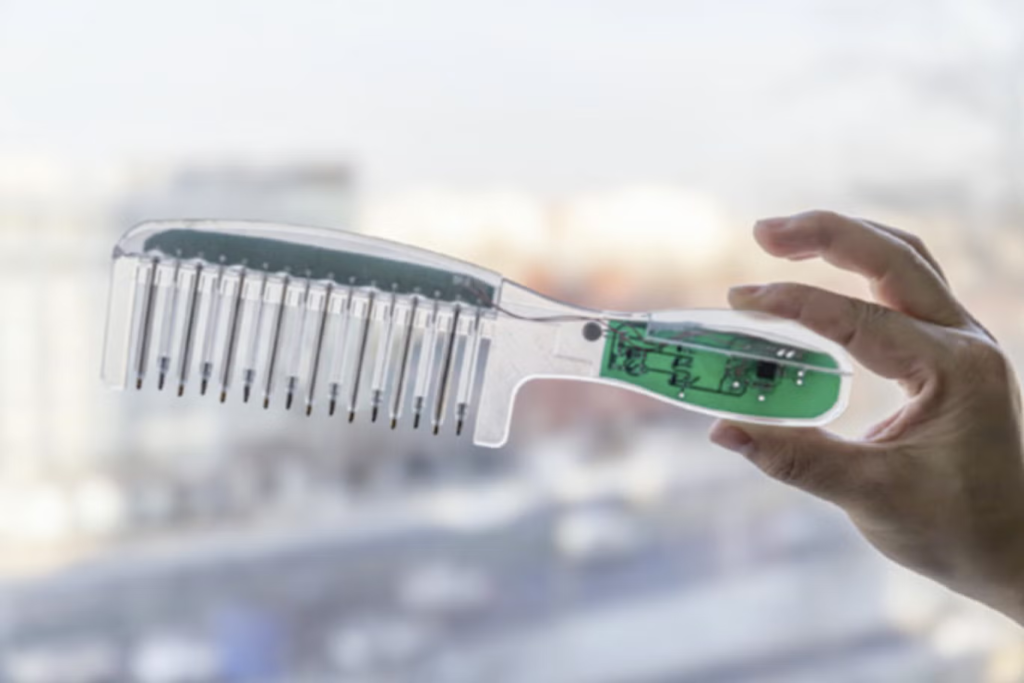
An experimental hair-restoration device developed by scientists could offer a new direction in the treatment of hair loss after producing impressive results in animal testing. The technology uses electrical pulses combined with targeted drug delivery to encourage hair follicles to become active and support the growth of new hair.
The device, called Detangle, was developed by researchers in China alongside collaborators from Hong Kong. Unlike ordinary hairbrushes, it incorporates electrical components designed to stimulate the scalp and help therapeutic substances reach deeper into the skin, potentially improving their effectiveness in treating hair thinning.
Hair loss affects millions of people and can occur for several reasons, including genetics, hormonal changes and the gradual weakening of hair follicles. Pattern baldness, one of the most common forms, causes follicles to shrink over time, producing thinner strands before eventually stopping hair growth altogether. Although existing treatments can slow the process or encourage regrowth, their results differ considerably from person to person.
The researchers designed the electric comb to address some of the biological processes responsible for hair loss. Its built-in electrodes produce controlled electrical stimulation when the device is applied to the scalp. This process is intended to temporarily increase the skin’s permeability, allowing therapeutic compounds to reach follicular regions more effectively than conventional topical applications.
The experimental treatment combines substances designed to encourage blood vessel formation around hair follicles and target biological pathways associated with follicle shrinkage. By improving the surrounding environment and delivering treatment directly to the affected areas, scientists hope to support follicular activity and promote healthier hair growth.
During laboratory experiments, researchers tested the device on mice and compared the results with other approaches, including topical minoxidil, a commonly used hair-loss treatment. The mice receiving the combined electrical stimulation and drug-delivery approach demonstrated substantial improvements in hair coverage over the testing period.
After 28 days, the treated animals reportedly achieved approximately 97.85 per cent hair coverage in the experimental area. The results suggested that combining electrical stimulation with targeted treatment delivery could produce stronger hair-regrowth outcomes than certain comparison treatments under laboratory conditions.
Scientists also observed improvements in hair follicle activity and blood circulation around the treated areas. Their findings indicated that the technology could potentially influence several mechanisms involved in hair growth rather than focusing on a single factor. The research was published in Nature Communications on November 3, 2026.
Despite the encouraging findings, the device remains in the experimental stage and has not been established as an effective treatment for human hair loss. Results obtained from mice cannot automatically be replicated in people, and further investigations will be required to evaluate its safety, effectiveness, long-term performance and possible side effects.
Researchers will need to determine whether the device can produce comparable results in human clinical trials and whether the benefits can be maintained after treatment. Its availability for consumers also remains uncertain, with no confirmed timeline for commercial release.
The development offers a potentially promising direction for hair-restoration research, particularly for individuals who have experienced limited success with existing treatments. However, scientists emphasise that further testing is necessary before the technology can be considered a reliable option for people struggling with hair loss. If future studies confirm its effectiveness, the electric comb could eventually contribute to new approaches in hair-regrowth treatment.
Manipur-gi Chief Minister Yumnam Khemchand Singh-gi chairmanship-ta November 18-da pangthokpa Cabinet meeting-da Senapati District Hospital campus amasung aduga adjoining Autonomous District Council (ADC) land-bu Government Medical College semgatnaba site oina approve toure. Medical college asi annual 100 MBBS students admit touba capacity leigani amasung 500-bed teaching hospital ama su leigani. College asi houdoklakpa matungda Senapati amasung neighbouring hill areas-gi misingna specialist treatment amasung emergency healthcare phangnaba Imphal-da chatpa matam hanningani. Cabinet-na Handloom, Textiles and Handicraft Department haiba separate department ama louthoknaba su approve toure. Manipur-da handloom 2,16,192 leiri amasung weavers 2,24,684 leiri; makhoigi marakta women 2.11 lakh-na henna leiri. Anouba department-na weavers-singda training, modernisation amasung market access piba-da mateng panggani. Cabinet-na agricultural land residential nattraga other non-agricultural purpose-da convert toukhiba 1,097 applications, 352.85 acres phaoba regularise touba su approve toure.
Source: India Today NE – Manipur Cabinet decisions · The Sangai Express – Cabinet approvals