
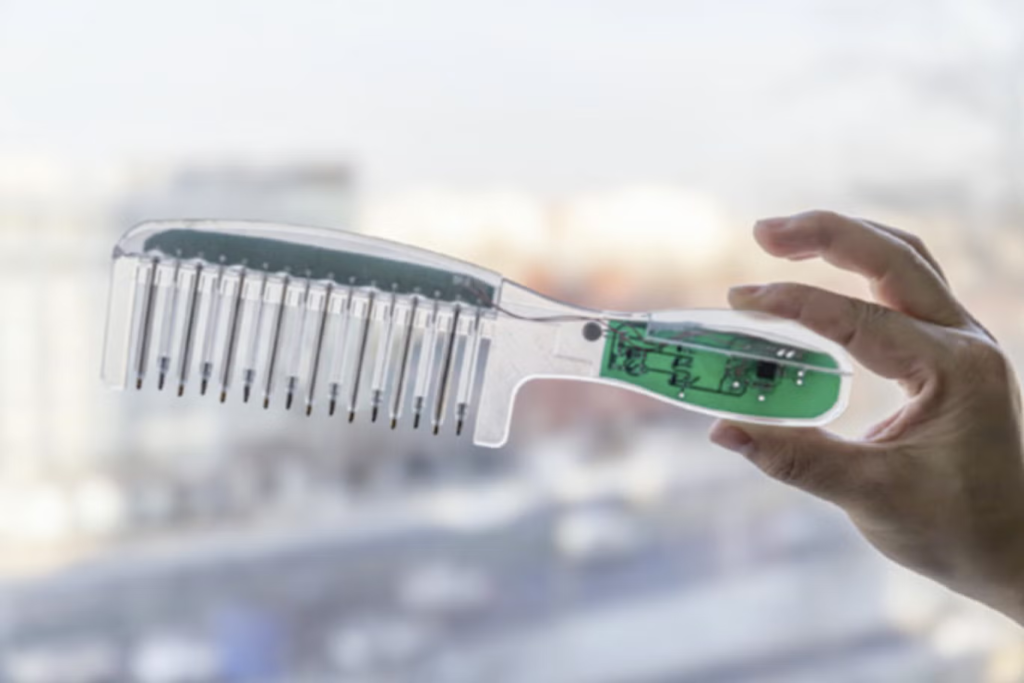
An experimental hair-restoration device developed by scientists could offer a new direction in the treatment of hair loss after producing impressive results in animal testing. The technology uses electrical pulses combined with targeted drug delivery to encourage hair follicles to become active and support the growth of new hair.
The device, called Detangle, was developed by researchers in China alongside collaborators from Hong Kong. Unlike ordinary hairbrushes, it incorporates electrical components designed to stimulate the scalp and help therapeutic substances reach deeper into the skin, potentially improving their effectiveness in treating hair thinning.
Hair loss affects millions of people and can occur for several reasons, including genetics, hormonal changes and the gradual weakening of hair follicles. Pattern baldness, one of the most common forms, causes follicles to shrink over time, producing thinner strands before eventually stopping hair growth altogether. Although existing treatments can slow the process or encourage regrowth, their results differ considerably from person to person.
The researchers designed the electric comb to address some of the biological processes responsible for hair loss. Its built-in electrodes produce controlled electrical stimulation when the device is applied to the scalp. This process is intended to temporarily increase the skin’s permeability, allowing therapeutic compounds to reach follicular regions more effectively than conventional topical applications.
The experimental treatment combines substances designed to encourage blood vessel formation around hair follicles and target biological pathways associated with follicle shrinkage. By improving the surrounding environment and delivering treatment directly to the affected areas, scientists hope to support follicular activity and promote healthier hair growth.
During laboratory experiments, researchers tested the device on mice and compared the results with other approaches, including topical minoxidil, a commonly used hair-loss treatment. The mice receiving the combined electrical stimulation and drug-delivery approach demonstrated substantial improvements in hair coverage over the testing period.
After 28 days, the treated animals reportedly achieved approximately 97.85 per cent hair coverage in the experimental area. The results suggested that combining electrical stimulation with targeted treatment delivery could produce stronger hair-regrowth outcomes than certain comparison treatments under laboratory conditions.
Scientists also observed improvements in hair follicle activity and blood circulation around the treated areas. Their findings indicated that the technology could potentially influence several mechanisms involved in hair growth rather than focusing on a single factor. The research was published in Nature Communications on November 3, 2026.
Despite the encouraging findings, the device remains in the experimental stage and has not been established as an effective treatment for human hair loss. Results obtained from mice cannot automatically be replicated in people, and further investigations will be required to evaluate its safety, effectiveness, long-term performance and possible side effects.
Researchers will need to determine whether the device can produce comparable results in human clinical trials and whether the benefits can be maintained after treatment. Its availability for consumers also remains uncertain, with no confirmed timeline for commercial release.
The development offers a potentially promising direction for hair-restoration research, particularly for individuals who have experienced limited success with existing treatments. However, scientists emphasise that further testing is necessary before the technology can be considered a reliable option for people struggling with hair loss. If future studies confirm its effectiveness, the electric comb could eventually contribute to new approaches in hair-regrowth treatment.
You can watch the video below