
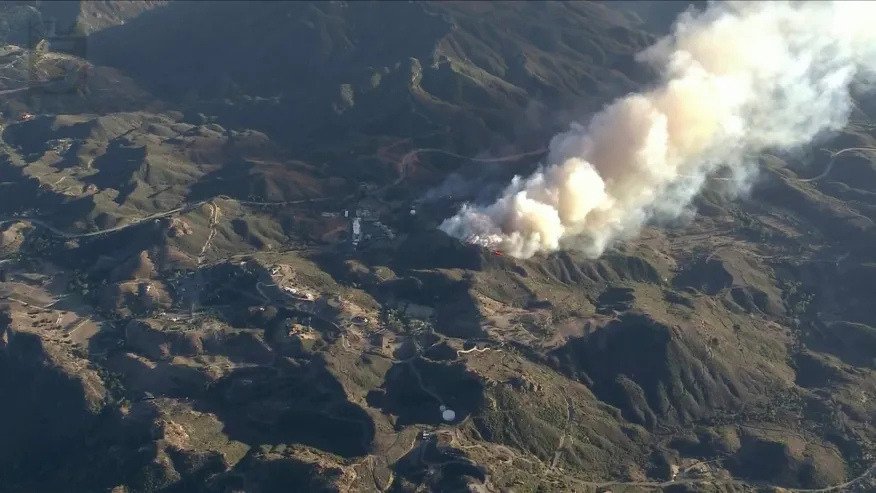
Fast-Moving Malibu Blaze Grows Past 100 Acres Amid Dangerous Fire Weather

A wildfire in Malibu, California, expanded to more than 100 acres on Thursday, October 15, as powerful winds and dry conditions increased the danger of further spread. The blaze, identified as the Bryson Fire, broke out in the Encinal Canyon area and prompted emergency officials to issue evacuation orders and warnings for locations potentially threatened by the flames.

The fire reportedly burned approximately 102 acres within hours of starting, raising concerns about nearby communities and surrounding vegetation. Firefighters from Los Angeles County responded to the emergency, while additional assistance was requested from the Ventura County Fire Department. Crews worked to contain the growing blaze and protect homes and other properties as conditions continued to develop.

Evacuation orders and warnings affected areas extending toward Leo Carrillo State Park, Pepperdine University and the Malibu coastline. Authorities encouraged residents in threatened locations to remain alert and follow official instructions, particularly if changing wind conditions caused the fire to move toward populated areas.

Pepperdine University reported that winds were blowing southwest, away from its Malibu campus, and indicated that the wildfire did not pose an immediate threat to the campus at that time. Nevertheless, emergency officials continued monitoring the situation as the fire spread through the surrounding landscape.

Weather conditions presented a significant challenge for firefighting teams. The National Weather Service issued Red Flag Warnings across parts of Los Angeles and Ventura counties because of strong Santa Ana winds, low humidity and elevated temperatures. Forecasts indicated sustained winds of approximately 20 to 35 mph, with gusts potentially reaching 55 mph and isolated gusts approaching 65 mph. Humidity levels were expected to fall to between 8% and 15% in affected areas.

These conditions can accelerate wildfire growth and make containment efforts more difficult. Strong winds may carry burning embers beyond established fire lines, creating new ignition points far from the main blaze. Meanwhile, dry brush and vegetation can provide readily available fuel, allowing flames to spread rapidly across hillsides and toward nearby structures.

The wildfire also emerged during a period of heightened fire danger across Southern California. Other fires were reported as offshore winds increased the risk of additional ignitions. Emergency agencies remained on alert, while utility companies introduced precautionary measures intended to reduce the possibility of electrical equipment starting new fires.

Southern California Edison implemented safety-related power shutoffs affecting nearly 58,900 customers, according to reports published during the developing emergency. Such measures are sometimes used during extreme fire weather when strong winds could damage electrical infrastructure or bring equipment into contact with dry vegetation.

Despite the growing concern, several details about the Bryson Fire remained uncertain. The cause of the blaze had not been established in the available reports, and the full extent of property damage had not been confirmed. Fire crews continued assessing the affected area while working to restrict the fire’s advance.

The incident highlights Malibu’s vulnerability to wildfires during periods of intense Santa Ana winds. Communities surrounded by dry vegetation can face rapidly changing conditions, making early warnings and timely evacuations particularly important.

Authorities urged residents to prepare essential supplies, keep informed about emergency announcements and leave immediately if instructed to evacuate. Officials also advised people to avoid activities that could produce sparks during the dangerous weather period.

As firefighters continued their response, the main priorities remained protecting residents, safeguarding property and preventing the flames from reaching additional populated areas. With hazardous weather conditions expected to continue, emergency teams faced the possibility of further fire growth and additional ignitions across the region.

The situation remained developing as officials monitored the blaze and assessed the effectiveness of containment efforts. Residents were encouraged to rely on local emergency authorities for the latest evacuation information and safety instructions.

You can watch the video below

DELHI-DA CJP PROTEST-GI MATAMDA SECURITY HENNA TIGHT TOUKHRE, CENTRAL PARK 2 NUMIT SHUT OIGANI

New Delhi, October 16, 2026

New Delhi-gi Connaught Place-da Cockroach Janta Party (CJP)-na “Lehra Do Tiranga” protest touba plan touba matamda security arrangement-sing henna tight toukhre. Delhi Police amasung paramilitary force-singna central Delhi-da public order maintain touba matamda additional deployment pangthok-i.

Report-gi matung-inna, Delhi Police personnel 6,000-gi mathakta amasung Central Armed Police Forces-gi personnel 26,000 phaoba security duty-ta thambigani. Central Park, Connaught Place amasung Rajiv Chowk Metro Station-gi mapanda CCTV surveillance amadi barricade arrangement-sing henna phajahanba toure.

New Delhi Municipal Council-na Central Park asi October 16 amasung 17-da public-gi use-gi matamda shut touba notice phongdokhre. Delhi Police-na protest march achouba oina pangthoknaba permission phangde haiduna phongdokhi, adubu selected protester-singda atoppa suitable location ama-da march touba opportunity phangba ngamgani.

Traffic Police-na Connaught Place amasung surrounding area-gi road 21 phaoba traffic congestion amadi diversion thokpa yai haiduna advisory phongdokhre. Office chatpa meeoising, shopper-sing amasung railway station-ta chatliba passenger-singna travel plan adu matam chana semba amasung public transport use touba hairi.

Source-sing: Hindustan Times — Delhi protest security arrangements⁠ · Delhi Traffic Police — Traffic advisory for October 16⁠

FDA Moves Toward Easing Restrictions on Compounded Peptide Treatments

The U.S. Food and Drug Administration (FDA) is considering a potential shift in its approach to compounded peptide treatments, a development that could expand access to selected substances used in the wellness and fitness industries. The proposal comes amid increasing consumer interest in peptides promoted for recovery, tissue repair and anti-aging, alongside ongoing debate over whether sufficient scientific evidence supports their safety and effectiveness.

On October 15, 2026, the Department of Health and Human Services (HHS) submitted an interim policy proposal covering the compounding of certain peptides to the White House Office of Management and Budget for review. The submission represents a step toward a possible regulatory adjustment, but the government has not yet published the proposal’s full terms or announced a final decision.

Under the proposed approach, certain pharmacies could potentially be permitted to compound selected peptides under temporary enforcement discretion. This arrangement would give regulators the option to refrain from taking enforcement action against qualifying preparations under specified conditions. However, the proposal does not mean the substances have received formal FDA approval, and the scope of any policy change remains unclear.

Peptides are short chains of amino acids that play various roles in biological processes. Some are already used in approved medicines, while others are marketed for a range of purposes, including muscle recovery, injury treatment, physical performance and age-related concerns. Their growing visibility on social media has contributed to demand among consumers seeking alternatives for health, fitness and appearance-related goals.

BPC-157 is among the substances that have attracted considerable attention. The synthetic peptide is frequently promoted online for its alleged healing and recovery benefits. Other experimental peptides are similarly advertised by wellness businesses and fitness communities. However, claims made in marketing materials do not necessarily reflect established medical evidence, and many of these substances have not been approved for the uses being promoted.

The FDA has previously placed restrictions on the compounding of several peptides because of concerns about their potential risks. Reported areas of concern include contamination, immune reactions and the possibility of other serious effects, including tumor growth. Scientists have also highlighted the lack of sufficient human data to establish the safety and effectiveness of many of these products.

The latest policy development follows a July advisory panel meeting during which outside experts recommended easing restrictions on six of the seven peptides considered. The recommendations came despite concerns raised by FDA scientists about gaps in the available evidence. Advisory panel recommendations can inform the agency’s decisions, but they do not require the FDA to adopt the suggested changes.

Those supporting broader access argue that carefully regulated compounding could offer consumers an alternative to obtaining peptide products through online sellers operating with varying levels of oversight. They believe clearer rules could help establish more consistent standards for preparation and distribution while addressing demand for these substances.

Critics, however, warn that greater availability could encourage people to use treatments without adequate evidence or medical supervision. They also caution that consumers may mistakenly assume a product is proven safe simply because a pharmacy is permitted to prepare it. The absence of established clinical evidence remains a central concern in the debate.

Compounded medications are prepared or modified by pharmacies to meet particular patient needs. Unlike FDA-approved medicines, they generally do not undergo the same premarket review process to demonstrate safety and effectiveness. Consequently, a change in compounding policy would not automatically establish that a peptide is appropriate for a specific condition or that its advertised benefits are scientifically supported.

The potential policy shift could also affect businesses involved in telehealth, specialty pharmacies and wellness services. Companies operating in these sectors have shown interest in peptide-based offerings, and a relaxation of restrictions could create new commercial opportunities. At the same time, the regulatory framework would determine which substances could be prepared and under what conditions.

Important questions remain unanswered as the proposal undergoes review. Officials have not disclosed the complete list of peptides that might be covered, the requirements pharmacies would need to follow or how long any temporary enforcement arrangement might remain in place.

For now, the submission signals that federal officials are examining a possible change rather than confirming a final policy. The outcome will depend on the review process and any conditions established by regulators. Until further guidance becomes available, consumers and healthcare professionals will continue to face questions about the evidence supporting many peptides promoted for wellness and recovery.

You can watch the video below

Tesla’s Redesigned Roadster Stuns With Midair Flips and Compressed-Air Propulsion

Tesla has presented its redesigned Roadster, an electric sports car featuring experimental propulsion technology capable of supporting brief aerial maneuvers. The unveiling on October 15, 2026, highlighted the company’s efforts to combine high-performance electric motoring with aerospace-inspired engineering developed alongside SpaceX. During the demonstration, the vehicle performed a series of unusual movements, including an airborne rotation, drawing attention to its potential capabilities and the technical challenges that remain before production.

The Roadster project has experienced a lengthy development process since Tesla first announced the next-generation model in 2017. Originally expected to arrive in 2020, the vehicle faced multiple delays as the company continued working on its design and performance targets. The latest presentation provided a closer look at the prototype and its experimental systems, although important questions about production readiness remain unanswered.

One of the most unusual features is a compressed-gas thruster system designed to produce brief bursts of thrust. These devices can help influence the vehicle’s movement and rotation when used in a controlled environment. In the demonstration, the Roadster travelled along a specially designed curved ramp with the assistance of a fan-based suction mechanism that held it against the surface. The car then launched into the air, rotated and returned to the ground. The demonstration vehicle operated without a driver inside.

Tesla chief executive Elon Musk has described the project as a joint engineering effort involving Tesla and SpaceX. The collaboration reflects an attempt to adapt concepts associated with aerospace technology to an electric sports car. However, the precise practical benefits of the thrusters during ordinary driving have not been fully established, and the aerial display does not demonstrate that such maneuvers could be performed safely on public roads.

The company has also highlighted the Roadster’s expected acceleration and top speed. Musk has claimed that the vehicle could accelerate from zero to 60 miles per hour in under one second and exceed 230 mph. These figures remain manufacturer claims pending independent verification of the final production model. Actual performance could depend on the vehicle’s configuration, operating conditions and the technology ultimately offered to customers.

Tesla expects production to begin in 2028, although a confirmed delivery timetable and final specifications remain important outstanding details. The company has discussed different versions, including a Performance model and a Thrust configuration equipped with additional acceleration technology. A more specialised Rocket variant has also been described as featuring an expanded flight-oriented system and being available by invitation.

The prospect of an automobile capable of briefly leaving the ground introduces significant regulatory and safety considerations. A vehicle using propulsion systems for aerial movement would require safeguards beyond those associated with conventional electric cars. Questions surrounding passenger protection, controlled landing, operating environments and compliance with transport regulations will need to be addressed before any such technology could be used more widely.

The more advanced capabilities may also limit the Roadster’s suitability for everyday transportation. Its price, specialised engineering and potentially complex maintenance requirements could place it beyond the reach of most consumers. As a result, the vehicle may serve primarily as a showcase for Tesla’s engineering ambitions rather than a high-volume product.

The project also arrives as Tesla expands its interests in artificial intelligence, autonomous driving and robotics. The Roadster offers a different way to demonstrate the company’s technical ambitions, using an electric sports car to explore concepts that cross the boundaries between automotive and aerospace engineering.

Although the presentation represents progress for a project that has remained in development for years, the prototype’s dramatic demonstration does not guarantee that every feature will reach production. Tesla must still establish the final specifications, validate the vehicle’s safety and demonstrate that its unusual technology can be delivered reliably.

The redesigned Roadster therefore remains an ambitious development in electric-car engineering. Its eventual success will depend on whether Tesla can turn its experimental aerial capabilities and impressive performance claims into a practical, safe and commercially available vehicle when production is expected to begin in 2028.

You can watch the video below

INDIA-AMASUNG US-GI TRADE DEAL-GI FIRST PHASE FINAL DRAFTING STAGE-DA LEIRI

New Delhi, October 16, 2026

India amasung United States-gi marakta trade agreement-gi first phase asi final legal drafting stage-ta leiri haiba India-gi Trade Minister Piyush Goyal-na phongdokhre. Agreement asi puthokpa matamda Indian exporter-singna US market-ta preferential access phangba amasung tariff stability phangba government-na hotnari.

February 2026-da India amasung US-na trade deal-gi framework ama-da agreement toukhi. Framework adugi matung-inna, certain Indian goods-singda US tariff adu 50%-dagi 18%-ta thok-hanba oikhi. Adubu final agreement asi sign touba matamda India-na Bangladesh, Vietnam amasung Indonesia-gumba competing country-singga compare touba competitive advantage phangba pammi.

India-gi Trade Secretary Rajesh Agrawal-na negotiation-sing adu phajabada chatli haiduna, government-na agreement adu matam chana conclude touba amasung sign touba expectation leiri haiduna phongdokhi.

April-dagi August 2026 phaoba India-gi goods export to US adu $42.79 billion phaoba lakle, chahi ama-gi manungda hen-gatkhre. Adubu Russia-dagi oil purchase amadi US-gi proposed tariff measures-singgi maramda bilateral trade negotiation adu makha tana challenge phangba yai.

US Secretary of State Marco Rubio-na October 17-dagi 22 phaoba India amasung Uzbekistan visit touba schedule leiri. Visit asida energy cooperation, commercial investment amasung broader economic relations-gi maramda discussion tougani.

Source: Reuters — India-US trade deal nears final drafting stage⁠

MANIPUR-DA BSF PERSONNEL 75 AMASUNG CIVILIAN DRIVER 3 FOOD POISONING SUSPECT TOUNA HOSPITAL-DA ADMIT TOUKHRE

Imphal, October 16, 2026

Manipur-gi Imphal-da Border Security Force (BSF)-gi personnel 75 amasung civilian driver 3 suspected food poisoning-gi maramda Regional Institute of Medical Sciences (RIMS) hospital-ta admit toukhre. Affected BSF personnel-sing asi 58 Battalion-gi Delta Company-gi member-sing oini.

Report-gi matung-inna, BSF personnel-sing asi October 14-da Dimapur-dagi Imphal-da laklammi. Mahakna Imphal West district-gi temporary shelter ama-da leirammi. Food chaba matungda health problem thokpa aduna hospital-ta treatment phanghanba matamda health authority-singna investigation houkhatle.

RIMS Hospital-gi Medical Superintendent-na houjik phaoba patient-singgi condition adu serious oide haiduna phongdokhi. State Food Safety Department amasung Integrated Disease Surveillance Programme-gi team-na affected site-ta chatuna food sample-sing collect toukhi.

Food sample-sing asi laboratory-ta test touba matungda food poisoning-gi actual cause adu khangjagani. Health authority-singna report phangba matamda further action lougani.

Source: The Indian Express — BSF personnel hospitalised in Manipur⁠

Taxi Driver Raises Alarm After Passenger Uses Counterfeit Currency

A taxi driver reportedly sought police assistance after receiving banknotes believed to be counterfeit from a passenger. The incident has drawn attention to the risks faced by workers who regularly handle cash and the importance of identifying potentially fraudulent currency during everyday transactions.

The situation reportedly unfolded when a passenger paid for a taxi ride with money that the driver suspected was not genuine. Rather than accepting the payment without further investigation, the driver chose to bring the matter to the attention of the police.

The driver’s decision highlights the difficulties that transport workers can encounter while dealing with cash payments. Taxi drivers often serve numerous passengers during their working hours, leaving limited time to carefully examine every banknote they receive. When a note appears unusual, determining its authenticity may require additional checks or assistance from the appropriate authorities.

For drivers who rely on daily fares to support themselves, receiving counterfeit money can result in an unexpected financial setback. Earnings from taxi services must frequently cover fuel, repairs, maintenance and other operating expenses. Consequently, losing money through a suspicious payment can affect a driver’s income, particularly when daily earnings are limited.

Although the driver reportedly suspected that the passenger had used fake currency, the circumstances surrounding the payment remain unclear. It has not been established whether the banknotes were officially examined or confirmed to be counterfeit. Similarly, there is no verified information indicating whether the passenger knowingly presented fraudulent money or was aware of any problem with the notes.

This distinction is important because suspicion alone does not establish that a person has committed an offence. Banknotes can sometimes appear unusual because of damage, wear or unfamiliar security features. An appropriate examination is necessary to determine whether the currency is genuine before responsibility can be established.

The incident also highlights the need for greater awareness among people who regularly receive cash payments. Taxi drivers, shopkeepers, street vendors and other workers can reduce their exposure to counterfeit currency by checking banknotes for recognised security features and paying attention to anything that appears inconsistent. When doubts arise, seeking guidance from a bank or law enforcement agency can help prevent further complications.

Digital payments may offer an alternative for drivers and passengers who prefer not to exchange physical currency. However, cash remains widely used for everyday purchases and transport services in many communities. As a result, knowing how to respond to suspicious banknotes remains important even as electronic payment options become more accessible.

Members of the public are generally encouraged to report suspected counterfeit currency through the appropriate official channels. Attempting to spend a questionable note elsewhere may expose another person to financial loss and could create additional legal problems. Proper reporting allows authorities to assess the currency and determine whether further investigation is warranted.

For independent taxi drivers, incidents involving questionable payments can be particularly challenging because they must make quick decisions while managing their vehicles, passengers and daily schedules. Seeking police assistance can provide a formal way to address concerns rather than allowing a potentially fraudulent transaction to go unreported.

The reported incident serves as a reminder that caution is essential when handling cash. It also illustrates how an ordinary taxi journey can lead to concerns requiring official attention when the payment becomes questionable.

Important details, including the location and date of the incident, the amount involved, the passenger’s explanation and the outcome of any police investigation, have not been independently confirmed in the information available. Until further information emerges, the allegation that counterfeit currency was used should be treated cautiously, without assuming that the passenger deliberately attempted to deceive the driver

You can watch the video below

INDIA-NA BANGLADESH-DA RAILWAY COACH 200 PUTHOKNABA PROJECT HOUKHRE

New Delhi, October 15, 2026

India-gi railway sector-na Bangladesh-gi railway system-ta mateng pangnaba coach 200 puthoknaba project adugi manungda first batch coach 18 Bangladesh-da dispatch toukhre. Project asi India amadi Bangladesh-gi marakta railway cooperation amasung transport connectivity hen-gat-hanba matamda maru oiba development ama oini.

Report-gi matung-inna, coach-sing asi Bangladesh-gi operating conditions aduda suit touba matamda design toukhrabani. Passenger-sing train-gi roof-ta chaba matamda additional load thokpa yai haiba practical concern adu khangdoktuna roof structure adu strengthen toukhi.

Railway coach-sing puthokpa asi Bangladesh-gi passenger transport capacity hen-gat-hanba amasung railway travel adu suvidha oihallakpa mateng pangba yai. India-na railway manufacturing-gi experience amadi technical expertise use touba matamda neighbouring country-singga infrastructure cooperation hen-gat-hanba ngammi.

Coach-sing pumnamak dispatch amadi operational oihallakpa matamda Bangladesh-gi railway network-da passenger service phajaba oihallakpa yai. Project asi regional connectivity amasung South Asia-gi transport cooperation-gi matamda important oigani.

Source: NDTV — India dispatches first 18 of 200 railway coaches to Bangladesh⁠

Island Fossil Discovery Reveals a Previously Unknown Dinosaur Species

A fossil recovered from an island has drawn scientific attention after researchers identified it as evidence of a dinosaur species not previously recognised. The discovery adds to the growing body of knowledge about prehistoric animals and highlights how examining ancient remains can reveal new details about the diversity of life that existed millions of years ago.

Scientists continue to rely on fossil discoveries to reconstruct the history of dinosaurs, including their physical characteristics, evolutionary development and possible habitats. Every newly identified species has the potential to provide additional clues about how these animals lived and how different groups developed across ancient landscapes.

Determining whether a fossil represents a new species requires detailed scientific investigation. Researchers examine the shape and structure of preserved bones, compare them with specimens from known dinosaur groups and identify anatomical features that distinguish the remains from previously classified animals. These differences must be carefully assessed before scientists can establish a new classification.

The island location may offer additional opportunities to investigate the region’s prehistoric environment. Islands can sometimes create conditions in which isolated animal populations develop distinctive characteristics over generations. Differences in available food, habitat and environmental pressures may influence the evolution of animals separated from populations on larger landmasses.

However, the geographical setting alone cannot establish how a dinosaur evolved. Scientists must also study the geological layers containing the fossil, determine their approximate age and assess other evidence preserved at the site. Such information helps researchers place the discovery within the broader timeline of prehistoric life.

The process of identifying a dinosaur fossil generally begins with careful excavation and documentation. Specialists record the location of the remains and the surrounding geological material before removing the specimen for further examination. Fossils can be fragile, making careful handling essential to prevent damage to features that may be important for classification.

After excavation, researchers clean and prepare the remains for closer study. Depending on the condition of the specimen, they may use advanced imaging techniques, digital modelling and detailed measurements to examine its structure. These methods can reveal features that are difficult to observe with the naked eye and allow comparisons with fossils preserved in museum collections.

Such comparisons are particularly important because dinosaurs belonging to related groups can share many physical similarities. Scientists must distinguish ordinary differences between individuals from characteristics that support the recognition of a separate species. Their conclusions depend on the quality of the fossil evidence and the consistency of the anatomical differences observed.

The discovery may also contribute to research into the ecosystems that existed during the Mesozoic Era, the geological period spanning approximately 252 million to 66 million years ago. During this time, dinosaurs occupied a wide range of environments and developed numerous adaptations. Fossils of plants and other animals found in the same geological formations can help scientists reconstruct the habitats in which these prehistoric creatures lived.

Understanding a newly identified species can also help researchers investigate how dinosaur populations responded to changing environmental conditions. Evidence about body structure, geological age and relationships with other species may eventually provide a clearer picture of its place in prehistoric ecosystems.

Nevertheless, the full scientific importance of the island fossil depends on further details from the research. The dinosaur’s name, estimated age, size, diet and evolutionary relationships should be established through published findings rather than inferred from the discovery alone.

The identification underscores the continuing value of palaeontological research. Many prehistoric species remain unknown because their remains were never preserved, have yet to be found or have not been examined in sufficient detail. New discoveries can therefore expand scientific understanding even when they involve only a small number of fossilised bones.

As investigations continue, the island specimen may provide further insights into the diversity and evolution of dinosaurs. The finding illustrates how studying ancient remains can reveal previously unrecognised aspects of Earth’s history and deepen our understanding of the creatures that inhabited the planet long before humans appeared.

You can check the video below

RBI-NA RUPEE-GI VALUE SUPPORT TOUBA MATAMDA $75–80 BILLION USE TOUKHRE

Mumbai, October 15, 2026

India-gi Reserve Bank of India (RBI)-na Indian rupee-gi value support touba matamda approximately $75 billion-dagi $80 billion phaoba foreign-exchange resources use toukhraba yai haiba report ama thokkhre. Reuters-gi report-gi matung-inna, RBI-na June 8, 2026-dagi dollar sell touba amasung dollar-rupee swap transactions-sing pangthokna currency market-ta pressure khanghanba hotnari.

India-gi rupee-gi value adu high crude oil price, US Treasury bond yield hen-gatpa amasung foreign investor-singna Indian stock-sing sell touba maramda pressure phang-i. Rupee-gi value khudongchaba oihallakpa matamda imported goods-gi cost hen-gatpa yai, aduna inflation amadi business cost-singdasu asar phanghanba yai.

Report-gi matung-inna, India-gi foreign-exchange reserves adu September-gi houjik houjik high level-dagi approximately $51 billion khudongchaba oina thokle. October 2, 2026 phaoba reserves adu $734.6 billion oikhi.

RBI-na currency stability maintain touba amasung excessive volatility khanghanba hotnari. Adubu foreign-exchange resources use touba aduna India-gi financial stability-ta makha tana pressure phanghanba ngamgani haiba concern economist-singna phongdok-i.

Source: Reuters — RBI uses foreign-exchange resources to defend rupee⁠