
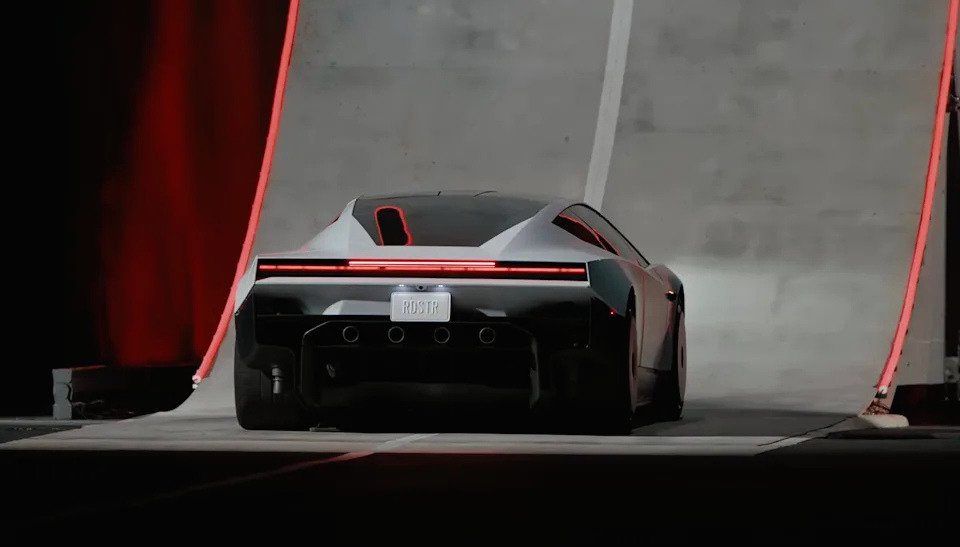
Tesla has presented its redesigned Roadster, an electric sports car featuring experimental propulsion technology capable of supporting brief aerial maneuvers. The unveiling on October 15, 2026, highlighted the company’s efforts to combine high-performance electric motoring with aerospace-inspired engineering developed alongside SpaceX. During the demonstration, the vehicle performed a series of unusual movements, including an airborne rotation, drawing attention to its potential capabilities and the technical challenges that remain before production.
The Roadster project has experienced a lengthy development process since Tesla first announced the next-generation model in 2017. Originally expected to arrive in 2020, the vehicle faced multiple delays as the company continued working on its design and performance targets. The latest presentation provided a closer look at the prototype and its experimental systems, although important questions about production readiness remain unanswered.
One of the most unusual features is a compressed-gas thruster system designed to produce brief bursts of thrust. These devices can help influence the vehicle’s movement and rotation when used in a controlled environment. In the demonstration, the Roadster travelled along a specially designed curved ramp with the assistance of a fan-based suction mechanism that held it against the surface. The car then launched into the air, rotated and returned to the ground. The demonstration vehicle operated without a driver inside.
Tesla chief executive Elon Musk has described the project as a joint engineering effort involving Tesla and SpaceX. The collaboration reflects an attempt to adapt concepts associated with aerospace technology to an electric sports car. However, the precise practical benefits of the thrusters during ordinary driving have not been fully established, and the aerial display does not demonstrate that such maneuvers could be performed safely on public roads.
The company has also highlighted the Roadster’s expected acceleration and top speed. Musk has claimed that the vehicle could accelerate from zero to 60 miles per hour in under one second and exceed 230 mph. These figures remain manufacturer claims pending independent verification of the final production model. Actual performance could depend on the vehicle’s configuration, operating conditions and the technology ultimately offered to customers.
Tesla expects production to begin in 2028, although a confirmed delivery timetable and final specifications remain important outstanding details. The company has discussed different versions, including a Performance model and a Thrust configuration equipped with additional acceleration technology. A more specialised Rocket variant has also been described as featuring an expanded flight-oriented system and being available by invitation.
The prospect of an automobile capable of briefly leaving the ground introduces significant regulatory and safety considerations. A vehicle using propulsion systems for aerial movement would require safeguards beyond those associated with conventional electric cars. Questions surrounding passenger protection, controlled landing, operating environments and compliance with transport regulations will need to be addressed before any such technology could be used more widely.
The more advanced capabilities may also limit the Roadster’s suitability for everyday transportation. Its price, specialised engineering and potentially complex maintenance requirements could place it beyond the reach of most consumers. As a result, the vehicle may serve primarily as a showcase for Tesla’s engineering ambitions rather than a high-volume product.
The project also arrives as Tesla expands its interests in artificial intelligence, autonomous driving and robotics. The Roadster offers a different way to demonstrate the company’s technical ambitions, using an electric sports car to explore concepts that cross the boundaries between automotive and aerospace engineering.
Although the presentation represents progress for a project that has remained in development for years, the prototype’s dramatic demonstration does not guarantee that every feature will reach production. Tesla must still establish the final specifications, validate the vehicle’s safety and demonstrate that its unusual technology can be delivered reliably.
The redesigned Roadster therefore remains an ambitious development in electric-car engineering. Its eventual success will depend on whether Tesla can turn its experimental aerial capabilities and impressive performance claims into a practical, safe and commercially available vehicle when production is expected to begin in 2028.
You can watch the video below