
Ukraine has claimed responsibility for an operation against a Russian military airfield, reporting that five military aircraft were hit during an overnight strike. The reported attack took place at Savasleyka airbase in Russia’s Nizhny Novgorod region between November 24 and 25, 2026, marking another attempt by Kyiv to weaken Moscow’s military aviation capabilities.
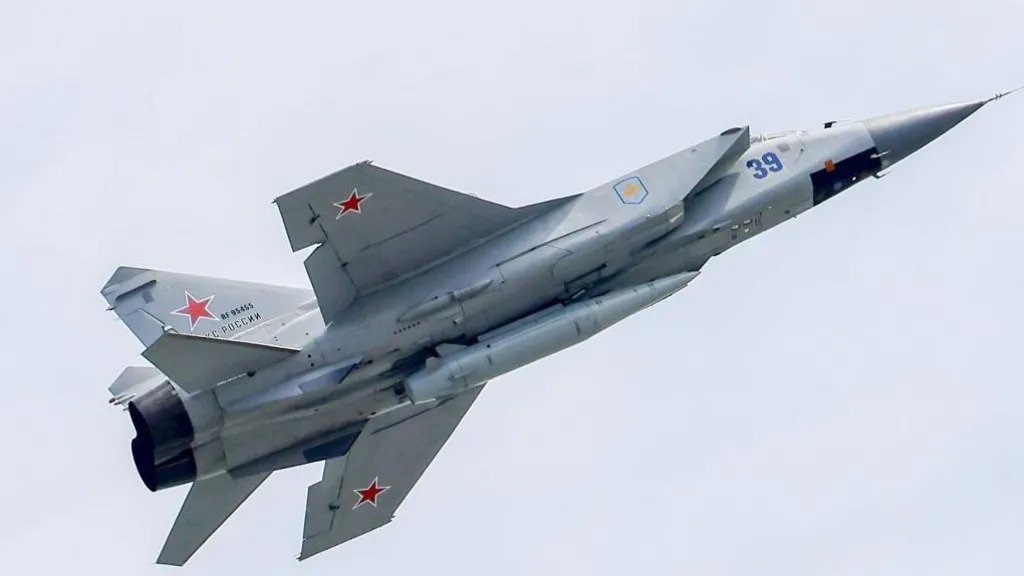
Ukraine’s General Staff stated that the operation damaged three MiG-31 fighter jets and two Su-34 fighter-bombers. According to the military announcement, the aircraft sustained damage that could leave them grounded for an extended period. However, officials indicated that assessments were continuing to establish the precise extent of the destruction.
The targeted installation is an important location for Russian military aviation, particularly because of its association with MiG-31 aircraft. Certain versions of these interceptors are capable of carrying Russia’s Kh-47M2 Kinzhal air-launched ballistic missiles, which have been used in attacks against Ukrainian territory.
The MiG-31 is designed for high-speed interception missions and has been adapted to support specialised missile operations. Its role in Russia’s long-range strike capabilities makes it a significant military asset. The Su-34, meanwhile, is primarily used for ground-attack operations and can carry different types of guided weapons. Losing access to aircraft from both categories could affect several aspects of Russia’s aerial operations.
Ukraine’s military described the airfield operation as part of a wider campaign against Russian military infrastructure. The reported targets extended beyond the aircraft stationed at Savasleyka, with additional strikes allegedly directed at radar installations, ammunition storage facilities and logistical sites.
Among the other locations mentioned by Ukrainian officials was a P-18 radar installation near Karavan-Solodkyi in the occupied Luhansk region. The system plays a role in identifying aerial threats and supplying information to Russian air defence networks. Disrupting such equipment could complicate efforts to monitor Ukrainian drone and missile activity.
Ukrainian forces also reported attacks against fuel and lubricant storage facilities, military supply centres and an ammunition depot in occupied areas of the Luhansk and Donetsk regions. These locations support the transportation of equipment, the movement of supplies and the continued operation of Russian military units.
The reported operation reflects Kyiv’s broader approach of targeting infrastructure that contributes directly to Russia’s military campaign. Rather than concentrating exclusively on positions along the front lines, Ukraine has increasingly conducted long-range operations against facilities deeper inside Russian-controlled territory.
Savasleyka airfield has previously attracted Ukrainian attention. Its importance to Russia’s military aviation and missile operations has made it a significant target during the conflict. Earlier reported attacks against the facility in 2024 and 2025 demonstrated Ukraine’s continued interest in disrupting Russian aircraft operations.
The latest development comes as both countries continue exchanging long-range attacks. Ukraine has expanded its use of drones to strike military installations, industrial facilities and other strategic locations inside Russia. Moscow, meanwhile, continues carrying out missile and drone operations against Ukrainian cities, energy infrastructure and military positions.
These developments have placed additional pressure on both countries’ military resources. For Ukraine, damaging aircraft and supply networks could help reduce the effectiveness of Russian operations. For Russia, protecting airfields and maintaining the availability of advanced military equipment remain important priorities.
Russian authorities had not immediately confirmed the reported damage to the five aircraft or provided an independent assessment of the operation. As a result, the full scale of the losses remains uncertain, and the claims made by Ukraine have yet to be independently verified.
Nevertheless, the reported strike highlights Kyiv’s continued efforts to challenge Russia’s military capabilities through attacks on strategically important installations. If confirmed, the damage could temporarily affect the availability of aircraft used for interception and ground-attack missions.
With fighting continuing across multiple regions, military airfields, radar systems and logistical networks remain important targets for both sides. The latest claims surrounding Savasleyka underline the growing importance of long-range operations in the ongoing Russia-Ukraine war.
You can watch the video below