
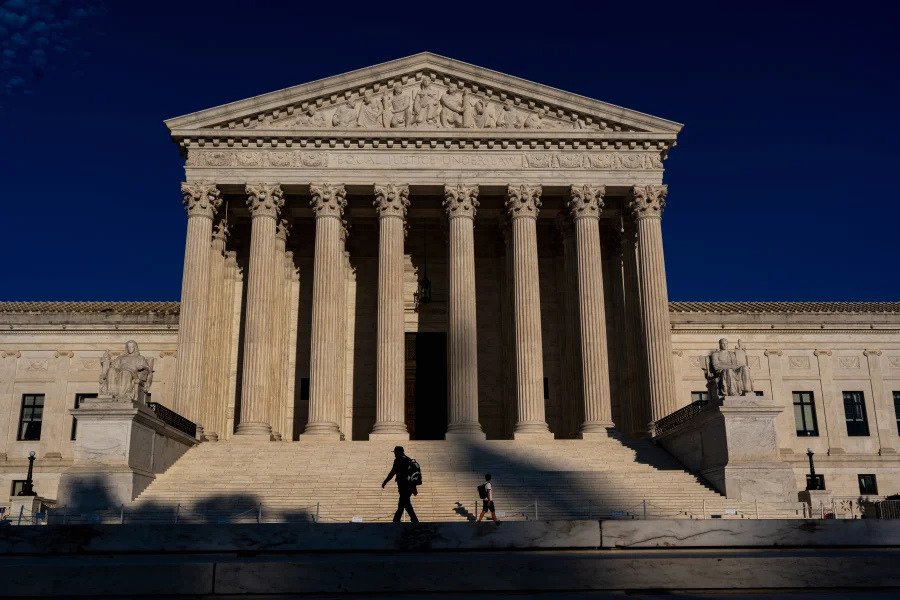
The U.S. Supreme Court is reviewing a significant legal challenge that could redefine the extent to which federal law enforcement officers can be held personally responsible for alleged constitutional violations. The case has renewed discussions about civil rights, government accountability and the legal safeguards available to individuals, particularly as immigration enforcement agencies face increasing public scrutiny.
The justices heard arguments on November 9, 2026, in a dispute involving Kekai Watanabe, a former federal prisoner who claims that prison officials failed to provide proper medical attention after he sustained serious injuries during an incident at a detention facility in Hawaii in 2021.
Court documents indicate that Watanabe was assaulted during a disturbance involving other inmates. He reportedly suffered significant injuries, including a fractured tailbone, but alleges that his complaints about severe pain were not adequately addressed by prison medical personnel. The fracture was eventually identified by doctors approximately seven months after the incident.
Following the experience, Watanabe initiated legal proceedings against a prison nurse, arguing that the failure to provide appropriate medical care amounted to a violation of his constitutional rights. His lawsuit centers on protections under the Eighth Amendment, which prohibits cruel and unusual punishment.
The dispute has brought renewed attention to a legal doctrine established through a landmark 1971 Supreme Court decision known as Bivens. This principle allows individuals, under limited circumstances, to seek financial compensation from federal officers accused of violating constitutional protections.
However, the Supreme Court has gradually narrowed the circumstances in which such claims can be pursued. The latest dispute, identified as Nielsen v. Watanabe, asks the justices to consider whether the legal grounds supporting these lawsuits should remain available in situations involving alleged misconduct by federal employees.
Attorneys representing the prison nurse argue that Watanabe’s circumstances do not fall within the categories of cases previously recognized under the Bivens doctrine. They contend that expanding the legal remedy would interfere with decisions that should primarily be handled by Congress.
On the other side, Watanabe’s supporters argue that restricting these claims further could leave individuals with fewer opportunities to obtain justice when federal officers violate their constitutional rights. They believe the possibility of financial consequences plays an important role in discouraging misconduct and ensuring that victims have access to meaningful legal remedies.
The potential consequences extend beyond the federal prison system. Immigration enforcement agencies, particularly U.S. Immigration and Customs Enforcement (ICE), have faced growing scrutiny over allegations involving excessive force, unlawful detention and the treatment of individuals during enforcement operations.
Civil rights organizations have expressed concerns that narrowing the ability to sue federal officers could make it harder for people affected by alleged misconduct to pursue compensation. They argue that existing accountability mechanisms may not always provide adequate protection when constitutional violations occur.
Some legal specialists, however, believe that a more comprehensive approach should come from Congress. They argue that government institutions need stronger oversight procedures, improved employee training and clearer administrative policies to prevent misconduct. According to this position, individual lawsuits alone cannot resolve wider problems within federal law enforcement agencies.
Another available legal option is the Federal Tort Claims Act, which permits certain claims against the federal government for misconduct by its employees. Nevertheless, this legislation operates under specific restrictions and generally requires individuals to complete an administrative claims process before pursuing litigation. It does not offer precisely the same legal remedy as a Bivens lawsuit against an individual officer.
The disagreement has also highlighted the responsibility of lawmakers in establishing clear rules governing federal accountability. Congress has the authority to create legislation allowing individuals to seek compensation when federal employees violate their constitutional protections, although a comprehensive solution has yet to emerge.
The Supreme Court’s eventual decision could have important implications for civil rights cases, immigration enforcement and the responsibilities of federal law enforcement personnel. A ruling that further limits the Bivens doctrine could significantly reduce the legal options available to people seeking damages from individual federal officers.
As the legal proceedings continue, the case raises a broader question about how the country should balance protections for government employees with the constitutional rights of the public. Its outcome could influence future accountability standards and determine how effectively individuals can challenge alleged misconduct by federal authorities.
You can watch the video below