
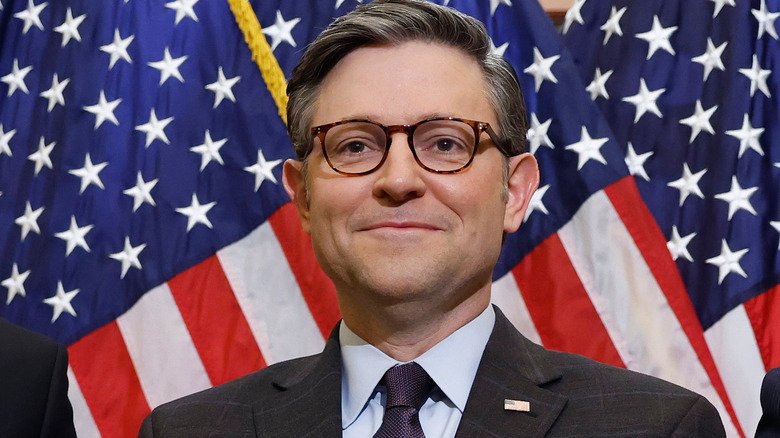
House Speaker Mike Johnson has suggested that Congress could potentially work with President Donald Trump on his proposal to provide $5,000 payments to eligible American adults, although he has made clear that there is no certainty the plan will become law.
Trump has promoted the proposed payment as a “Trump Dividend,” saying Americans could receive $5,000 if Republicans maintain control of Congress in the upcoming midterm elections. The idea has quickly attracted attention, but it remains a proposal rather than an approved government benefit.
Johnson’s comments highlight the role lawmakers would have to play before such payments could be distributed. While Trump has spoken positively about the prospect of sending money directly to Americans, the proposal would require congressional action and agreement over how the program should operate and how it would be funded.
The potential price tag is one of the biggest questions surrounding the idea. With roughly 245 million adults potentially qualifying, payments of $5,000 each could cost more than $1.2 trillion. The eventual figure would depend on the eligibility requirements established if Congress were to consider legislation.
Trump has argued that increased government revenue could provide the resources needed for the payments. His administration has promoted the proposal as a way for Americans to share in what Trump describes as economic gains under his leadership.
Yet the financial implications have already generated debate. Critics have questioned whether the federal government could afford a program of this size without placing additional pressure on the national budget. Concerns have also been raised about the possibility of higher inflation if such a large amount of money were distributed directly to households.
The proposal could create an especially complicated debate among Republicans. While some members of the party have expressed support for the concept, fiscal conservatives have traditionally emphasized reducing government spending and limiting the growth of federal debt.
The country’s overall financial position adds another layer to the discussion. With federal debt already above $40 trillion and the deficit remaining a major political issue, lawmakers would have to weigh the potential benefits of direct payments against the cost of establishing a nationwide program.
Democrats have also challenged the proposal, questioning its economic feasibility and criticizing its connection to the upcoming elections. Trump has linked the proposed dividend to Republican control of Congress, making the issue part of the broader political campaign surrounding the midterms.
The $5,000 idea is also not the first time Trump has floated the possibility of sending money directly to Americans. Previous proposals included a potential “DOGE dividend,” which was discussed as a way of returning government savings to taxpayers, as well as a separate tariff-funded rebate. Neither concept became a nationwide payment program.
For Americans hoping to receive the proposed $5,000, however, there is currently no guaranteed payment date or confirmed distribution process. Congress has not passed legislation creating the dividend, and several important details remain unresolved.
Those questions include who would qualify, how the payments would be financed, whether there would be income restrictions and what legal mechanism would be used to distribute the money.
Johnson’s remarks therefore leave the proposal in a preliminary stage. Congress could potentially help develop and authorize the program, but lawmakers would first need to reach an agreement on its structure and financial impact.
As the midterm elections draw closer, Trump is likely to continue highlighting the proposed dividend as part of his economic agenda. Whether the promise develops into an actual federal program will ultimately depend on congressional negotiations, legislative approval and the administration’s ability to address concerns surrounding its cost.
For now, the proposed $5,000 payment remains an idea under discussion—not a guaranteed check for Americans.
You can watch the video below