
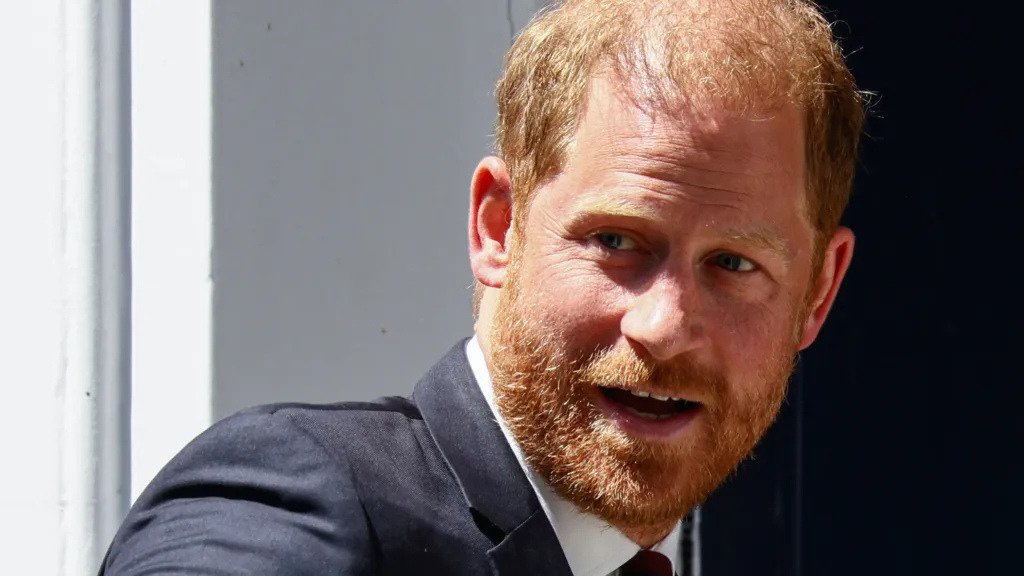
Prince Harry has spoken candidly about the emotional difficulties he experienced after moving away from the United Kingdom, revealing that his transition to a new life was accompanied by a period of depression. The Duke of Sussex shared his experience while discussing grief, mental health and emotional recovery in an educational series featuring neuroscientist Dr Mary-Frances O’Connor.
The conversation, featured in Redefining Grief: Building Resilience Through Loss, examines how people respond to loss and major life changes. Harry’s contribution offers a personal account of how stepping away from a demanding environment did not immediately bring the emotional relief he had anticipated.
Harry explained that after relocating to Canada with Meghan Markle and their young son, Archie, in 2019, he experienced a significant emotional adjustment. Although the move was intended to create distance from the pressures surrounding royal life, he found himself struggling when the constant intensity of his previous routine suddenly disappeared.
According to Harry, his adrenaline levels dropped considerably within days of arriving, leaving him feeling unable to function normally. He described experiencing depression for around two weeks, highlighting the unexpected difficulties that can accompany major transitions.
His account illustrates how leaving a stressful situation does not necessarily result in immediate peace of mind. Adjusting to unfamiliar circumstances can bring emotional challenges that may not become apparent until the initial changes have taken place.
Starting Over Away From the Royal Household
Harry and Meghan moved to Vancouver Island in late 2019 before announcing in early 2020 that they intended to step back from their roles as senior working members of the British royal family.
The decision represented a major change in their personal and professional lives. Alongside relocating overseas, the couple began establishing a future outside the traditional structure of royal duties and public responsibilities.
They later settled in California, where they continued building their family life and pursuing independent projects.
Looking back on the transition, Harry described how difficult it was to adapt to a slower pace after years of living with intense demands and constant pressure. The absence of those familiar conditions left him confronting feelings he had not fully understood.
His experience highlights the complicated relationship between stress, routine and emotional wellbeing. Even when a person makes a change to improve their circumstances, adjusting to a new environment can take time and may involve unexpected setbacks.
Remembering His Mother and the Lasting Impact of Grief
Harry also reflected on the death of his mother, Diana, Princess of Wales, who died in a car crash in Paris in 1997 when he was 12.
He explained that the loss affected him for many years and contributed to a prolonged struggle with his emotions. At times, he found it difficult to imagine experiencing happiness without feeling that he was somehow moving away from his connection to his mother.
Harry described carrying feelings of guilt about enjoying life after her death, as though sadness was necessary to demonstrate the depth of his love and loss.
His reflections highlight how grief can continue to influence a person’s emotional life long after a bereavement. Painful memories may remain difficult to confront, particularly when someone has spent years avoiding or suppressing them.
He also discussed how his military experience gave him a sense of purpose during a challenging period, although some emotional difficulties continued beneath the surface.
Therapy Helped Him Reconnect With Memories
Harry credited therapy with helping him approach his grief differently. He recalled an exercise involving his mother’s perfume, which was suggested by a therapist as a way to reconnect with memories associated with her.
The experience helped him revisit memories of Diana, including her voice and laughter, which he felt he had struggled to recall clearly over time.
Through this process, Harry began to reconsider his belief that happiness and grief could not exist together. He came to understand that remembering someone who has died does not require a person to remain unhappy.
His experience emphasises the potential value of professional support when dealing with painful memories and complicated emotions. Therapy can provide a space for people to explore their experiences and develop healthier ways of coping with loss.
Harry Encourages Greater Understanding of Mental Health
The Duke’s latest reflections continue his previous efforts to speak publicly about mental health and the personal challenges he has experienced.
By discussing depression following his departure from the UK, he has highlighted how major life changes can affect emotional wellbeing in unexpected ways. His account also demonstrates that grief and happiness are not necessarily opposing experiences.
Harry’s message centres on acknowledging difficult feelings rather than attempting to ignore them. His journey illustrates that recovery can involve understanding past experiences, seeking support and gradually learning to embrace positive moments.
Ultimately, his reflections offer a personal perspective on the complexities of starting over, coping with bereavement and finding emotional balance. While everyone’s experience is different, Harry’s willingness to discuss his struggles encourages greater openness around mental health and the challenges of moving forward after loss.
You can watch the video below