India-gi share market asi Wednesday-da flat oina open oigadabani haiba report thokkhre. International market-da crude oil price hen-gatpa amasung foreign investor-singna Indian share-sing sell touba matamda market sentiment adu cautious oina leiri.
Tuesday-da Nifty 50 amasung Sensex index ani-mak approximately 1.6% hen-gatlammi. Information technology company HCLTech-gi quarterly earnings phajaba matungda IT stock-singna market recovery-da mateng pangkhi. Adubu oil price barrel ama-da $107 phaoba hen-gatpa aduna inflation amasung India-gi import cost-sing hen-gat-hanba yai.
Foreign portfolio investor-singna Indian stock market-da consecutive trading session 13-ni phaoba net selling toukhi. Adubu domestic institutional investor-singna stock-sing purchase touba matungda market-ta support ama phangkhi.
Market expert-singna global oil price, company earnings amasung US inflation data adu investor-singna nungsitna watch touba matamda khanghanba hairi. Market-gi movement asi India-gi economy amasung investor confidence-gi maramda important oigani.
Source: Reuters — Indian shares face muted opening
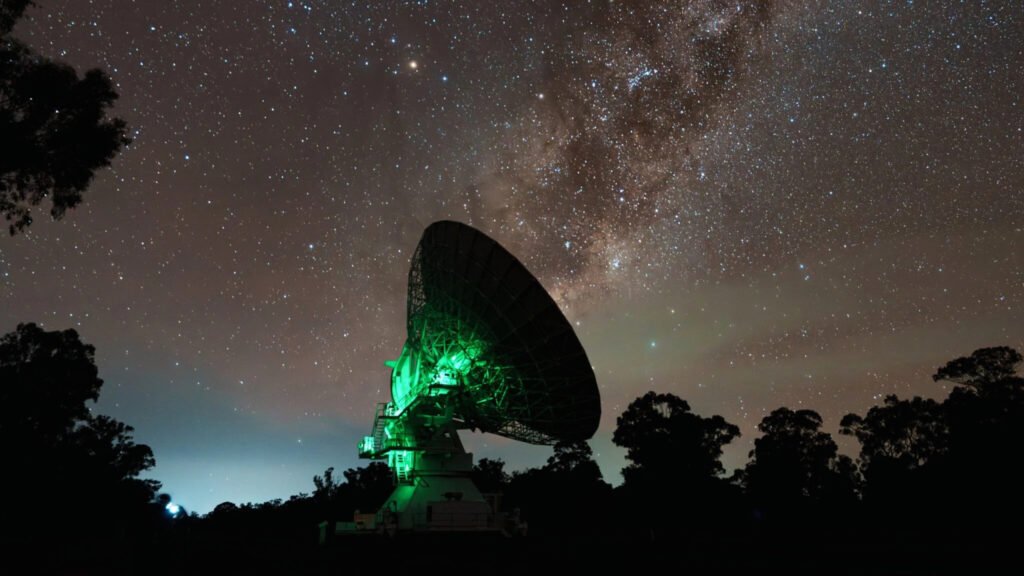
Astronomers studying a powerful radio signal from the distant universe have discovered an unexpected galaxy that could help explain how these mysterious cosmic events occur. The signal, which travelled through space for billions of years before reaching Earth, originated when the universe was approximately three billion years old.
The discovery offers researchers a rare opportunity to investigate the conditions that existed during an important period in cosmic history. By tracing the signal to its source, scientists have uncovered details about a galaxy that challenges some expectations about where these unusual events might originate.
The radio burst, identified as FRB 20240304B, was detected in March 2024 by the MeerKAT radio telescope in South Africa. Known as a fast radio burst, or FRB, the event involved an intense flash of radio waves lasting only a brief period. Despite their short duration, such bursts can release enormous amounts of energy, making them valuable subjects for astronomical research.
One of the most intriguing aspects of the discovery was the identification of its host galaxy. Using the James Webb Space Telescope, researchers were able to examine the distant galaxy and learn more about the environment associated with the burst. The galaxy was found to be a relatively small dwarf galaxy with active star formation.
This finding surprised researchers because astronomers are still working to understand the types of galaxies that produce fast radio bursts. Identifying the host galaxy provides important evidence about the conditions under which these powerful signals emerge. It also allows scientists to compare the discovery with other known bursts and investigate whether similar environments are responsible for these events.
The signal began its journey when the universe was roughly three billion years old, meaning its light travelled for around 10 billion years before reaching Earth. Observing such a distant event allows scientists to study a period when galaxies were developing and forming stars at different rates from those seen in many galaxies today.
Fast radio bursts remain one of the most intriguing phenomena in modern astronomy. Although researchers have identified many examples, the precise mechanisms behind all these events are not yet fully understood. One leading possibility involves magnetars, which are neutron stars possessing extraordinarily powerful magnetic fields. However, scientists continue to investigate whether different physical processes can produce similar signals.
The galaxy’s characteristics may help researchers narrow down the possible explanations. By examining its star formation activity and chemical composition, astronomers can investigate whether the conditions favour the creation of highly energetic objects capable of producing radio bursts.
The discovery also demonstrates the importance of combining observations from different telescopes. Radio instruments can detect brief bursts, while powerful space telescopes can examine the distant galaxies associated with them. Together, these observations provide a more complete picture of the event and its cosmic surroundings.
Beyond identifying the source, the signal may offer additional information about the material between the galaxy and Earth. As radio waves travel through space, they interact with gas and other matter along their route. Studying these effects can help astronomers investigate the distribution of material across the universe, including matter that is difficult to observe directly.
Researchers will need further observations to establish the full significance of the discovery and determine how the burst was produced. Additional studies of distant galaxies and their radio signals could reveal whether this event represents a common pattern or an unusual exception.
The findings highlight how a brief flash of radio energy can provide valuable information about the universe’s distant past. By connecting an ancient signal with an unexpected galaxy, astronomers have gained another opportunity to investigate the origins of fast radio bursts and the evolution of galaxies across cosmic time.
Manipuri pony adu Manipur-gi cultural heritage-gi maru oiba part ama oirabana, digital registration amadi scientific conservation asi indigenous animal adu protect touba matamda important step ama oigani
Source: India Today NE — Manipur launches digital registry for Manipuri ponies
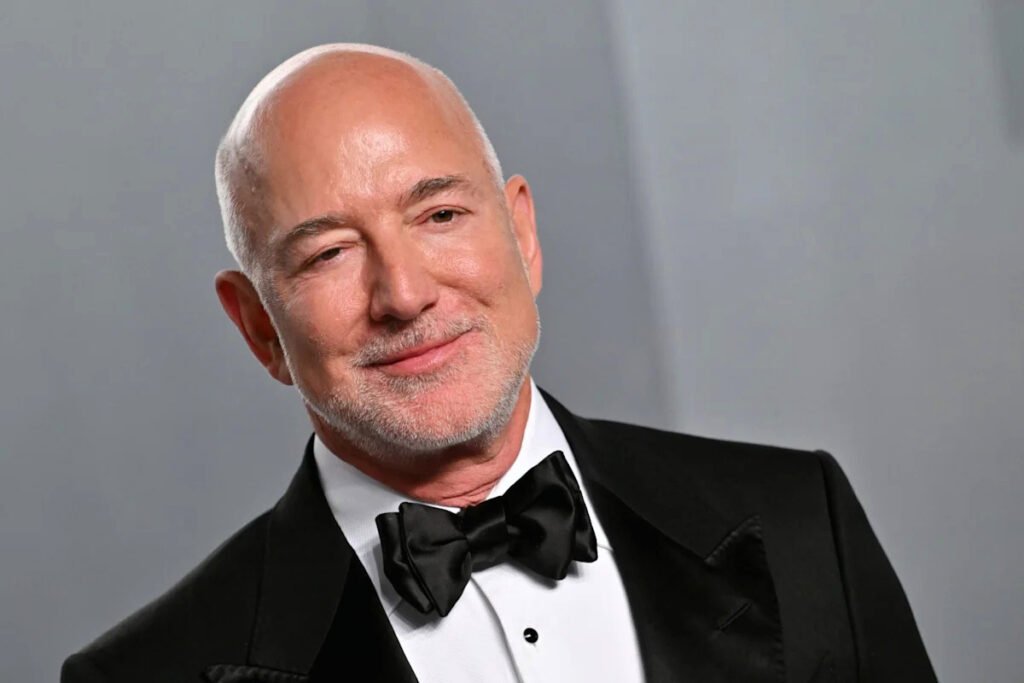
Amazon founder Jeff Bezos has pushed back against criticism of wealthy entrepreneurs, arguing that achieving financial success should not automatically lead to public condemnation. During a recent interview with Fox News, Bezos questioned the tendency to portray billionaires negatively and emphasized the role businesses can play in creating jobs, developing products and contributing to economic growth.
Bezos argued that some people have been encouraged to view success through an unfair lens, suggesting that building a profitable company should not be treated as wrongdoing. He maintained that entrepreneurs can create substantial wealth by offering products and services that customers genuinely want.
His comments have renewed discussion about the relationship between business success, economic opportunity and the growing debate over wealth inequality in the United States.
To illustrate his argument, Bezos described how a simple hamburger stand could eventually grow into a large restaurant business. A small operation that attracts customers could expand into multiple locations, employ more workers and generate significant revenue over time.
He also referred to Raising Cane’s, a fast-food chain known for its chicken-finger meals, as an example of a business that developed by appealing to consumers.
According to Bezos, entrepreneurs should not be criticized simply because their businesses become successful. He argued that providing products people appreciate and are willing to purchase can form the foundation of legitimate commercial achievement.
His perspective reflects his own experience building Amazon from an online bookstore into a global company operating across e-commerce, cloud computing and other industries. He has also pursued ambitious projects through Blue Origin, his space exploration company.
Bezos’ remarks come as Americans continue debating the concentration of wealth and the economic challenges confronting ordinary households.
Critics of billionaire fortunes argue that extreme wealth inequality raises concerns about access to opportunities, taxation and the influence wealthy individuals can exercise over public policy. They also question whether the benefits generated by large businesses are distributed fairly among workers, consumers and investors.
Supporters of entrepreneurship, however, argue that successful companies can stimulate economic activity, introduce new technologies and provide employment to millions of people.
Bezos’ position challenges the assumption that financial success itself should make an entrepreneur a target of criticism. He suggests that public discussion should focus on addressing economic problems rather than assigning blame to people simply because they have accumulated wealth.
Nevertheless, the debate involves more than whether a business becomes profitable. Questions surrounding wages, working conditions, market competition and the distribution of economic gains remain important considerations when assessing the broader impact of large corporations.
While defending entrepreneurs, Bezos also acknowledged the financial pressures facing many Americans, particularly younger people struggling with housing costs.
He discussed the difficulty of finding affordable places to live near employment opportunities and argued that policymakers should examine the underlying causes of rising prices.
Housing supply and restrictions that limit construction can contribute to affordability problems in some markets. Addressing these challenges may require examining local regulations, building capacity and other factors affecting the availability of homes.
Bezos encouraged a focus on practical solutions rather than political rhetoric. His argument was that identifying the causes of economic difficulties is more useful than simply blaming wealthy individuals or businesses.
However, housing affordability is a complex issue, and its causes vary across communities. Policy discussions also involve wages, financing costs, infrastructure and local demand.
Bezos’ comments reinforce his belief that entrepreneurship should be recognized for its potential to create value, generate employment and expand economic opportunities.
His argument does not eliminate concerns about wealth inequality or corporate responsibility. Instead, it highlights a continuing disagreement over how society should evaluate people who build highly profitable businesses.
For Bezos, becoming wealthy through a successful enterprise should not automatically carry a negative moral judgment. He maintains that public attention should remain on whether businesses provide useful products and services and whether policymakers are addressing the economic challenges affecting households.
As discussions about billionaires, taxation and affordability continue, his remarks add another perspective to the debate over the role of private enterprise in American society. The central question remains how to encourage innovation and business growth while ensuring that economic opportunities and benefits are broadly accessible.
Manipur-da eligible voter pumnamakki name electoral roll-ta yaoba ngamhanbada statewide campaign ama houkhatle. Chief Electoral Officer-gi office-gi report-gi matung-inna, state-gi polling booth 3,041-da special camp-sing organise touba plan toure.
Campaign asi eligible voter-singgi name voter list-ta yaoba ngamhanba, voter information check touba amasung registration-related khudongchaba-sing solve touba matamda mateng pangnaba semkhrabani. Election-ta vote touba hak adu democratic process-gi maru oiba part ama oirabana, voter list accurate oiba adu important oini.
NATO has issued a strong warning to Russia, pledging a decisive military response if the alliance’s territory comes under attack. The statement underscores growing concerns about European security and the alliance’s efforts to deter potential aggression.
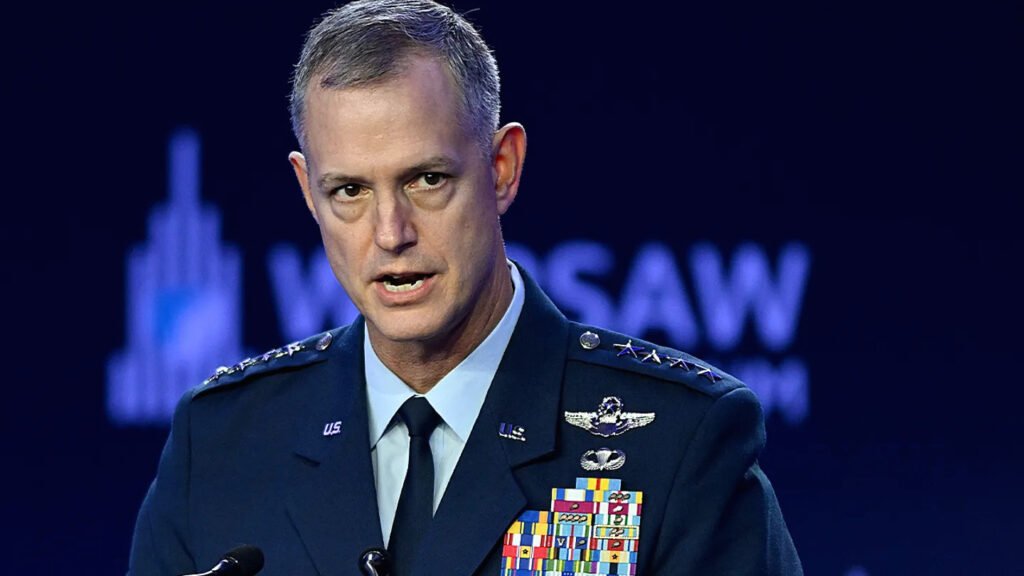
During the Warsaw Security Forum in Poland on October 12, 2026, NATO’s top military commander, U.S. Air Force General Alexus Grynkewich, outlined the alliance’s strategy to stop an attack, weaken advancing forces and prevent an adversary from continuing its offensive.
Grynkewich stressed that NATO was prepared to defend its members by disrupting hostile operations and targeting the military capabilities needed to sustain an attack. His remarks reinforced the alliance’s commitment to protecting allied territory.
Although his comments did not explicitly identify Russia in every instance, they came amid heightened tensions between Moscow and Western governments.
European countries have raised concerns about alleged sabotage, cyberattacks and suspicious drone activity. Western officials have attributed some hostile activities to Russia, while Moscow has denied various accusations.
Tensions have increased since Russia launched its full-scale invasion of Ukraine in February 2022, prompting NATO members to strengthen their defenses and improve military coordination.
NATO’s collective defense principle, established under Article 5 of the North Atlantic Treaty, considers an armed attack against one member an attack against all. Each ally must assist the country under attack through measures it considers necessary, potentially including military force.
The commitment remains central to NATO’s strategy of deterring aggression and reassuring member countries of the alliance’s support.
Despite the strong rhetoric, there is no confirmed evidence that Russia is preparing an imminent attack against NATO territory. Moscow has also denied intending to attack European countries.
Grynkewich’s remarks therefore serve as a warning about the consequences of a potential assault rather than confirmation that a military confrontation is imminent.
NATO continues to emphasize defense, deterrence and military preparedness as tensions with Russia persist. The alliance’s message is clear: any attack against its members would prompt a coordinated response intended to protect allied territory and prevent further aggression.
With the 2028 United States presidential election approaching on the political horizon, attention is beginning to shift toward potential contenders from both the Republican and Democratic parties. Secretary of State Marco Rubio, Georgia Senator Jon Ossoff and New York Representative Alexandria Ocasio-Cortez are among the prominent political figures being discussed in connection with the next presidential contest. However, their public positions differ, and speculation about their future ambitions does not necessarily indicate that they are preparing to launch campaigns.
While Rubio remains an influential Republican figure, Ossoff has publicly dismissed the possibility of running in 2028, and Ocasio-Cortez has left the door open to a potential presidential bid. Their respective decisions could help shape discussions about the future leadership of their parties.
Rubio’s Position in the Republican Party
Marco Rubio has maintained a significant presence in Republican politics through his work in the Trump administration and his previous experience in the U.S. Senate. As secretary of state, he is responsible for overseeing American diplomatic relations and helping implement the administration’s foreign policy priorities.
Rubio previously competed for the Republican presidential nomination in 2016, when he faced Donald Trump and other candidates. Although he did not secure the nomination, the campaign established him as a nationally recognized Republican politician.
As attention turns toward 2028, Vice President JD Vance has also been mentioned in discussions about the Republican Party’s next presidential nominee. This has encouraged questions about whether Rubio might consider another campaign.
Nevertheless, Rubio’s political prominence should not be interpreted as confirmation of a presidential bid. His immediate responsibilities remain connected to his current government position, and his future plans would need to be established through clear public statements.
Ossoff Focuses on His Senate Responsibilities
Jon Ossoff has also attracted attention in discussions about the Democratic Party’s future. The Georgia senator has developed a national profile through his legislative work and public criticism of the Trump administration.
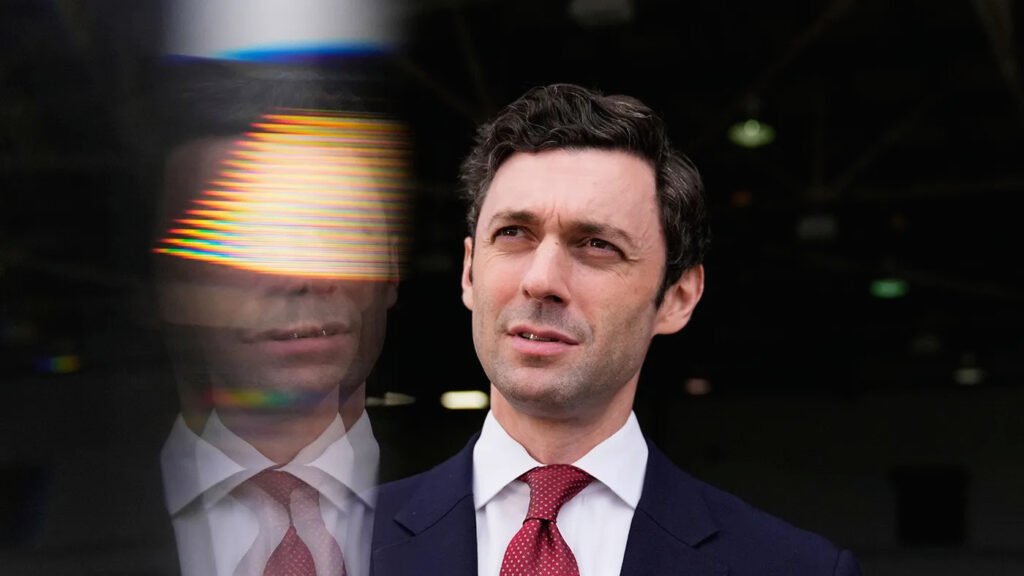
Despite speculation about a possible presidential campaign, Ossoff has directly stated that he has no interest in running for president in 2028. In remarks reported in September 2026, he emphasized his focus on his Senate race and the approaching midterm elections.
His comments suggest that his immediate political priorities remain centered on Georgia and the balance of power in Congress. Rather than encouraging expectations of a presidential campaign, he has sought to direct attention toward the elections taking place before the next presidential contest.
Although his name may continue to appear in conversations about Democratic leadership, his stated position provides an important distinction between political speculation and his own expressed intentions.
Ocasio-Cortez Leaves a Presidential Bid Possible
Alexandria Ocasio-Cortez has responded differently to questions about her political future. The New York representative, commonly known as AOC, has not ruled out running for president in 2028, although she has not announced a campaign.
Her national visibility comes from her work in Congress, progressive policy advocacy and participation in political events beyond her district. She has also supported Democratic candidates in other states, helping maintain her presence in national political discussions.
In August 2026, Ocasio-Cortez indicated that she was concentrating on the midterm elections while leaving open the possibility of a future presidential run. That position allows her to continue her current political work without making an early commitment to the 2028 race.
Whether she eventually pursues the presidency remains uncertain. For now, her public comments do not amount to a formal declaration of candidacy.
The Road Toward the 2028 Election
The different responses from Rubio, Ossoff and Ocasio-Cortez demonstrate why early presidential speculation requires careful examination. Political prominence, public appearances and media attention do not automatically translate into a decision to run for the White House.
Rubio continues serving in the Trump administration, Ossoff has publicly rejected a 2028 presidential campaign, and Ocasio-Cortez has kept her options open without formally entering the contest.
The 2026 midterm elections will take place before the next presidential election and are likely to remain an immediate priority for many politicians. Their results could influence party strategies, leadership debates and discussions about potential candidates.
For now, the three figures occupy different positions in the evolving political conversation. Whether any of them ultimately seeks the presidency will depend on future decisions and announcements rather than speculation alone.