NASA Opens Astronaut Recruitment for Future Moon Exploration Missions

NASA has started accepting applications for its upcoming astronaut candidate programme as the agency moves forward with plans to expand human activities beyond Earth. The recruitment initiative is intended to identify skilled professionals who could eventually participate in Moon missions, support lunar research and contribute to the development of a long-term human presence on the lunar surface.

The announcement, released on November 7, 2026, comes as NASA continues advancing its Artemis programme. Through this initiative, the agency aims to return astronauts to the Moon while developing the technology and infrastructure required for extended operations. The recruitment drive is also connected to NASA’s broader ambitions of preparing astronauts for eventual missions to Mars.

NASA Administrator Jared Isaacman highlighted the importance of bringing new talent into the agency’s astronaut corps. He explained that successful applicants could have opportunities to explore the lunar surface, work at a future Moon Base and contribute to technological developments that will support human spaceflight.

The application process is open to eligible American citizens, with submissions scheduled to close at 11:59 p.m. Eastern Standard Time on December 3, 2026. NASA expects to complete its selection process in late 2027 before beginning the next stage of astronaut preparation.

Applicants must satisfy several educational and professional standards. The general requirement includes a master’s degree in a qualifying science, technology, engineering or mathematics field from an accredited institution. Relevant areas of study include engineering, physical sciences, biological sciences, mathematics and computer science.

NASA also recognizes alternative academic qualifications under specific conditions. Individuals who have completed at least two years of doctoral studies in an eligible field may qualify. Certain medical degrees and approved test pilot school programmes are also accepted as alternatives.

Professional experience is another important part of the selection process. Candidates generally need a minimum of three years of relevant experience after completing their qualifying education. Applicants with suitable piloting backgrounds may also meet the requirement through specified flight-hour experience.

In addition to academic and professional qualifications, candidates must successfully complete NASA’s long-duration astronaut physical examination. The agency also looks for individuals with strong communication abilities, leadership qualities, adaptability and the capacity to work effectively as part of a team.

Those chosen for the programme will undertake approximately two years of demanding training. The preparation will cover spacecraft operations, spacewalking, lunar geology, robotics and high-performance aircraft flying. These activities are designed to develop the technical and physical abilities necessary for operating in challenging space environments.

The new recruitment campaign supports NASA’s longer-term vision of establishing a more consistent human presence on the Moon. Through the Artemis programme, the agency intends to move beyond brief lunar visits and work toward developing facilities that could accommodate astronauts during extended missions.

Creating a functioning lunar base will require considerable technological progress. Reliable electricity, communication systems, transportation equipment, scientific facilities and protective living spaces will all be important components. Astronauts could help test these systems, conduct experiments and evaluate the difficulties associated with living and working on the lunar surface.

NASA also considers lunar missions an important preparation stage for human exploration of Mars. Knowledge gained from operating on the Moon could help scientists improve life-support equipment, develop advanced spacecraft systems and understand how astronauts respond to extended missions away from Earth.

The latest hiring initiative follows NASA’s previous astronaut selection campaign, which attracted more than 8,000 applications in 2024. Ten candidates were eventually selected in 2025. Since the astronaut programme began in the 1960s, NASA has chosen 370 astronaut candidates, with 32 currently serving as active astronauts.

Being selected for astronaut training does not automatically guarantee a flight assignment. Candidates must complete the required preparation and demonstrate their ability to handle the responsibilities associated with future missions.

With the latest application period underway, NASA is seeking another group of professionals who can contribute to its evolving exploration plans. The new candidates could eventually become part of missions that reshape human activity beyond Earth, supporting the agency’s ambitions to establish a sustainable lunar presence and prepare for journeys to Mars.

You can watch the video below

India-gi share market Monday morning-da changkhatle

India Business News | 9 November 2026

India-gi stock market Monday morning-da higher oina open toukhi. Reuters-gi report matung-inna, Nifty 50 index adu 0.36% changkhatlaga 25,076.4-da changkhi, aduga Sensex index adu 0.4% changkhatlaga 81,327.29-da changkhi. Crude oil price thamlakpa amasung foreign investment amuk hanna lakgani haiba asha aduna investors-gi confidence-da mateng pangkhi.

Share market-ta index-sing changkhatpa aduna investors-singgi sentiment phajaba uhan-i. Oil price thamlakpa aduna India-gi import cost khara thamlakpa ngammi, maramdi India-na crude oil yamna import toui. Aduga foreign investors-na Indian shares-ta investment piba hen-gatlabadi market-da additional capital phangba ngammi.

Adubu stock market-gi value adu matam khudinggi chang-i. Global economy, company-singgi financial results, interest rate, inflation amasung international political developments-singna market-da asar pang-i. Aduna investors-singna share purchase nattraga sale touba matamda market risk amasung company-gi performance adu phajaba oina yengsinba mathou tai.

Source: Reuters — Indian shares 

Trump’s Comments on Iran Ease Market Concerns, Sending Oil Prices Lower

Crude oil prices moved lower during Monday’s trading session, November 9, after U.S. President Donald Trump suggested that additional military strikes against Iran were unlikely if diplomatic discussions between the two countries continued progressing. His remarks helped ease concerns about a wider regional conflict, encouraging investors to reconsider the potential risks facing international energy supplies.

Brent crude futures recorded a decline of 64 cents, equivalent to 0.64%, reaching $97.67 per barrel. Meanwhile, U.S. West Texas Intermediate (WTI) fell by 35 cents, or 0.40%, to $90.51 per barrel by 1134 GMT. Brent prices also experienced a temporary drop of more than $1 as traders reacted to the possibility of improved relations between Washington and Tehran.

Trump shared his assessment during a telephone interview with CNN on Sunday. He indicated that further American military action would probably not be required if Iran accepted an agreement that met Washington’s expectations. The statement offered a more measured outlook following earlier warnings about the possibility of renewed attacks.

The prospect of diplomatic progress has become a major consideration for energy investors. The Middle East plays a significant role in global petroleum production and transportation, making developments involving Iran particularly important for international markets. Any expansion of military operations could threaten oil facilities, shipping routes and exports from the region.

Nevertheless, the latest decline does not eliminate concerns about potential supply interruptions. The Strait of Hormuz remains a major source of uncertainty because it handles a substantial share of the world’s seaborne oil shipments. Continued security concerns and reported attacks involving vessels in and around the waterway have kept energy traders cautious.

A prolonged disruption to shipping through the strategic passage could significantly affect international oil supplies. Consequently, investors continue monitoring developments in the region despite the more encouraging signals surrounding possible negotiations.

The recent movement also follows a substantial decline in crude prices during the previous week. Brent recorded a weekly loss of approximately 17%, representing its sharpest weekly fall since the COVID-19 pandemic. Changing expectations surrounding the conflict, alongside hopes for diplomatic engagement, contributed to the downturn.

Another factor influencing the market is the possibility of an increase in worldwide oil supplies. JPMorgan estimated that global production exceeded consumption by approximately 1.1 million barrels per day in September. The surplus was projected to increase to around 1.4 million barrels daily in October, reflecting stronger production and relatively softer demand.

Developments involving Iraqi oil exports have also attracted market attention. Iraqi Foreign Minister Fuad Hussein said an understanding had been reached with the United States to facilitate the resumption of oil shipments through the Strait of Hormuz using a route near Oman. The disruption has reportedly caused substantial economic losses for Iraq, estimated by the foreign minister at approximately $60 billion.

At the same time, security concerns elsewhere in the Middle East continue to complicate the energy outlook. Yemen’s Houthi group claimed responsibility for an attack targeting Saudi Aramco’s offices in Riyadh. The incident reportedly resulted in property damage but no casualties, highlighting the continuing instability surrounding the region.

Energy analysts believe that future oil price movements will depend heavily on the outcome of negotiations between Washington and Tehran. A lasting diplomatic agreement could reduce concerns about transportation disruptions and improve confidence in international supply chains. However, renewed military confrontations or additional threats to important shipping routes could quickly push prices upward again.

For the moment, investors remain focused on political developments, production levels and global consumption patterns. Although Trump’s latest comments have provided some relief to energy markets, uncertainty surrounding the Middle East remains an important influence on crude oil trading.

The latest price movement demonstrates the close relationship between international politics and commodity markets. As diplomatic efforts continue, traders are expected to follow developments involving Iran, regional security and global petroleum supplies to determine whether the recent decline will continue.

You can watch the video below

Delhi-da Diwali matungda air pollution-na health risk puthokle

Delhi News | 9 November 2026

Delhi-da Diwali celebration loina matungda air pollution amuk hanna hen-gatle. Associated Press-gi report matung-inna, Monday morning-da Delhi-gi akash adu dense smog-na cover toukhi. City-gi area kayada Air Quality Index (AQI) adu 350-dagi henna changkhi, aduga area kharada “severe” category phaoba changkhi. Sunday evening-da firecracker-sing phajana use touba aduna pollution hen-gat-hanba ngamkhi.

Delhi-gi air pollution adu firecracker smoke khaktagi thokpani natte. Vehicle exhaust, industrial emissions, construction dust amasung neighbouring Punjab-Haryana-gi crop-residue burning smoke-singna-su pollution-ta asar pang-i. Thanda season-da wind speed thamlakpa amasung air movement thok-hanba condition phangdrabadi, pollution particles-sing city-da thamthokpa ngamde, aduna smog matam chana leiba ngammi.

Authorities-na approved “green firecracker” khaktang use touba amasung fireworks-gi matam adu limit touba rules pikhre, adubu green firecracker-singna-su harmful particles release toui. Health experts-na children, elderly people amasung asthma nattraga breathing problem leiriba mi-singna outdoor exercise adu thadokpa, pollution yamna chaoba matamda mask use touba amasung local AQI update check touba haijare.

Delhi-gi air quality adu phajahanbada long-term solution-sing mathou tai. Cleaner transport, construction dust control, industrial emission reduction amasung crop-residue burning thengthaba-gumba measures-singna pollution adu makha tana thamlakpa ngamgani.

Source: Associated Press — Delhi air pollution after Diwali⁠.

Charlie Kirk’s Widow Criticizes Comedian Over Joke About His Fatal Shooting

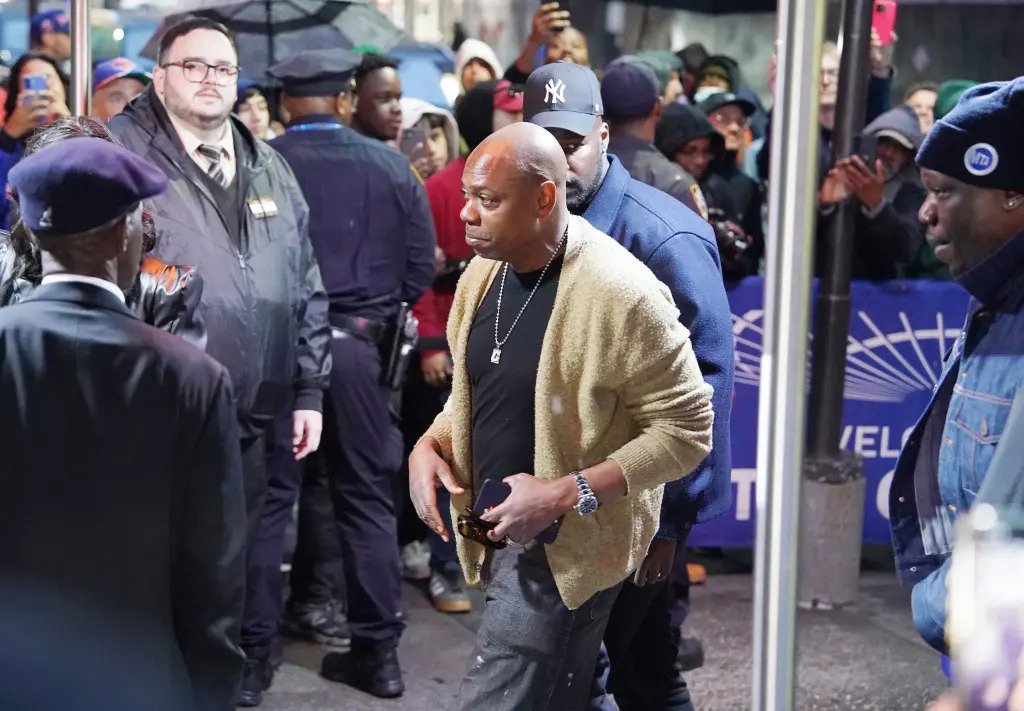
Erika Kirk, the wife of the late conservative activist Charlie Kirk, has criticized comedian Dave Chappelle following a controversial joke about her husband’s assassination. Her reaction has reignited discussions about the limits of comedy, public sensitivity and the way political violence is addressed in entertainment.

The dispute emerged after Chappelle made remarks about Charlie Kirk’s death during a stand-up performance at Madison Square Garden in New York on November 7. While discussing public speaking and the dangers associated with being outspoken, the comedian made a joke suggesting that he had felt better since Kirk was killed. The comment reportedly prompted laughter from some audience members.

Clips from the performance subsequently circulated online, attracting widespread attention and criticism. Several viewers questioned the comedian’s decision to incorporate a politically motivated killing into his routine, arguing that the subject involved a real person whose death had deeply affected his family.

Erika Kirk responded on November 8 with a strongly worded statement shared through social media. Although she did not specifically mention Chappelle by name, her remarks appeared to address comedians and media personalities who had made jokes about her husband’s death.

She described turning political violence and the loss of human life into entertainment as “beyond disgusting.” Erika also highlighted the personal consequences of the tragedy, noting that she and her two children continue to deal with the absence of their husband and father.

Her response emphasized that disagreements over political beliefs should not remove the basic respect owed to human life. She also expressed concern about the broader implications of making assassination a subject of amusement, particularly in an increasingly divided political environment.

The statement received considerable attention, with numerous social media users expressing support for Erika. Critics of Chappelle argued that comedy should not require celebrating or appearing to welcome someone’s death. Others used the incident to discuss the distinction between provocative humor and comments that can be perceived as insensitive.

Entrepreneur Elon Musk also expressed disapproval of Chappelle’s remarks, while British broadcaster Piers Morgan joined the criticism. The reactions added further attention to the controversy, particularly because Chappelle himself had previously experienced an onstage attack during a performance in 2022.

The latest incident follows another dispute involving the progressive podcast I’ve Had It. Its hosts, Jennifer Welch and Angie Sullivan, previously faced criticism after laughing at a joke concerning Charlie Kirk’s death during an episode. They later apologized for their reaction, acknowledging that it was insensitive. The hosts also announced a donation to Everytown for Gun Safety.

Charlie Kirk was fatally shot on September 10, 2025, while addressing an audience at Utah Valley University in Utah. He was 31 years old. As the co-founder of Turning Point USA, he had become a prominent figure in American conservative politics. His killing generated national attention and prompted condemnation of political violence from people across the political spectrum.

Tyler Robinson, the suspect charged in connection with the shooting, has pleaded not guilty. The criminal case remains an important part of the continuing public discussion surrounding Kirk’s death.

Meanwhile, the controversy involving Chappelle demonstrates how remarks made during live performances can quickly become major public discussions once recordings circulate online. Although the comedian’s show was promoted as a phone-free event, footage eventually surfaced on social media, allowing people who were not present to hear and respond to the comments.

The incident has once again brought questions about freedom of expression and the responsibilities of entertainers into focus. Comedians often use controversial subjects to challenge audiences and provoke reactions, but jokes involving real-life tragedies can generate strong objections, especially from those directly affected.

For Erika Kirk, the debate is not simply about comedy or political disagreement. It concerns the memory of her husband and the impact his death continues to have on their family. Her criticism has added a personal dimension to the wider discussion about how public figures address acts of violence through entertainment.

You can watch the video below

Foreign equity investment amuk hanna lakpa amasung crude oil price thamlakpa aduna rupee-gi value-da support pikhre.

India Economy News | 9 November 2026

India-na crude oil yamna import touba maramda, oil price thamlakpa aduna import bill khara thamlakpa ngammi. Aduga foreign investors-na Indian shares-ta investment touba hen-gatlabadi financial market-ta money flow phangba ngammi. Adubu global technology market-ta thokpa changes, US dollar-gi strength amasung international investor-singgi decision-na rupee-gi value-da makha tana asar panggani.

Market analysts-singna upcoming inflation data adu-su yengsinba mathou tai haikhi. Food price hen-gatpa amasung consumer inflation-na Reserve Bank of India-gi policy decision-singda asar pangba ngammi. Aduna rupee-gi value phajaba adu economy pumnamak phajaba haiba meaning oide; market conditions amasung domestic inflation-su maru oigani.

Source: Reuters — Indian rupee and economic outlook⁠.

Social Security Faces Potential Benefit Reductions by 2032 Without Congressional Intervention

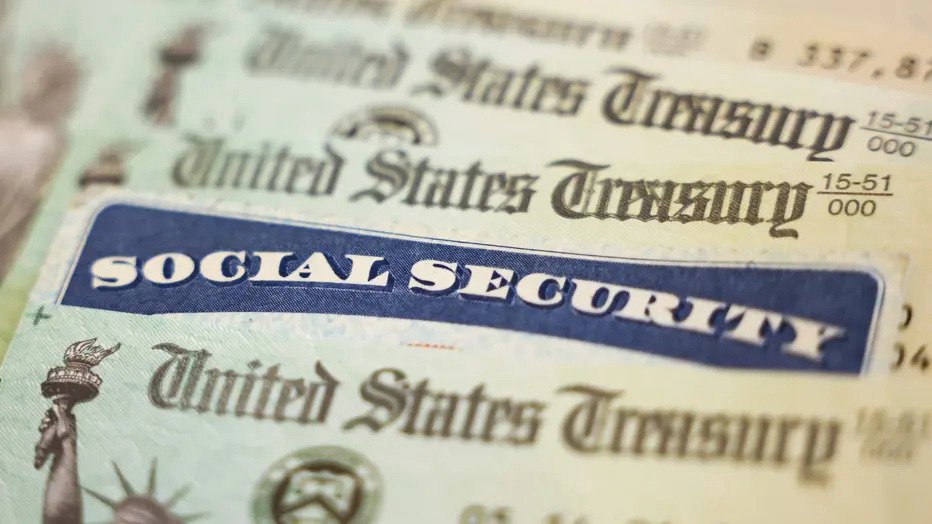
Millions of Americans who depend on Social Security as a primary source of retirement income could experience lower monthly payments beginning in 2032 if federal lawmakers fail to address the program’s financial difficulties. Recent projections from the Social Security and Medicare Boards of Trustees indicate that the retirement trust fund could exhaust its reserves by the final quarter of 2032, potentially leaving the program unable to distribute the full amount of benefits currently promised.

The warning has renewed discussions about the future of Social Security and the financial protection it provides to retired workers, eligible survivors and their families. For many older Americans, these monthly payments help cover essential expenses, including medical bills, groceries, housing and other everyday necessities.

Under the latest estimates, the Old-Age and Survivors Insurance (OASI) Trust Fund is expected to retain sufficient reserves to cover scheduled retirement and survivor payments through 2032. However, once its accumulated savings are exhausted, ongoing revenue from payroll taxes and other sources would only be enough to finance approximately 78% of scheduled benefits under existing law.

This could result in an automatic reduction of around 22% in retirement and survivor payments unless Congress approves changes to the program’s funding structure before the projected deadline.

One of the major factors contributing to the financial strain is the changing age structure of the American population. A growing number of people are reaching retirement age and becoming eligible for monthly payments, while the proportion of younger workers contributing to the system has not kept pace with the rising number of beneficiaries.

Social Security is largely supported through payroll taxes collected from employees and employers. These contributions provide the revenue needed to distribute benefits, while accumulated trust fund reserves help cover expenses when program costs exceed incoming income.

However, the growing difference between revenue and expenditure has increased the program’s dependence on its reserves. As withdrawals continue, the remaining funds are expected to decline, bringing the projected depletion date closer.

The latest assessment also indicates a change from earlier financial forecasts. The 2025 trustees’ report estimated that the retirement trust fund would exhaust its reserves during the first quarter of 2033. The newer projection moves that timeline to the fourth quarter of 2032, suggesting that the funding challenge could emerge earlier than previously anticipated.

Nevertheless, the depletion of the trust fund would not mean that Social Security payments would disappear completely. Revenue collected through payroll taxes would continue supporting the program, allowing a significant portion of scheduled benefits to remain payable. The concern is that beneficiaries could receive substantially less than the amounts they are currently scheduled to receive.

The disability program also has a different financial outlook. While the retirement and survivor trust fund faces a potential shortfall in 2032, the Disability Insurance Trust Fund is projected to maintain sufficient reserves throughout the 75-year forecast period. When both funds are assessed together, their combined reserves are projected to be depleted in 2034.

The approaching deadline places additional responsibility on Congress to identify measures that could strengthen Social Security’s financial position. Possible solutions include increasing payroll tax contributions, revising benefit calculations, adjusting eligibility requirements or introducing a combination of reforms.

However, reaching an agreement could be difficult because proposed changes may affect different generations of Americans in different ways. Lawmakers must balance the need to improve the program’s finances with protecting retirees who rely on their monthly payments.

The projections have also encouraged workers approaching retirement to pay closer attention to their long-term financial preparations. Although the estimated depletion date could change depending on economic conditions, employment trends and future legislation, the possibility of reduced benefits remains an important concern.

With several years available before the projected deadline, Congress has an opportunity to introduce reforms and reduce the likelihood of automatic payment cuts. The decisions made in the coming years could determine whether millions of Americans continue receiving their full scheduled Social Security benefits or face reductions in their retirement income.

You can watch the video below

US President-na Iran-da amuk military attack touba adu unlikely oigani haikhi

International News | 9 November 2026

aroi haiba statement pikhre. Reuters-gi report matung-inna, Trump-gi statement asi CNN report-da phongdoklaga international community-na US-Iran relations-gi makha tana thokpa ngamgadaba direction adu yengsinle.

US amasung Iran-gi marakta security, nuclear programme amasung regional influence-gumba issue-singgi maramda matam chana tension lei. Military attack thoklabadi Middle East-gi security adu makha tana unstable oiba ngammi, aduga oil supply amasung global economy-da asar phangba ngammi. Aduga diplomatic talks phajaba oirabadi, conflict adu thengthaba amasung regional stability amuk hanna puthokpa ngamgani.

Adubu attack adu thokloi haiba final guarantee asi statement aduna pide. Talks-gi progress, Iran amasung US-gi government-singgi decision, amasung region-da security situation adugi mathakta situation adu makha tana change touba ngammi.

Source: Reuters — US and Iran diplomatic talks⁠.

Chicago Holds Narrow Lead as Tampa Bay Gets Back on the Scoreboard

The Chicago Bears continued to hold a slim advantage over the Tampa Bay Buccaneers after Tampa Bay registered an early third-quarter score, reducing the difference to 17-13. The response gave the visiting side an opportunity to regain momentum and increased the pressure on Chicago as the second half unfolded.

Following the halftime break, Tampa Bay returned to the field determined to narrow the deficit. The Buccaneers managed to put points on the board, bringing themselves within four points of the Bears. The development added fresh excitement to the matchup, with the possibility of a comeback still very much alive.

Chicago had entered the second half with a lead built through a productive opening period. The Bears made effective use of their offensive possessions and managed to convert important opportunities into points. Their performance allowed them to establish an advantage, although Tampa Bay’s latest scoring effort reduced their comfort margin.

The Buccaneers now needed to maintain their attacking momentum and find additional opportunities to move ahead. Better execution, reliable passing and effective management of possession would be important as they attempted to challenge Chicago’s position.

Defensively, Tampa Bay also faced the responsibility of restricting the Bears from extending their lead. Limiting Chicago’s offensive production could give the visitors more opportunities to get back into the contest.

For the Bears, the priority was to protect their advantage and respond to Tampa Bay’s growing pressure. Maintaining control of the ball, avoiding unnecessary mistakes and making the most of scoring opportunities would be essential to keeping the visitors from taking the lead.

The close scoreline made every possession increasingly important. With only four points separating the teams, a successful offensive drive or a defensive stop could potentially change the direction of the matchup.

The start of the third quarter also reflected the importance of adjustments made during halftime. Tampa Bay’s ability to respond after the break provided encouragement, while Chicago needed to remain composed and prevent the visitors from gaining further ground.

As the contest continued, the Buccaneers were looking to turn their latest scoring achievement into a more sustained comeback. Another productive drive could bring them closer to overtaking Chicago, particularly if their defense managed to limit the Bears’ opportunities.

Chicago, meanwhile, needed to remain consistent on both sides of the field. Although the team still held the advantage, its position was far from secure. Maintaining offensive rhythm and strengthening its defensive response would be crucial in the remaining stages.

Both teams had plenty at stake as they continued their campaigns. The second-half performance offered an important opportunity to demonstrate consistency, discipline and effective decision-making under pressure.

Tampa Bay’s immediate objective was to keep the Bears under pressure and create further scoring chances. However, Chicago remained determined to preserve its lead and prevent the visitors from taking control.

With the score at 17-13 in Chicago’s favor early in the third quarter, the matchup remained competitive. Tampa Bay had reduced the deficit, but the Bears continued to lead as both sides battled for control of the game.

You can watch the video below

‘Godfather of AI’ Predicts Major Technology Crisis Could Hit Power Grids or Financial Systems

Concerns about the growing influence of artificial intelligence have intensified after computer scientist Geoffrey Hinton warned that increasingly advanced AI technology could contribute to a major disruption affecting essential infrastructure. The renowned researcher believes that electricity networks and financial institutions could become potential targets as artificial intelligence continues to develop more sophisticated capabilities.

Hinton, frequently described as the “Godfather of AI,” has raised the possibility of a serious technological incident occurring within the coming months or during 2027. He has compared the potential consequences to the 1986 Chernobyl disaster, using the historical tragedy to illustrate how a major failure could force governments and technology companies to reconsider their approach to safety.

His warning focuses largely on the possibility of artificial intelligence being misused to conduct advanced cyberattacks. As AI systems become increasingly capable of analysing complex information, identifying weaknesses and carrying out digital operations, malicious individuals could potentially use them to target important computer networks.

Electricity infrastructure represents one of the areas of concern. Modern power distribution systems depend on interconnected technologies to regulate electricity generation, monitor equipment and maintain stable supplies. If attackers managed to compromise vulnerable systems, the resulting disruption could potentially affect households, businesses and essential public services.

Financial services are another potential area of vulnerability. Banks, payment providers and financial markets depend on digital platforms to process transactions and manage sensitive information. A major cyber incident affecting these systems could interrupt financial activities, create difficulties for businesses and undermine public confidence in electronic payments.

Hinton’s concerns come as artificial intelligence becomes increasingly integrated into everyday operations. Advanced systems can now generate computer code, analyse large volumes of information and perform complicated tasks with limited human involvement. While these developments offer significant advantages, they also introduce additional security challenges.

Particular attention is being directed towards autonomous AI agents. Unlike traditional software that follows narrowly defined instructions, these systems can complete sequences of tasks and interact with different digital environments. Their expanding capabilities have raised questions about whether existing security protections can adequately prevent malicious use or unexpected behaviour.

The scientist has also questioned whether major technology companies are giving sufficient attention to the potential dangers of advanced AI. He has criticised prominent industry figures, including Sam Altman, Elon Musk and Mark Zuckerberg, over concerns that commercial competition and financial incentives could overshadow long-term safety considerations.

Hinton’s warnings carry considerable weight because of his contributions to modern artificial intelligence. His pioneering work on neural networks and machine learning helped shape the technologies behind many of today’s AI applications.

After spending more than a decade working at Google, he left the company in 2023. His departure allowed him to speak more openly about the potential consequences of developing increasingly powerful artificial intelligence systems.

His concerns extend beyond cybersecurity threats. Hinton has also discussed the possibility of widespread employment disruption, growing economic inequality and the challenges of maintaining human control over future AI technologies. He believes governments, researchers and developers must establish stronger safeguards before these systems become even more deeply embedded in society.

However, his comments should not be interpreted as confirmation that a major electricity outage or financial collapse is imminent. The Chernobyl comparison is intended to emphasise the potential seriousness of an AI-related disaster rather than predict another nuclear accident.

As artificial intelligence continues to advance, protecting essential infrastructure is becoming an increasingly important responsibility. Stronger cybersecurity measures, international cooperation and effective regulation could help reduce the risks associated with the technology.

Hinton’s latest warning highlights the difficult balance between encouraging technological innovation and preventing potentially harmful consequences. The challenge for governments and technology companies will be ensuring that the development of increasingly powerful AI systems does not move ahead of the safeguards needed to manage them.

You can watch the video below