
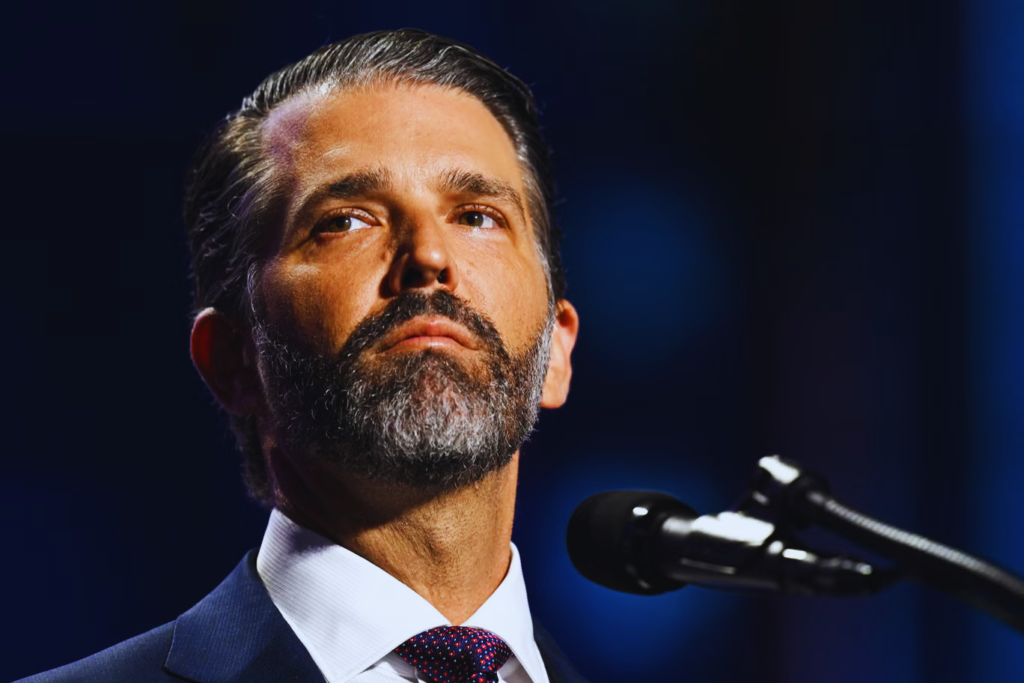
Donald Trump Jr., the eldest son of U.S. President Donald Trump, reportedly advised his father against launching a military conflict with Iran, according to a report published by The Atlantic on October 20, 2026. His alleged opposition has drawn attention to differing views within the president’s political circle regarding American involvement in the Middle East.
The report, which cites two individuals who have spoken directly with Trump Jr. about the conflict, states that he expressed reservations about the military campaign in private discussions. He reportedly believed the United States should avoid becoming involved in another prolonged overseas war. Despite his concerns, Trump Jr. has not publicly challenged his father’s decision or issued a direct statement opposing the operation.
His reported position is consistent with his previous skepticism toward foreign military interventions. During the 2024 presidential campaign, the Trump political movement frequently emphasized limiting overseas commitments and prioritizing American interests at home. The military campaign against Iran has since raised questions about how those principles align with the administration’s current approach.
As a prominent figure in the Make America Great Again (MAGA) movement, Trump Jr. has played an influential role in conservative political circles. His reported disagreement is therefore significant in understanding the range of opinions surrounding the administration’s foreign policy, although it remains unclear whether his private views have influenced any official decisions.
According to The Atlantic, Trump Jr. has chosen not to publicly criticize his father over the conflict. The report suggests that he prefers to keep his concerns private rather than risk an open disagreement within the family. A spokesperson for Trump Jr. did not comment on the reported conversations, and the White House did not directly address the claims.
The reported differences extend beyond the president’s family. Vice President JD Vance has also been associated with concerns about military intervention and the possibility of an extended conflict. The report further described reservations among senior administration officials regarding aspects of an earlier Israeli proposal involving regime change in Iran.
These accounts illustrate a wider debate within Republican ranks over the meaning of the “America First” agenda. Advocates of a more restrained foreign policy argue that military campaigns can consume substantial financial resources, expose American personnel to danger and divert attention from domestic priorities. Others maintain that military action may be necessary to address security threats and protect strategic interests.
Public opinion has also emerged as a challenge for the administration. A Pew Research Center survey cited in The Atlantic found that 65% of Americans disapproved of President Trump’s handling of the Iran operation, while 33% expressed approval. The report also noted a decline in Republican approval, from 69% in March to 63%.
The conflict’s economic effects have added another dimension to the debate. Disruptions in energy markets and increases in fuel prices have raised concerns about household expenses and the wider economic consequences of continued military operations. These issues could become increasingly important as political attention turns toward the U.S. midterm elections.
The White House has continued to defend its strategy. An administration official told The Atlantic that Iran had sustained extensive damage and indicated that the conflict would end soon. Nevertheless, questions remain about the duration of the operation and its longer-term implications for regional stability and American foreign policy.
Trump Jr.’s reported objections provide a glimpse into private discussions surrounding the administration’s military decisions. However, without a direct public confirmation from him, the precise nature and extent of his opposition remain based on the accounts cited in the report.
As the situation develops, the administration faces continuing scrutiny over its military objectives, economic consequences and commitment to limiting foreign conflicts. Whether the reported disagreements will affect future policy decisions remains uncertain.
You can watch the video below