
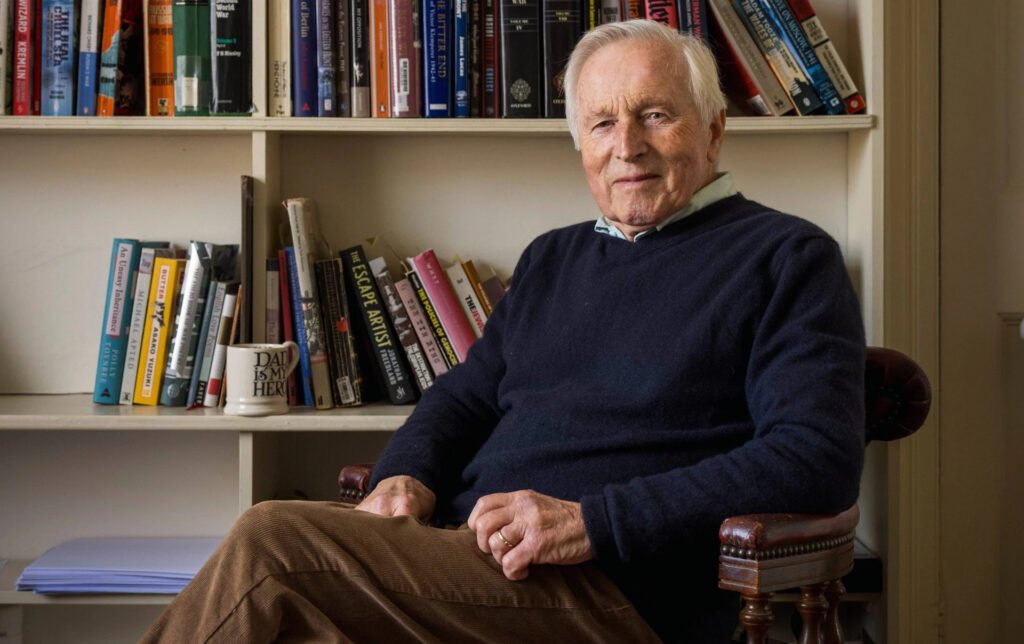
Veteran broadcaster Jonathan Dimbleby has challenged Earl Spencer’s claims concerning King Charles’s behaviour after Princess Diana’s death, dismissing suggestions that the monarch felt relieved by the tragedy. Dimbleby, who has known Charles for decades, believes Spencer’s description of the events does not reflect what he personally witnessed during that difficult period.
The controversy stems from Spencer’s memoir, Swan Song: Diana, My Sister, in which he revisits the circumstances surrounding his sister’s death in a Paris car crash on August 31, 1997. The book includes recollections of conversations between Spencer and Charles during the days leading up to Diana’s funeral, raising fresh questions about the royal family’s response to the loss.
Among the most disputed claims is Spencer’s account of a telephone conversation in which Charles allegedly told him, “We’ll forget her soon enough.” Spencer connects the remark to a disagreement about whether Princes William and Harry should walk behind their mother’s coffin during the funeral procession.
He also recalls another conversation in which he believed Charles sounded unusually cheerful. Spencer described the monarch’s alleged tone as “giddily elated” and compared it to the excitement of someone who had won the lottery. He interpreted the behaviour as suggesting that Charles was relieved by Diana’s death because he could move forward with his relationship with Camilla.
Dimbleby has rejected this interpretation, arguing that it conflicts with his understanding of Charles’s emotional condition at the time. In an interview with The Telegraph, he said the King had been deeply affected by Diana’s death and was dealing with an overwhelming personal and public tragedy. He described Spencer’s allegations as “grotesque and dishonest” and questioned the evidence supporting such a serious portrayal.
The broadcaster also expressed concern about the impact of bringing these accusations back into public discussion decades after the events. He suggested that the claims could unfairly influence public perceptions of the King, particularly when the conversations being described cannot easily be independently verified.
Dimbleby’s comments are significant because of his longstanding connection with Charles. He produced the 1994 television documentary Charles: The Private Man, the Public Role and later authored an authorised biography of the then Prince of Wales. Having observed the King over many years, Dimbleby believes his own experiences provide a different perspective on how Charles responded to Diana’s death.
However, he has maintained that his statements reflect his personal views rather than an attempt to defend the monarchy. He also raised questions about the responsibility of broadcasters when presenting serious allegations about individuals who are not given a direct opportunity to respond.
Buckingham Palace had previously addressed the controversy surrounding Spencer’s memoir with an unusual public statement. Although the institution generally avoids commenting on published books, it suggested that the pain associated with family bereavement can influence a person’s judgment and memories, even many years after a loss. The statement was widely understood as a response to the allegations.
Spencer has continued to stand by his recollections. During a September interview with the BBC, he maintained that the conversations described in his memoir reflected what he remembered experiencing. His account remains his personal interpretation of events surrounding his sister’s death.
Dimbleby explained that he had initially chosen not to comment because he did not want to generate additional publicity for the memoir. However, he eventually decided to speak publicly because he believed the allegations required a response.
The disagreement has once again brought attention to the lasting impact of Princess Diana’s death and the complicated relationships between the royal and Spencer families. Nearly three decades after the tragedy, different recollections of that period continue to attract public interest.
Although Dimbleby has firmly disputed Spencer’s version of events, the conflicting accounts remain based on personal memories. The latest exchange highlights how the circumstances surrounding Diana’s death continue to shape discussions about King Charles, the royal family and her enduring legacy.
You can watch the video below