
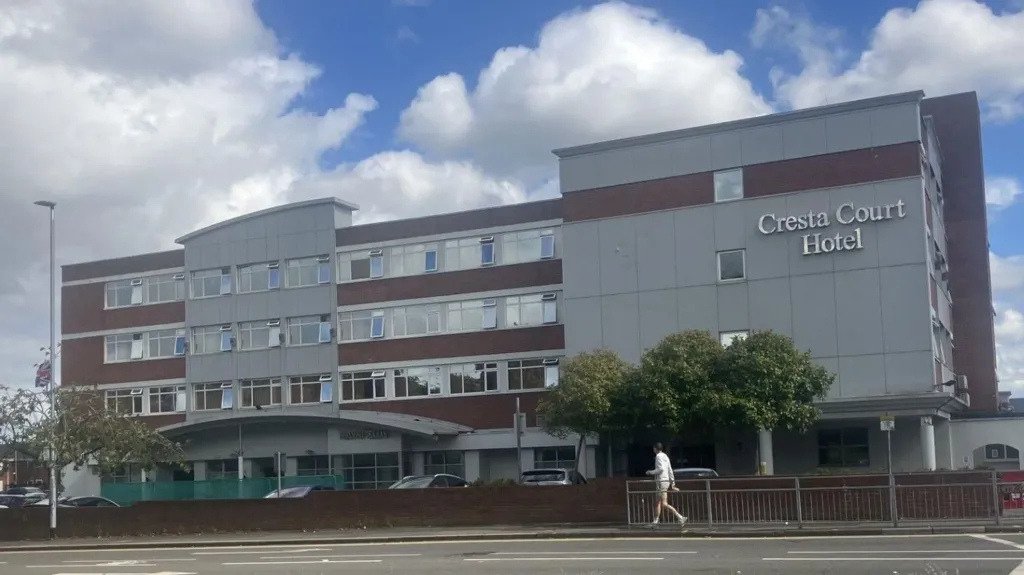
The Cresta Court Hotel in Altrincham, Greater Manchester, is preparing to end its role as temporary accommodation for asylum seekers, with the remaining residents expected to leave within the next three months. The announcement was confirmed by local Labour MP Conor Rand, bringing an anticipated end to a housing arrangement that has attracted considerable attention and controversy over the past two years.
The 148-bedroom establishment has accommodated male asylum seekers since November 2024, after being withdrawn from its regular hospitality operations. Its conversion into temporary accommodation prompted criticism from sections of the local community, with concerns raised about the sudden cancellation of existing bookings and the loss of a popular venue for weddings, conferences and private events.
The hotel’s use for asylum accommodation also became a source of public demonstrations, with opposing groups gathering outside the property to express different views about immigration policy and the government’s housing arrangements.
Rand has welcomed the decision to end the arrangement, maintaining that commercial hotels should not be relied upon as long-term solutions for accommodating people seeking asylum. He also highlighted the difficulties associated with the arrangement for local residents, taxpayers and those staying at the property.
The MP has linked the continued use of hotels to wider problems within the immigration system, particularly delays in processing asylum applications. Reducing the backlog and making decisions more efficiently could help limit the need for temporary accommodation, he suggested.
Local Conservative representatives have also supported the announcement, pointing to their continued efforts to campaign against the hotel’s use for asylum housing. Nevertheless, the relocation plans have raised questions about where the current residents will be transferred and what arrangements will be available to them.
The Home Office has confirmed that ending hotel-based asylum accommodation remains part of the government’s broader strategy. Residents leaving Cresta Court are expected to be transferred to alternative facilities, potentially including former military sites and other designated accommodation.
The government has faced increasing pressure to reduce the cost of providing temporary housing for asylum seekers. In 2023, around 400 hotels across the UK were being used for this purpose, with reported expenditure reaching approximately £9 million per day.
The number of hotels involved has since declined, with fewer than 160 reportedly remaining in operation by November 2026. The reduction reflects efforts to move people into alternative accommodation and ease the financial demands associated with commercial hotel contracts.
Cresta Court is not the only property in the North West to have ended its involvement in asylum accommodation. The Britannia Ashley Hotel in Hale also stopped serving that purpose in August, forming part of the wider reduction in hotel-based housing.
However, the government’s approach has continued to attract criticism. Some opposition representatives argue that closing individual hotels does not necessarily resolve the underlying accommodation shortage. Instead, moving residents into other facilities could shift the pressure from one location to another without addressing delays in asylum decisions.
The Home Office has maintained that it is working with local authorities to arrange suitable alternatives while reducing the effects of temporary accommodation on surrounding communities.
Meanwhile, attention is turning towards the future of the Cresta Court building. Before becoming asylum accommodation, the hotel operated as a venue for weddings, conferences, business gatherings and other hospitality activities. Its departure from the housing arrangement could create an opportunity for the property to return to its previous commercial purpose.
However, no confirmed reopening date or detailed plans for its future operations have been announced. The exact timetable for relocating the remaining residents has also yet to be established.
The planned closure marks another development in the government’s attempt to reduce its dependence on hotels for asylum accommodation. Whether the wider strategy will deliver lasting results will depend on the availability of suitable housing, improvements to application processing and the effective management of future accommodation arrangements.
You can watch the video below