
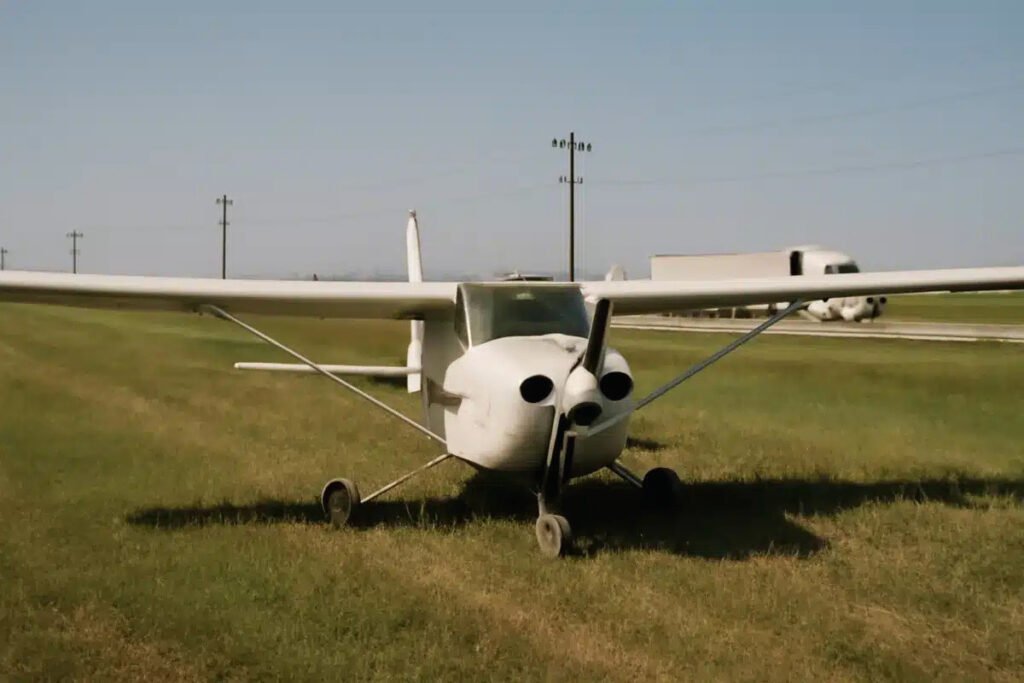
A small Cessna aircraft was forced into an unexpected emergency landing on a Florida highway after experiencing engine problems during flight, turning an ordinary journey into a dramatic situation that ended with the plane safely on the ground.
The pilot reportedly encountered mechanical trouble while airborne and was left with limited options as the aircraft could no longer continue normally. Unable to immediately reach a conventional airport runway, the pilot identified a nearby stretch of highway as the safest available location for an emergency landing.
Drivers on the road were met with an extraordinary sight as the aircraft descended toward the highway. The pilot carefully guided the Cessna between potential obstacles and moving vehicles before successfully bringing the plane down on the roadway.
Despite the obvious dangers involved in landing an aircraft on an active road, the emergency maneuver was completed without a major collision. The successful outcome prevented what could have become a far more serious incident.
Police officers and emergency personnel arrived at the location shortly after reports of the unusual landing. Authorities secured the area, managed traffic and began assessing both the aircraft and the circumstances surrounding the emergency.
Highways present numerous challenges for pilots attempting an emergency landing. Unlike a designated runway, roads contain moving traffic and can be surrounded by road signs, barriers, electrical wires and other obstacles. The limited space available can make such a maneuver particularly hazardous.
The pilot’s quick decision-making and ability to remain composed appear to have been essential to the safe landing. During an in-flight emergency, pilots must rapidly assess factors including the aircraft’s altitude, remaining speed, wind conditions and possible landing locations.
After touching down, the Cessna was brought to a stop, allowing first responders to approach and evaluate the situation. Immediate details about the number of occupants aboard the aircraft and whether anyone was injured were not available.
Investigators are expected to determine the exact cause of the engine issue that forced the aircraft from the sky. Officials may examine the plane’s engine and mechanical systems while also reviewing maintenance information and the sequence of events leading to the emergency.
Engine problems can vary significantly, ranging from reduced power to a complete loss of propulsion. In either situation, pilots must act quickly to maintain control of the aircraft and find a suitable location to land safely.
While unusual, emergency landings away from airports are a possibility for aircraft experiencing serious mechanical difficulties. Pilots receive training to identify alternative landing sites, which can include open fields or other clear areas when a runway cannot be reached in time.
Roadways may occasionally provide a long and relatively flat surface, but they remain highly dangerous because of traffic and infrastructure. Drivers may have little warning that an aircraft is approaching, while overhead structures and roadside obstacles can create additional hazards.
The incident caused disruption in the area as authorities restricted access to part of the highway while emergency crews responded. Motorists were directed away from the affected stretch of road as officials worked to secure the scene and arrange for the aircraft to be removed.
Aviation safety authorities are expected to continue examining the incident and gathering details about what happened before the landing. The investigation will likely focus on the mechanical problem, the aircraft’s condition and the decisions made during the emergency.
For witnesses, the sight of a Cessna descending onto a highway was both surprising and alarming. However, what began as a potentially dangerous situation ended with the aircraft safely on the ground and without a catastrophic collision.
The incident serves as a reminder of the split-second decisions pilots may be required to make when mechanical trouble develops in the air. In this case, the pilot’s response and careful handling of the aircraft appear to have played a crucial role in turning a potentially disastrous emergency into a successful landing.