
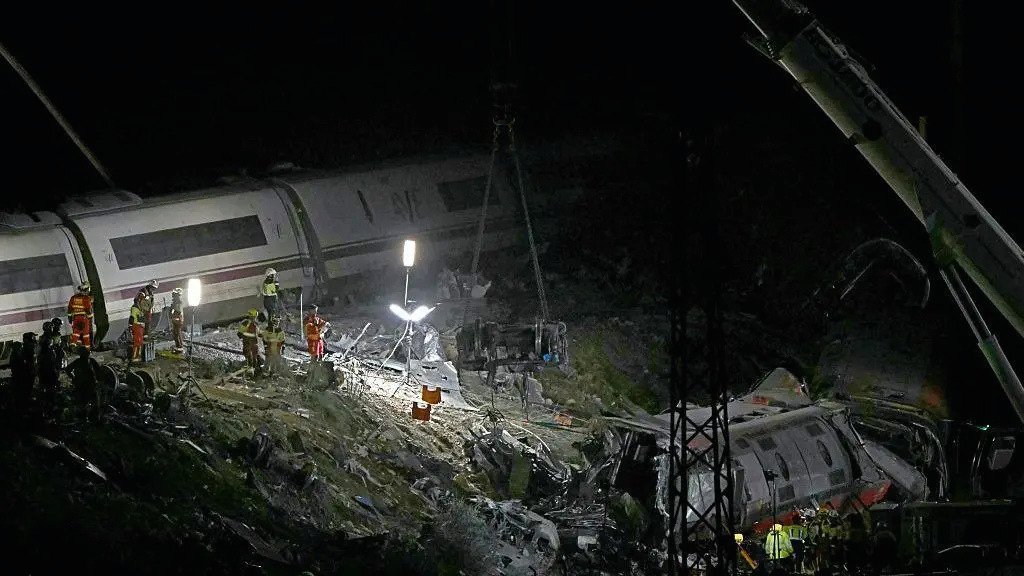
Spain is in mourning after a devastating high-speed train collision killed at least 68 people, leaving dozens injured and prompting a nationwide response from emergency services. Prime Minister Pedro Sánchez expressed his condolences to the victims and their families, saying the tragedy had plunged the entire country into grief.
The crash occurred near Urda, in the province of Toledo, south of Madrid, when a Renfe passenger train collided with the rear of a stationary Iryo train. The impact caused carriages to derail, creating a major rescue operation as emergency teams worked to reach passengers trapped inside damaged compartments.
Authorities reported that hundreds of people were travelling aboard the two trains. Initial figures indicated that the Renfe service was carrying approximately 397 passengers, while around 147 people were aboard the Iryo train. The scale of the collision placed considerable pressure on emergency responders, medical teams and nearby hospitals.
Rescue workers arrived at the scene to evacuate survivors, provide first aid and transport injured passengers for treatment. The injured were taken to medical facilities, with some reportedly suffering serious injuries. Officials warned that casualty figures and details about the victims could change as identification efforts and hospital assessments continued.
Prime Minister Sánchez announced three days of national mourning, beginning on October 29, as Spain paid tribute to those who lost their lives. The government’s declaration reflected the scale of the tragedy and the widespread impact on families and communities across the country. Sánchez also pledged that the circumstances surrounding the collision would be investigated thoroughly.
Transport officials have begun examining the events that led to the crash, including the condition of railway safety systems and decisions made by the rail network’s control centre. Transport Minister Óscar Puente said investigators were looking into a possible technical failure involving a safety system and the response to the situation. Early information suggested that decisions made at the control centre would form part of the inquiry, although the precise sequence of events had not yet been established.
Officials have cautioned against drawing firm conclusions before the investigation is complete. Investigators are expected to examine technical records, operational procedures and communications connected to the trains’ movements. Establishing whether equipment malfunction, human decisions or a combination of factors contributed to the collision will be central to determining responsibility and preventing similar incidents.
The disaster has also renewed public attention on railway safety in Spain. The country operates an extensive high-speed rail network that connects major cities and carries large numbers of passengers every day. The collision comes after another deadly railway accident earlier in the year, which killed 46 people near Adamuz. Authorities have said the causes of the two incidents appear to be unrelated, but the latest tragedy has intensified calls for careful scrutiny of rail safety measures.
Train services on affected routes were suspended while emergency operations and initial investigations continued. The disruption caused travel difficulties for passengers, while railway authorities worked to assess the condition of the tracks and determine when services could safely resume.
Across Spain, expressions of sympathy have poured in for the victims and their relatives. Political figures and members of the public have joined the national period of mourning, as families await information about loved ones and survivors begin the difficult process of recovery.
For now, the country’s attention remains focused on those affected by the collision and on establishing exactly what happened. Investigators will continue gathering evidence, while officials have promised to share further information as it becomes available. The tragedy has left Spain grieving and raised urgent questions about the safeguards needed to protect passengers on one of Europe’s major rail networks.
You can watch the video below