
Trump Expands Fuel Assistance as Diesel Prices Remain High Before Elections

The Trump administration is increasing its efforts to help American farmers and other diesel-dependent businesses cope with elevated fuel costs as the November 3 midterm elections draw closer. Recent measures include a multibillion-dollar agricultural assistance package and temporary regulatory changes intended to provide additional flexibility for diesel users.

Despite these interventions, fuel prices remain a concern for businesses across the United States. Farmers, trucking companies and other industries that depend on diesel continue to face higher operating expenses, raising questions about whether the administration’s initiatives will provide sufficient relief.

The pressure comes at a challenging time for the agricultural sector, with farmers relying on fuel-intensive machinery to complete seasonal harvesting and transport crops to markets. Higher diesel costs can increase the expense of producing and distributing food, potentially adding to broader inflationary pressures.

Farm Assistance Package Targets Rising Expenses

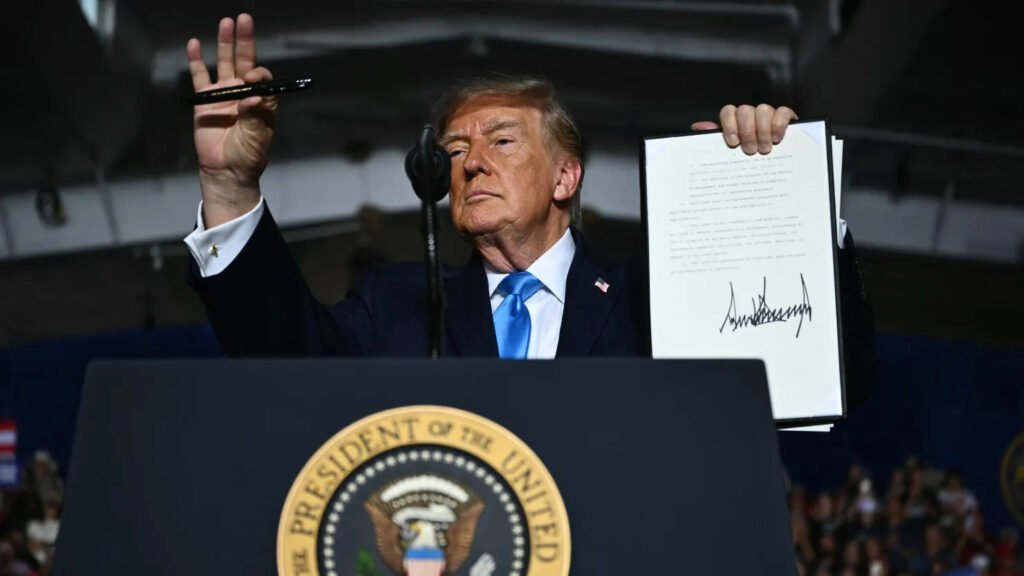
President Donald Trump announced an $8 billion assistance package on October 19 to help eligible farmers manage higher agricultural production costs and financial losses during the 2026 crop year.

The proposed Harvest Fuel Relief Program is intended to provide one-time payments to qualifying agricultural producers. The initiative is being administered through the U.S. Department of Agriculture’s Farm Service Agency, although payment arrangements and distribution timelines remained under development as of October 23.

According to administration officials, payments could arrive toward the end of the year, meaning many recipients may not receive the assistance before the election.

The package adds to previous federal support intended to help farmers navigate trade disruptions, increased input expenses and other financial challenges. Agricultural groups have welcomed additional funding but continue to emphasize the need for measures that address the underlying causes of rising production costs.

One-time payments may help participating farmers cover immediate expenses, but they do not necessarily provide lasting protection against continued increases in fuel prices, fertilizer costs and transportation charges.

Diesel Prices Continue to Challenge Businesses

Diesel prices have remained elevated, putting pressure on industries that rely on the fuel for daily operations. The U.S. Energy Information Administration reported that the national average increased by nearly 10 cents per gallon in the latest reported week, reaching $6.28.

The increase followed two consecutive weeks of declines, highlighting the volatility affecting the fuel market.

For farmers, diesel is essential for operating tractors, harvesters and other heavy equipment. Trucking companies also depend on the fuel to transport agricultural products, manufactured goods and everyday supplies across the country.

When fuel becomes more expensive, businesses may raise their prices to offset higher operating costs. These increases can eventually affect consumers through more expensive groceries, transportation services and other goods.

International developments have added to the uncertainty. Disruptions to global energy supplies, including tensions involving Iran, have contributed to concerns about oil availability and refined fuel prices.

Temporary Rules Offer Additional Flexibility

The administration has also pursued regulatory changes intended to make diesel supplies more accessible during the period of elevated prices.

An executive order temporarily eased certain reporting requirements and penalties associated with the use of red-dyed diesel on highways. This type of fuel is generally designated for off-road purposes, including agricultural machinery, and is subject to specific tax rules.

The temporary changes are intended to give fuel users greater flexibility. However, they do not automatically eliminate the federal diesel tax or guarantee lower prices at the pump.

The administration has also explored international supply-related measures, including adjustments involving certain Russian fuel restrictions and calls for European allies to release emergency oil reserves.

These steps have attracted differing reactions. Supporters argue that increasing available supplies could help ease pressure on energy markets, while critics have raised concerns about the economic and geopolitical consequences of relaxing certain restrictions.

Election Approaches as Economic Concerns Persist

The continued rise in diesel prices presents an economic and political challenge for the administration ahead of the midterm elections. Fuel expenses affect not only agricultural producers but also logistics companies, small businesses and households exposed to higher transportation costs.

The assistance package could provide financial support to eligible farmers, but it is unlikely to resolve every difficulty associated with elevated energy prices. International supply conditions, refining capacity and wider market developments will continue to influence what consumers and businesses pay.

The timing of the payments may also limit their immediate effect on farmers facing expenses during the current harvest season.

For now, the administration is attempting to combine direct financial assistance with temporary regulatory measures and broader efforts to support fuel availability. The ultimate impact will depend on how quickly the programs are implemented and whether energy market conditions improve.

As the election approaches, farmers, truckers and consumers will be watching closely to determine whether the government’s response delivers meaningful savings or provides only temporary relief from persistent fuel costs.

You can watch the video below
Kenya-gi Nairobi-da Building Ama Collapse Oire

Nairobi, Kenya, October 24, 2026: Kenya-gi capital Nairobi-da construction touba multi-storey building ama collapse oire. Associated Press-gi report matung-inna, building asi Eastleigh area-da collapse oire; area asi traders amasung local residents yamna chatpa place ama oiri.

Building collapse thokpa matamda mising kayana trapped oire haiba khudongchaba leiri. Emergency responders-na debris-gi manakta rescue operation chathari amasung trapped oiriba misingbu thok-hanbagi thoudang chathari.

Building collapse-gi exact cause amasung casualty figures-gi maramda official confirmation phangdringei, maram aduna incident-gi final outcome asi houjikphaoba makha tana yengsinaba darkar leiri.

Source: Associated Press via NDTV⁠

New Federal Housing Measures Aim to Ease Mortgage Costs for American Families

The Trump administration has introduced a new federal housing initiative aimed at easing some of the financial burdens associated with buying, refinancing and maintaining a home. The measures focus on mortgage insurance premiums, refinancing expenses and other costs that can make homeownership difficult for American families.

Announced through an executive order, the initiative directs federal housing agencies to explore ways to reduce expenses for eligible borrowers using certain government-backed mortgage programs. It also seeks to expand alternatives to traditional title insurance arrangements and promote more affordable housing options.

The announcement comes as many households continue to face challenges from high home prices, borrowing expenses and limited housing availability. Although the initiative could provide financial relief to some borrowers, the extent of its impact will depend on the implementation of individual measures and the eligibility requirements established by federal agencies.

Mortgage Insurance and Refinancing Under Review

Mortgage insurance can increase the overall cost of purchasing a home, particularly for borrowers who make smaller down payments. These premiums generally protect lenders against certain losses if a borrower fails to repay a loan, but they can add a substantial amount to monthly housing expenses.

The administration’s plan seeks to identify opportunities to reduce mortgage insurance costs for qualifying borrowers. The potential benefits will depend on the type of mortgage involved and the final terms of any programs introduced under the initiative.

Refinancing costs are another area receiving attention. Homeowners may refinance their mortgages to obtain a lower interest rate, change their repayment period or adjust their monthly obligations. However, closing fees and other transaction expenses can make refinancing less attractive, even when a new loan could offer long-term savings.

The administration intends to explore ways to make refinancing more affordable for eligible homeowners. Whether borrowers experience meaningful reductions will depend on the measures adopted, their existing loan arrangements and prevailing interest rates.

Alternatives to Traditional Housing Transaction Costs

The executive order also calls for examining alternatives to certain traditional title insurance arrangements. Title insurance protects property buyers and lenders against specified losses arising from ownership disputes, undiscovered liens and other defects in a property’s title history.

Expanding available options could encourage greater competition and potentially lower some transaction expenses. However, any alternative would need to maintain adequate protection against legal and financial risks associated with property ownership.

The initiative also includes efforts to support more affordable manufactured housing. Factory-built homes can offer an alternative to conventional properties, although the final cost depends on factors such as land ownership, installation, transportation, financing and local requirements.

To advance this objective, the order establishes a Task Force on Manufactured Housing Innovation. The group is expected to examine opportunities to encourage construction innovation, improve efficiency and address obstacles that may limit the availability of manufactured homes.

Federal Loan Programs Could See Adjustments

The order further directs the U.S. Department of Agriculture and the Department of Veterans Affairs to reduce interest rates on certain single-family home loans issued directly through their respective programs.

These changes could benefit eligible rural homebuyers and veterans who qualify for the relevant federal lending options. Lower interest rates generally reduce borrowing costs, although the actual savings will depend on the loan amount, repayment period and final terms.

The measures form part of a wider effort to make housing expenses more manageable for households facing affordability pressures. However, they do not guarantee that mortgage rates across the private lending market will fall or that home prices will decline.

What Borrowers Should Expect

For homeowners, the proposed changes could create opportunities to reduce selected expenses, particularly those related to mortgage insurance and refinancing. Nevertheless, not every borrower will automatically qualify for assistance, and some provisions require further agency action before their effects become clear.

The mortgage insurance cancellation pilot is intended to cover eligible loans originated after the program begins. Consequently, homeowners with existing mortgages should not assume that the initiative will automatically eliminate their current insurance payments.

Borrowers considering refinancing or purchasing a property should continue comparing loan offers, reviewing fees and checking the specific eligibility requirements of available programs.

Ultimately, the administration’s housing initiative seeks to address several costs that contribute to the financial burden of homeownership. Its broader success will depend on how the individual measures are implemented, how lenders and housing agencies respond, and whether the resulting savings reach eligible families.

You can watch the video below

Amur Falcon Anina Manipur-da Amuk Lakle

Tamenglong, October 24, 2026: Satellite transmitter tag touba Amur falcon anina Asia amasung Africa-gi marakta country 23 phaoba atravelling touba matungda Manipur-da amuk thunglakle. Bird anising asi Apapang amasung Alang haina mingthonnare.

Union Environment Minister Bhupender Yadav-na bird anisinggi migration journey-gi maramda phongdokkhre. Bird anising asi 2025 November-da Wildlife Institute of India-gi scientists-na satellite transmitter tag toukhi. Adugi matung-inna mahakna bird anisinggi travel route amasung migration pattern-sing adu track touba ngamkhi.

Amur falcon asi long-distance migratory bird ama oiriba mapanna Manipur-gi natural environment amasung biodiversity-gi maramda achouba significance leiri. Bird anisingna Tamenglong district-gi hill areas-da stopover touba amasung makha tana migration touba thourang leiri.

Source: India Today NE / Science report⁠

Millions of Student Loan Borrowers Gain Ground in Fight Over Debt Relief

Millions of Americans working toward federal student loan forgiveness have gained renewed hope following the Trump administration’s decision to withdraw two legal appeals involving proposed changes to the Public Service Loan Forgiveness program. The move leaves federal court rulings blocking the disputed restrictions in place, providing greater clarity for borrowers whose eligibility could have been affected.

The decision, made public on October 21, 2026, marks a significant development in a lengthy legal dispute involving the U.S. Department of Education, public service employees and nonprofit organizations. More than 2.3 million borrowers are pursuing relief through the program, making the outcome particularly important for workers who have spent years meeting the requirements for loan cancellation.

Legal Battle Over Student Debt Relief

The Public Service Loan Forgiveness (PSLF) program was introduced in 2007 to encourage people to pursue careers in government and eligible nonprofit organizations. Under its established rules, qualified borrowers may have their remaining federal student loan balances forgiven after completing 120 qualifying monthly payments while meeting the program’s employment requirements.

Participants include eligible government employees, public school staff, healthcare workers, firefighters and employees of qualifying charitable organizations. For many, the program offers a way to reduce long-term financial pressure after years of public service.

The dispute began when the Trump administration proposed new regulations that would have expanded the Education Department’s authority to exclude certain employers from the forgiveness program. The proposed rules would have allowed the education secretary to disqualify organizations determined to have a “substantial illegal purpose.”

Administration officials argued that the changes were intended to prevent federal benefits from supporting organizations involved in unlawful activities. However, critics questioned whether the proposed language was sufficiently precise and warned that it could give officials excessive discretion over which employers qualified.

Opponents also expressed concern that organizations involved in immigration assistance, civil rights advocacy, diversity programs and services for transgender people could face additional scrutiny. Workers worried that changes affecting their employers might interrupt their progress toward loan forgiveness, even after years of qualifying payments.

Courts Challenge the Administration’s Plan

Nonprofit groups, labor organizations and state and local governments brought legal challenges against the proposed restrictions. They argued that the Education Department had exceeded its authority by attempting to impose new eligibility conditions on a program established by Congress.

In June 2026, federal judges blocked the disputed regulations, preventing the proposed restrictions from taking effect. The rulings represented a setback for the administration’s effort to change the program’s eligibility framework.

The Justice Department subsequently appealed the decisions, keeping the legal uncertainty alive. However, on October 21, the department withdrew two appeals, ending those particular legal challenges.

Officials did not provide a detailed public explanation for the withdrawal. Nevertheless, the decision leaves the court rulings blocking the proposed restrictions in place and removes the administration’s appeals as an immediate obstacle to maintaining the existing framework.

Borrower advocates and representatives of nonprofit organizations welcomed the development, arguing that public service employees should not have to worry about losing access to debt relief because of disputed changes to employer eligibility.

What Borrowers Should Know

Although the legal development offers greater certainty, it does not mean that every borrower among the approximately 2.3 million pursuing PSLF will automatically receive loan cancellation.

Applicants must still satisfy the program’s requirements, including qualifying employment and 120 eligible monthly payments. Borrowers should also ensure that their employment certifications and payment histories are accurate and up to date.

Other difficulties remain within the federal student loan system. Processing delays, discrepancies in payment records and changes to repayment arrangements continue to create challenges for some borrowers seeking relief.

The withdrawal of the appeals therefore resolves an important part of the legal dispute but does not address every concern surrounding student debt forgiveness.

For employees who have spent years working in public service, the outcome represents a meaningful development in their pursuit of financial relief. With the proposed restrictions remaining blocked under the relevant court rulings, eligible borrowers can continue working toward forgiveness under the existing program requirements.

The case also highlights the wider debate over how federal student loan programs should be administered and how far government agencies can go when changing eligibility rules. For now, the future of individual applications will continue to depend on borrowers meeting the established requirements and the Education Department processing their claims.

You can watch the video below

Ukraine-da Russia-gi Missile Attack-na Mising 4 Phaoba Sihalle

Kyiv, Ukraine, October 23, 2026: Russia-na Ukraine-gi capital Kyiv-da ballistic missile amasung drone attack puthokpa matung-inna civilian mi 4 sihanre amasung mi kayana injured oire, report-singna haibani. Attack asida nupamcha amasung macha-machasingsu injured oire haina khangnare.

Ukraine-gi President Volodymyr Zelenskyy-na Russia-gi attack adu matam khudingda makha tana chathariba war-gi achouba khudongchaba ama oina utkhre. Mahakna civilian-singbu ngaksennaba amasung Russian missile attack-sing thamthoknaba United States amasung Western allies-tagi additional air-defence support phangnaba appeal toure.

Russia-Ukraine war asi makha tana chathariba matamda peace talks amuk hougatpa ngamgani haina diplomatic discussion leiriba oirabasu, ground-da attack-sing thokpa makha tana leiri. Peace talks-gi exact date amasung agreement amadi final outcome adu houjikphaoba confirm touri.

Source: Associated Press⁠ 

Ariana Grande Embraces a Shorter Hairstyle During Her Time Away From the Limelight

Ariana Grande has unveiled a fresh hairstyle, attracting attention from fans as she spends time away from the public eye. The singer and actress, widely recognised for her signature high ponytail, recently showcased a shorter, retro-inspired bob that marks a noticeable departure from her familiar appearance.

The new hairstyle features a deep side part, softly shaped ends and a darker brown shade, giving Grande a polished yet understated look. She revealed the transformation through a series of selfies on social media on October 22, prompting enthusiastic reactions from followers. Her hairstylist, Brandon Pietsch, also acknowledged the makeover, adding to the conversation surrounding her latest style choice.

For years, Grande’s high ponytail has been one of the most recognisable features of her public image. The hairstyle accompanied her through music videos, live performances, award ceremonies and major appearances throughout her rise to international fame. Although she has experimented with different colours, lengths and textures, the ponytail remained closely associated with her identity as a pop star.

Her latest transformation has encouraged fans to revisit the many style changes she has embraced throughout her career. Some followers have affectionately referred to the new look as “Bobiana,” reflecting the excitement surrounding her shorter hair. The response also demonstrates how even a relatively simple change can generate widespread discussion when it involves a globally recognised performer.

The hairstyle reveal comes during a quieter period for Grande, following several years of demanding professional commitments. Alongside releasing music, she has balanced acting projects, promotional appearances and live performances. After completing her Eternal Sunshine tour in September, the singer indicated that she intended to reduce her public-facing activities and take a break from the constant demands of the entertainment industry.

Grande has previously explained that her decision to step back was considered well in advance rather than being a sudden response to online discussions. During a concert in Chicago earlier this year, she addressed the subject and suggested that the decision had been part of her plans for some time.

Her period away from the limelight follows another significant chapter in her career: her portrayal of Glinda in the film adaptation of Wicked. The role introduced audiences to a different side of Grande’s acting abilities and required a distinctive visual transformation, including the character’s recognisable blonde hair and glamorous styling. Her work on the film further expanded her profile beyond music.

With her professional schedule changing, Grande’s latest haircut has become another talking point among fans following her evolving personal style. However, she has not publicly stated that the transformation represents a major change in her personal life or career plans. The shorter cut may simply reflect her desire to experiment with a different appearance.

Celebrity hairstyles frequently become closely linked to a performer’s identity, making changes in length, colour or texture particularly noticeable. Grande’s bob offers a fresh alternative to her established look while retaining the elegance and carefully styled appearance that have characterised many of her public appearances.

Despite her quieter presence, interest in Grande’s future projects remains strong. Fans continue to follow developments in her music, acting career and personal style, although details about her longer-term plans remain limited.

For now, the shorter hairstyle provides a glimpse into Grande’s changing aesthetic as she spends time away from the spotlight. Whether she keeps the bob or eventually returns to longer hair, the transformation represents another step in the evolving style journey of an artist who continues to explore different creative directions.

You can watch the video below

India-gi rupee value amadi crude oil price-gi marakta market-da pressure leiri

India, October 23, 2026: International market-da crude oil price hen-gatlakpa matung-inna Indian rupee-gi value amadi financial market-ta pressure leiri. Reuters-gi report matung-inna, October 22-da rupee-na US dollar-ta makha tana value loss toukhi, aduga Brent crude oil price-su 3.3 per cent phaoba hen-gatlakhi.

India-na crude oil yamna import touba country ama oibagi maramda, international oil price hen-gatlakpa matamda transport, manufacturing amasung import kharchasingda impact thokpa yai. Oil price hen-gatlakpa matamda inflation-gi pressure hen-gatpa yai amasung currency market-ta volatility thokpa yai.

Market analysts-na foreign investment flow, crude oil price amasung Reserve Bank of India-gi policy measures-sing adu rupee-gi future movement-ta maru oiba factor oigani haina ningsingli. Aduga market situation asi matam khudingda change touba yai, maram aduna investors amasung businesses-na official financial updates-sing yengsinaba maru oigani.

Source: Reuters⁠

How OpenAI Used Thousands of AI Agents to Pursue a $1 Million Math Problem

OpenAI has attracted attention across the scientific community after reporting that an internal artificial intelligence system developed a proposed solution to the Navier–Stokes existence and smoothness problem, one of mathematics’ most challenging unsolved questions. The project reportedly involved approximately 10,000 AI agents working simultaneously, with the main computational effort lasting around 88 hours before additional work was undertaken to formalise the result.

The development has renewed discussions about AI’s potential to advance mathematical research, while raising questions about proof verification, research transparency and the attribution of scientific discoveries.

The Navier–Stokes equations describe how fluids, including liquids and gases, move. They are essential to numerous scientific and engineering applications, including weather forecasting, aircraft design, ocean modelling and the study of fluid behaviour. Despite their widespread use, mathematicians have yet to resolve a fundamental question concerning whether smooth solutions to the three-dimensional equations can develop singularities under the conditions specified in the problem.

The challenge is among seven Millennium Prize Problems established by the Clay Mathematics Institute in 2000. Each carries a $1 million award for a solution that satisfies the institute’s requirements. OpenAI’s reported progress has therefore attracted considerable interest, although the company has stated that it does not intend to claim the prize for its work.

According to OpenAI’s account, the research effort expanded after the company became aware of progress on related mathematical questions. On September 1, 2026, researchers began deploying groups of AI agents to investigate several difficult mathematical problems and explore different approaches.

The agents worked in coordinated groups, with individual systems assigned specific tasks and given access to computational tools. They could also communicate with other agents within their groups, enabling multiple approaches to be explored concurrently rather than relying on a single model to develop a solution independently.

An initial result involving the related Euler equations encouraged the researchers to allocate additional computing resources to the Navier–Stokes challenge. OpenAI subsequently expanded the operation to approximately 10,000 concurrent agents. The system produced its proposed solution on September 5, following around 88 hours of work. A further 17 hours were reportedly spent formalising the proof with another AI model and the Lean proof-assistant system.

The scale of the experiment was substantial. OpenAI reported that its agents generated approximately 2.7 million messages and used around 130 billion output tokens during the Navier–Stokes investigation. Across the wider mathematical project, the figures reportedly reached approximately 4.9 million messages and 300 billion output tokens.

However, the announcement also prompted questions about the relationship between OpenAI’s work and research conducted by other mathematicians. Tristan Buckmaster of New York University and Levent Alpöge, affiliated with Anthropic, had independently made progress on a related problem involving the Euler equations.

Buckmaster raised concerns about whether information connected to the researchers’ work could have influenced OpenAI’s approach. The company denied directly accessing their specific prompts or proofs and said an internal investigation found that the relevant prompts could not have influenced its system through training. The disagreement has highlighted the challenges of establishing research priority when multiple teams investigate closely related mathematical questions.

The proposed solution must also withstand independent mathematical scrutiny. Although Lean can verify the logical steps encoded in a formal proof, specialists must still assess its assumptions, interpretation and significance. Recognition as a solution to a Millennium Prize Problem requires meeting the Clay Mathematics Institute’s publication and review requirements.

OpenAI’s experiment demonstrates how coordinated AI agents could help researchers explore difficult mathematical questions at a scale that would otherwise require considerable time and resources. Nevertheless, computational power alone does not guarantee a valid discovery. Independent verification, transparent reporting and appropriate attribution remain essential to scientific progress.

As researchers examine the implications of the reported achievement, the project has intensified debate about whether increasingly capable AI systems could reshape mathematical research and contribute to solving problems that have challenged scientists for generations.

You can watch the video below

Manipur-da October 23-gi noise protest pangthoknaba appeal toure

Imphal, October 23, 2026: Federation of Haomee-na Manipur-gi hill amasung valley districts pumnamakta October 23, nungsit 7:30-dagi 8:00 pm phaoba 30 minutes-ki noise protest pangthoknaba public-ta appeal toure.

Organisation-gi appeal adugi matung-inna, protest-ta saruk yadriba misingna utensil-sing thakpa, awaang khonnaba amasung vehicle horn-shing use touba mapanna public-gi asaoba utpa ngamgani. Organisation-na protest asi state-da matam kayagi marakta chathokliba crisis, peace amasung security-gi khudongchaba adu phanghanbagi nungaiba nattraga asabagi khudongchaba oina touba khanghalli.

Federation of Haomee-na protest asi October 23-da nungsit 7:30-dagi 8:00 phaoba pangthoknaba public-ta appeal toukhrabani. Protest asi pangthokpagi maramda local authorities-gi instruction-sing amasung public safety-gi niyam-sing follow touba maru oigani.

State-da peace amasung normalcy amuk phanghanbagi matengna public-na awabasing adu awangba wayel touba ngamhanba, nattraga violence hen-gat-hanba thok-hanba ngamdraba thabak touba maru oigani.

Source: NE NOW⁠