Starbucks is preparing to celebrate the holiday season with an exciting collection of seasonal beverages, festive food selections and specially designed merchandise. Arriving on November 5, the company’s 2026 holiday menu combines several customer-favorite products with newly introduced flavors aimed at bringing a festive touch to its coffee shops.
The annual seasonal launch has become an important tradition for Starbucks customers, many of whom look forward to the return of familiar holiday beverages. This year’s selection offers a mixture of traditional coffee flavors, dessert-inspired creations and refreshing fruit-based drinks.
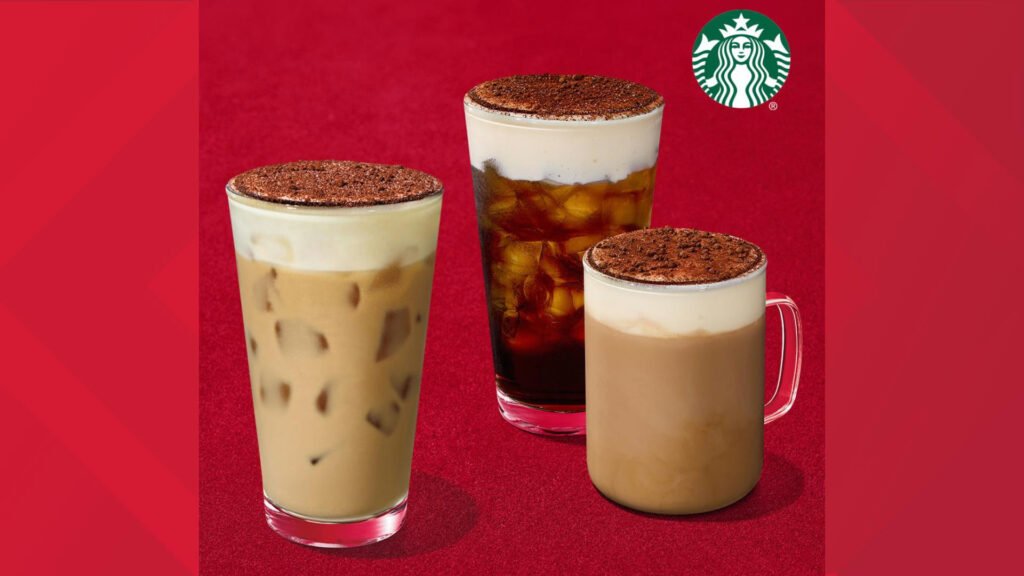
One of the highlights of the new collection is the Tiramisu Velvet Latte, which takes inspiration from the popular Italian dessert. The beverage combines espresso, milk and vanilla syrup, topped with mascarpone-inspired cold foam and a cocoa finish. It is available in both hot and iced versions.
Another addition is the Tiramisu Velvet Cold Brew, offering a chilled interpretation of the dessert-inspired flavor. It features Starbucks cold brew coffee, vanilla syrup and a creamy topping finished with cocoa powder.
For customers who prefer fruit-based refreshments, the Apple Pomegranate Refresher introduces a different flavor combination. The beverage brings together apple and pomegranate-inspired flavors with popping pearls, offering a lighter alternative to traditional coffee drinks.
The Snowy Apple Drink provides another option, combining the seasonal apple beverage with coconut milk for a creamier texture. Both drinks expand the holiday selection beyond espresso and cold brew offerings.
Several familiar beverages are also making their return this year. The seasonal collection includes the Peppermint Mocha, Caramel Brulée Latte, Sugar Cookie Latte and Gingerbread Chai. These drinks have become recognizable features of Starbucks’ holiday celebrations, attracting customers who enjoy their distinctive seasonal flavors.
Food offerings are also receiving attention as part of the latest launch. Starbucks is introducing the Bearista Cake Pop, a dessert inspired by its popular Bearista glass cup. Returning bakery favorites include the Snowman Cookie, Cranberry Bliss Bar and Sugar Plum Cheese Danish.
The company is also adding more substantial food choices to its seasonal selection. One notable introduction is the Braised Short Rib Grilled Cheese, prepared with slow-cooked beef, caramelized onion jam, Dijon mustard and melted cheese on sourdough bread.
Another option is the updated Turkey & Stuffing Sandwich, featuring turkey, traditional stuffing, gravy and cranberry flavors served on cranberry baguette bread.
Beyond food and beverages, Starbucks is continuing its holiday merchandise tradition with a range of seasonal drinkware, tumblers and collectible accessories. The festive collection features holiday-inspired designs intended to appeal to customers and collectors.
The original Bearista Glass Cold Cup is also scheduled to return at selected locations on December 1, with availability limited to remaining supplies.
Meanwhile, Starbucks is bringing back its popular Red Cup Day tradition on November 17. Customers purchasing qualifying handcrafted holiday beverages at participating stores will receive a limited-edition reusable holiday cup while supplies last.
The 2026 holiday collection reflects Starbucks’ strategy of balancing established seasonal favorites with new products that encourage customers to explore different flavors. By combining familiar beverages, innovative drinks, festive bakery items and collectible merchandise, the company is once again placing its seasonal menu at the center of its holiday marketing efforts.
With the new selection arriving on November 5, customers can look forward to another festive season filled with returning classics and newly introduced treats. Availability and product selections may differ between participating Starbucks locations.
Prince William and Prince Harry have once again demonstrated their shared dedication to preserving Princess Diana’s humanitarian legacy. The royal brothers have sent individual letters to young people recognized by The Diana Award, an organization established in memory of their late mother.
Although the brothers remain distant in their personal relationship, their involvement in the charity highlights a common commitment to encouraging young people to make a difference in society. Their separate messages celebrated the achievements of individuals whose work has brought positive change to communities around the world.
The 2026 Diana Award recognized 198 young people representing 44 countries. The recipients were acknowledged for their leadership, community involvement and efforts to address important social challenges. India had the largest number of recipients, with 49 young people receiving recognition. Nigeria followed with 25, while the United States accounted for 23.
The annual award continues to promote the belief that young people can play an important role in shaping a better future. Through their initiatives, the recipients have demonstrated how determination, creativity and compassion can contribute to meaningful improvements in society.
Established in honor of Diana, Princess of Wales, the organization seeks to carry forward the values she promoted during her lifetime. Her humanitarian work focused on supporting vulnerable individuals, raising awareness of social issues and encouraging people to treat others with dignity and understanding.
The charity continues to reflect those principles by celebrating young leaders who are committed to helping others. Its international recognition program provides a platform for individuals whose work might otherwise receive limited attention.
William and Harry’s latest messages reflect their continued connection to the organization. Both brothers have supported the Diana Award over the years, although their participation has generally taken place separately.
Their involvement comes amid continued public interest in their relationship. The siblings have experienced a well-documented rift, with their interactions becoming increasingly limited in recent years. Despite those differences, their support for the charity remains a shared aspect of their public commitments.
The brothers last appeared together at a major public engagement in July 2021, when they unveiled a statue of Princess Diana in the Sunken Garden at Kensington Palace. The occasion marked the 60th anniversary of their mother’s birth and brought them together to celebrate her enduring influence.
Since then, their public paths have largely diverged. William has continued his royal duties in Britain, while Harry has established a separate life in the United States with his family.
Their individual letters to the latest award recipients do not necessarily indicate a change in their personal relationship. Instead, the messages demonstrate that their mother’s legacy remains a cause they continue to support independently.
The 2026 recipients were recognized for their work across a wide range of areas, including education, health, equality and environmental protection. Their initiatives highlight the growing role young people play in responding to challenges within their communities and beyond.
The Diana Award’s leadership has emphasized the importance of recognizing young people as active contributors to society. The organization believes that acknowledging their efforts can encourage further participation and inspire others to become involved in community service.
Princess Diana’s influence continues to reach beyond her own generation. Her compassion and commitment to humanitarian causes remain central to the charity’s mission, providing inspiration for individuals working to improve the lives of others.
For William and Harry, the organization represents a lasting connection to their mother. Their separate messages offer a reminder that, despite personal differences, the brothers continue to share an important commitment to the principles Diana championed.
The latest ceremony ultimately celebrated the achievements of young changemakers whose dedication reflects the humanitarian spirit that Princess Diana sought to encourage throughout her life.
The growing popularity of energy drinks and stimulant-based supplements has sparked renewed health concerns after researchers identified a possible connection between these products and serious cardiovascular complications. A recent investigation has highlighted reports of cardiac arrest, heart attacks and irregular heart rhythms among consumers, particularly younger individuals.
The study was conducted by researchers at the University of Virginia School of Medicine, who examined adverse health reports submitted to the US Food and Drug Administration (FDA) between 2017 and 2025. Their findings revealed a noticeable difference in the frequency of reported cardiovascular complications involving products containing caffeine and other stimulants.
Researchers reviewed 28,345 reports of suspected adverse events. Of these, 854 were associated with energy drinks and dietary supplements containing caffeine or additional stimulant ingredients. The remaining 27,491 reports involved products without these substances.
Cardiac arrest was among the most concerning findings. It appeared approximately 11 times more frequently in reports involving stimulant-containing products than in those associated with products without such ingredients.
The researchers also identified higher reporting rates for other heart-related conditions. Heart attacks appeared around 4.5 times more frequently, while ventricular arrhythmias and heart palpitations were reported approximately four times more often. Additional symptoms included unusually rapid heartbeats, chest discomfort and episodes of fainting.
Young people accounted for a considerable share of the cardiovascular reports. Around 45% of the cases involving stimulant-containing products concerned individuals aged between 18 and 34. The finding has attracted attention because serious cardiac emergencies are generally less common among younger populations.
Energy drinks are widely consumed by students, working professionals and individuals involved in physical training. They are commonly advertised as products that improve alertness, concentration and stamina. However, their ingredients and stimulant concentrations can differ significantly depending on the manufacturer and product formulation.
The investigation considered several substances commonly found in these beverages and supplements. Apart from caffeine, researchers examined ingredients such as guarana, yerba mate, green tea extracts, synephrine and yohimbine. Some of these compounds are also included in pre-workout formulas and supplements marketed for weight management.
Medical professionals have long raised concerns about excessive stimulant consumption because it can affect blood pressure, heart rate and the electrical signals that regulate the heartbeat. In certain circumstances, these effects may contribute to abnormal heart rhythms, particularly among people with existing cardiovascular conditions or increased sensitivity to stimulants.
The American Heart Association generally considers daily caffeine consumption of up to 400 milligrams acceptable for most healthy adults. However, individual tolerance varies, and consuming several caffeinated products throughout the day can lead to excessive intake. Combining energy drinks with other stimulant-based supplements may increase exposure further.
Despite the findings, researchers have clarified that the study does not prove that energy drinks directly cause cardiac arrest or other serious heart conditions. The investigation relied on voluntarily submitted safety reports, meaning it cannot establish the actual risk among all consumers. Other factors, including existing medical conditions, medications and lifestyle habits, may also have contributed to the reported complications.
The research findings are expected to be presented during the American Heart Association’s Scientific Sessions 2026 in Chicago, scheduled for November 6 to 9. Further investigation and independent scientific review will be important in understanding the possible relationship between stimulant consumption and cardiovascular health.
Researchers are encouraging healthcare professionals to ask patients about their energy drink and supplement habits, especially when younger individuals experience symptoms such as chest pain, dizziness, fainting or unusual heart palpitations.
The findings have also brought attention to the importance of consumer awareness and clearer understanding of product ingredients. Although additional evidence is needed, researchers believe that monitoring stimulant intake and recognizing potential warning signs should remain important public health priorities.
With energy drinks continuing to attract younger consumers, the study adds to ongoing discussions about their safety and the possible consequences of excessive caffeine consumption.
Ruling asi foreign country-ta marriage touba amasung divorce process pangthokpa Indian citizen-singgidamak important oigani. Divorce decree amana India-da legal effect phangba ngamgani nattraga ngamdrabani haibadu case-gi circumstances amasung applicable law adugi mathakta depend tougani.New Delhi, India | 4 November 2026
Growing concerns about a possible downturn in financial markets have emerged after Bitcoin’s value relative to gold weakened toward the important threshold of 20 ounces per coin. The movement has attracted attention from investors and market analysts, who are examining whether the cryptocurrency’s declining performance could signal a broader shift away from riskier investments following the 2026 US midterm elections.
Mike McGlone, senior commodity strategist at Bloomberg Intelligence, has raised concerns about Bitcoin’s outlook compared with the precious metal. In an analysis published on October 31, he indicated that the Bitcoin-to-gold ratio was hovering around 20. He also suggested that the indicator had a greater possibility of falling toward 15 than recovering to 25.
The ratio is commonly used to measure Bitcoin’s relative strength against gold. It represents the amount of gold, measured in ounces, equivalent to the market value of one Bitcoin. When the figure rises, Bitcoin is outperforming the precious metal. A decline, however, indicates that gold is gaining an advantage over the cryptocurrency.
Although Bitcoin is frequently referred to as digital gold because of its limited supply and decentralized nature, both assets respond differently to market conditions. Gold has traditionally been viewed as a defensive investment during periods of uncertainty, while Bitcoin is known for experiencing substantial price movements when investor confidence changes.
McGlone’s warning is not limited to cryptocurrency investors. His analysis suggests that continued weakness in Bitcoin relative to gold could have implications for other financial assets, particularly technology stocks and growth-focused investments.
He has highlighted the historical connection between the Bitcoin-to-gold ratio and the Nasdaq-100 index. According to his assessment, a prolonged decline in the ratio could indicate that investors are becoming less comfortable with market risks. If that trend continues, technology shares and other speculative investments could face additional selling pressure.
Another issue raised in the analysis is Bitcoin’s comparatively high volatility. McGlone estimated that the cryptocurrency’s 260-day volatility averaged around three times the level recorded for gold over the previous five years. This highlights the difference between the two assets, especially during periods when financial markets experience uncertainty.
The strategist also examined Bitcoin’s performance against long-term US government bonds. His comparison involving BlackRock’s iShares Bitcoin Trust (IBIT) and the iShares 20+ Year Treasury Bond ETF (TLT) showed a relative performance reading of 81 on October 30, against a baseline of 100 established at the end of 2024. The figures indicated that long-term Treasury bonds had outperformed the Bitcoin investment fund over the period examined.
The latest warning comes as investors assess the potential financial implications of the November 3 US midterm elections. Political developments can influence expectations surrounding government spending, economic policies, financial regulations and overall market confidence.
However, McGlone does not believe that the conclusion of the election process automatically guarantees a recovery in asset prices. He has cautioned that another substantial decline in US equities could create further pressure across several investment categories, including cryptocurrencies and precious metals.
Gold, silver, platinum, palladium and other commodities have also featured in his broader market assessment. His concerns point toward the possibility of changing investment patterns if investors increasingly prioritize caution over higher-risk opportunities.
Nevertheless, the outlook remains divided among financial strategists. Some analysts believe that the recent weakness in equities could be nearing its end. Morgan Stanley strategists have suggested that the correction in US stocks may be approaching its final stages, offering a different perspective on the market’s potential direction.
For now, the Bitcoin-to-gold ratio remains an important indicator for investors attempting to understand changing market sentiment. A further decline could strengthen concerns about reduced demand for speculative assets, although the measurement alone cannot establish that a wider financial correction will occur.
Investors are likely to continue monitoring Bitcoin, gold, government bonds and major stock indexes as markets respond to political and economic developments. Whether the cryptocurrency manages to regain its relative strength or continues falling against gold could provide further insight into how investors are positioning themselves for the months ahead.
President Donald Trump has expressed growing dissatisfaction with Fox News following a series of significant Democratic victories in the 2026 US midterm elections. The developments have drawn attention to tensions between the president and a television network that has traditionally attracted a large conservative audience.
As election results emerged on November 3, Trump used his Truth Social platform to criticize Fox News over its political reporting, election analysis and coverage of Democratic candidates. His remarks reflected his frustration with the network’s editorial approach during an important period for the Republican Party.
Among those singled out by the president was Jessica Tarlov, a Democratic strategist and co-host of Fox News’ programme The Five. Trump criticized her commentary and expressed his unwillingness to continue watching the network while she was appearing on screen. He suggested that viewers could change channels rather than listen to her discussions.
The president also questioned the accuracy and credibility of Fox News’ polling. He accused the network of presenting unfavourable questions about his administration and giving excessive attention to Democratic political figures. Trump argued that the channel was not providing the level of support that Republican candidates needed during the election period.
Fox News’ audience figures also became part of the disagreement. Trump claimed that the network had lost a considerable portion of its viewers because of its coverage of Democrats. Media reports cited Nielsen figures showing that Fox News’ total-day audience had declined by approximately 27% in October compared with the same period a year earlier. Despite the reported decrease, the network continued to lead other cable news channels in overall viewership.
His criticism extended beyond television coverage, with Trump questioning political donations associated with Fox Corporation and highlighting contributions involving Democratic politicians and organizations. The comments further intensified the public disagreement between the president and the media company.
While Trump focused on the network, Democrats were celebrating substantial electoral achievements across several states. Their performance represented a setback for Republicans and potentially altered the balance of political power in Washington.
One of the most significant developments was the Democratic Party’s success in regaining control of the US Senate, following victories in several competitive contests. The party also recorded important gains in statewide elections, including races that had previously been dominated by Republican candidates.
In Texas, Democrat James Talarico defeated Republican Ken Paxton, while Gina Hinojosa secured victory over incumbent Governor Greg Abbott. Georgia also witnessed a notable political change as Keisha Lance Bottoms won the gubernatorial contest. Democrats additionally celebrated victories in South Carolina and Ohio.
The outcome in the House of Representatives remained a major focus as vote counting continued and the final distribution of seats was being determined.
A combination of domestic and international concerns contributed to the election debate. Rising living expenses, economic uncertainty, dissatisfaction with government decisions and concerns surrounding the administration’s foreign policy were among the issues discussed during the campaign.
The Democratic victories could create additional difficulties for Trump’s administration. With a stronger position in Congress, Democrats may have greater opportunities to influence legislation, investigate government decisions and challenge policies supported by the Republican leadership.
Trump’s dispute with Fox News has also raised questions about the relationship between conservative media organizations and Republican political figures. Although the network has frequently provided coverage of Trump and other Republican leaders, disagreements over polling, commentary and editorial decisions have periodically created friction.
The latest confrontation demonstrates that political disagreements can extend beyond opposing parties, particularly when media coverage becomes a subject of public criticism.
As the new election results reshape the political environment, Democrats are preparing to make use of their strengthened congressional position, while Republicans face the task of examining their performance and rebuilding support.
The combination of Democratic electoral success and Trump’s criticism of Fox News has therefore become one of the prominent developments following the 2026 midterm elections, with potential consequences for both the country’s political direction and the relationship between conservative media and the Republican Party.