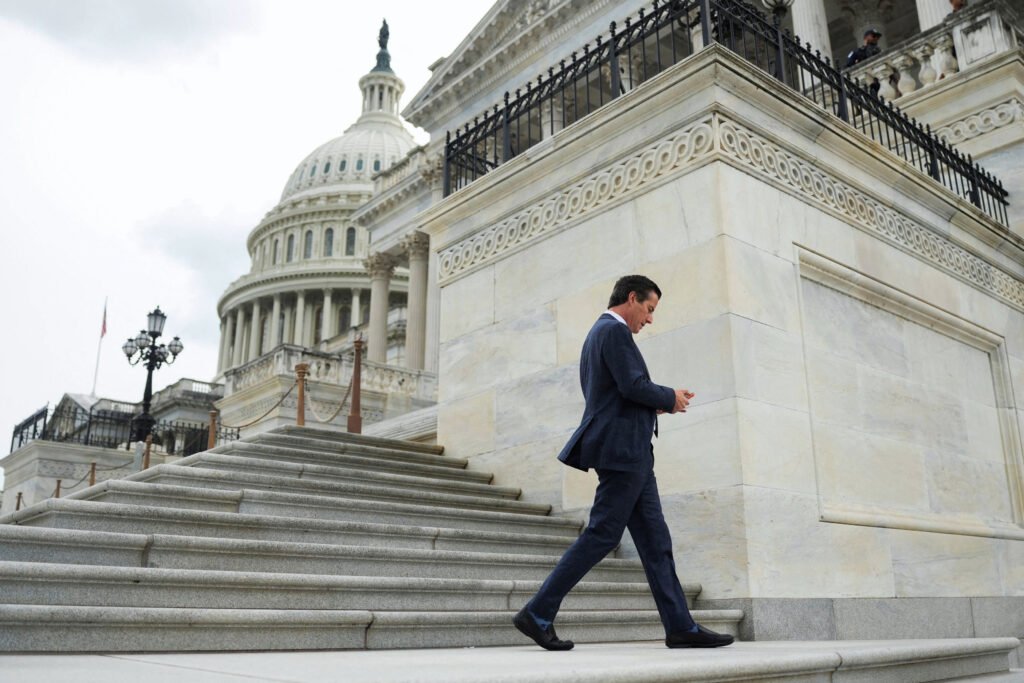
A proposed overhaul of how news is presented on social media has sparked disagreement between the United Kingdom and the Trump administration, with Washington questioning plans that could give established news organizations greater prominence across digital platforms.
The UK government is considering measures designed to make content from selected trusted news providers more visible to audiences using social networks and video-sharing services. The proposal is aimed at adapting the country’s public-service media system to changing patterns of news consumption, as increasing numbers of people rely on online platforms rather than traditional television and print outlets.
Public-service broadcasters such as the BBC, ITV, Channel 4 and Channel 5 could be among the organizations benefiting from the proposed changes. The government has said the measures are intended to ensure that audiences can continue to access reliable news as the media environment becomes increasingly dominated by digital platforms.
Under the proposal, qualifying news content could receive greater prominence through platform features or algorithms. The government argues that such measures could make established sources easier to locate and help audiences distinguish reliable journalism from inaccurate or misleading material.
Washington has taken a different view of the proposal. The Trump administration has expressed concern about government involvement in determining which media organizations should receive preferential treatment online. U.S. officials have questioned whether rules designed to promote selected outlets could interfere with the principle of free expression.
One of the central issues is the definition of a “trusted” news provider. Determining which organizations qualify for greater visibility could give policymakers an influence over the information audiences encounter, critics argue. The concern becomes more significant because many of the platforms potentially affected by the rules are operated by U.S.-based technology companies.
The disagreement therefore extends beyond Britain’s domestic media landscape. Any new requirements imposed on social-media and video-sharing services could affect large American technology companies that operate throughout the UK.
British officials have defended the proposed approach as an effort to modernize public-service media rather than restrict alternative sources of information. The Department for Culture, Media and Sport launched a consultation on the plans, inviting responses on how trusted news could be made more discoverable while maintaining a diverse media environment.
The government has pointed to major changes in audience behavior as a reason for considering the reforms. Younger audiences in particular increasingly encounter news through social networks, streaming services and online video platforms. Traditional broadcasters consequently face a different competitive environment from the one that existed when television was the dominant source of news.
The proposals could also affect the broader structure of public-service media in Britain. Officials are examining whether additional broadcasters and online services should be able to qualify for public-service status, potentially widening the range of organizations eligible for certain benefits.
Critics in Britain have also raised questions about the potential consequences. Some worry that giving established organizations greater prominence could make it harder for independent publishers, smaller outlets and individual creators to compete for attention online.
Supporters of the proposal counter that established journalism faces a growing challenge in reaching audiences when algorithms determine much of what users see. From that perspective, increased prominence could help audiences find reporting from organizations that already operate under recognized editorial and regulatory standards.
The dispute comes amid a broader international debate over the responsibilities of social-media companies and the role governments should play in shaping online information. Questions surrounding misinformation, platform algorithms and freedom of expression have become increasingly prominent as news consumption moves further into the digital sphere.
The UK measures have not yet become a fully implemented system. The government is reviewing feedback from its consultation before determining what steps, if any, should follow.
For Washington, the issue raises questions about the limits of government involvement in online news distribution. For London, it reflects an effort to adapt public-service broadcasting to a rapidly changing media market.
The disagreement could therefore become part of a wider conversation between the two countries about digital regulation, media freedom and how news should reach audiences in the social-media era.
Europe’s premier club competition returns this week as the 2026/27 UEFA Champions League launches its league phase with a series of high-profile encounters. From Real Madrid’s meeting with Inter Milan to Manchester City’s trip to Porto, the opening round immediately places several of the continent’s biggest clubs under pressure.
Matchday 1 is spread across September 8, 9 and 10, with 18 fixtures scheduled as the 36-team league phase gets underway. Under the current format, every club plays eight matches against different opponents, with results contributing to a single league table rather than separate traditional groups.
One of the standout fixtures on the opening schedule sees Real Madrid welcome Inter Milan. The matchup brings together two clubs with extensive European histories and gives both sides an early opportunity to collect valuable points. Real Madrid’s long record in the competition will again be closely watched, while Inter will face one of the most demanding opponents possible at the beginning of its campaign.
Manchester City also faces an immediate challenge when it travels to Porto. The English side has established itself as a regular contender in European competition, but Porto’s home advantage makes the fixture an important opening examination. The result could provide an early indication of how both teams handle the new league-phase campaign.
Liverpool’s encounter with Atlético Madrid is another major fixture on September 9. The two clubs have met in important European contests before, and their latest meeting adds another demanding test to the opening schedule. Liverpool will be seeking a positive start, while Atlético will attempt to take something from one of the competition’s most recognizable venues.
Arsenal also begins its European campaign against difficult opposition, facing Napoli in Italy. The fixture gives Arsenal an early opportunity to measure itself against a well-established Serie A club. With points carrying directly into the league table, neither side can afford to overlook the importance of its opening result.
Barcelona will host Feyenoord, providing the Spanish club with home advantage in its first league-phase match. Paris Saint-Germain, meanwhile, starts its title defense against Slovan Bratislava. As the reigning European champions, PSG enters the competition with the additional attention that comes with attempting to retain the trophy.
Other notable fixtures are scheduled for the final day of Matchday 1. Bayern Munich will meet Bodø/Glimt, while Manchester United hosts Sabah Masazir. The wider schedule also includes meetings involving Borussia Dortmund, Villarreal, Aston Villa, Club Brugge, Sporting CP, Galatasaray, Fenerbahçe and Roma.
The revised Champions League format adds another layer of significance to the opening fixtures. With 36 clubs competing in one table, teams have eight league-phase matches to accumulate points and secure their positions. The standings will determine which clubs advance directly to the knockout stage and which must navigate additional playoff rounds.
That means Matchday 1 is not simply an introduction to the competition. Every point can contribute to a club’s eventual position in the table, although the opening results will represent only one part of a much longer campaign.
UEFA’s Matchday 1 preview has also highlighted a range of statistical storylines, records and individual milestones to monitor across the opening fixtures. Those numbers could become more significant as the season develops and players establish themselves among the competition’s leading performers.
With several heavyweight clubs meeting strong opposition from the outset, the first three days of the Champions League promise an immediate test of form and preparation. By the end of Matchday 1, the league table will have its first shape, while Europe’s leading clubs will begin the long pursuit of a place in the knockout rounds.
Imphal, September 8, 2026: Manipur-gi defending champions Junior Boys football team-na Mizoram-bu penalty shootout-da 7–6-da thadokpa matungda Junior Boys’ National Football Championship for Dr B.C. Roy Trophy 2026–27 final-da thokle.
Match asi 90 minutes-da 2–2 draw oiramlaga, winner khangnaba penalty shootout tounarammi. Penalty shootout-da Manipur-na 7–6-da Mizoram-bu defeat toure. Asi matungda Manipur final ticket secure toure.
Final match asi September 9, 2026-da West Bengal-ga punsi thoknaba oigani. Manipur-na defending champion oirabadi title amuk amuk phangnaba hotnasi. Football fans-na Manipur team-bu final-da strong performance amasi amasung championship title amuk phangnaba thajasi.
New Delhi, September 8, 2026: Supreme Court na Aravalli Hills amasung Range gi definition amasung demarcation touba High Powered Committee-na report submit touba matam November 30, 2026 phaoba thadokle. Committee-na six months additional time pibiyu haina request toukhi, adubu Supreme Court-na request asi reject toure.
Chief Justice of India Surya Kant-na committee-na work asi hour-by-hour tougadabani amasung report asi matamda submit tounaba importance piri. Aravalli Hills asi India gi important ecological area ama oirabadi, forest, groundwater amasung environment protection gi maramda important role ama pangthok-i.
Court-na report asi November 30-gi matamda submit tounaba direction piri. Aravalli area-da illegal construction, mining amasung environmental damage-gi maramda report asi important oigani.
Social Security’s financial outlook is once again pushing lawmakers toward a difficult policy debate, with some Republicans showing greater willingness to consider tax increases as Congress looks for ways to preserve the program’s benefits.
The issue has become more urgent following projections from the 2026 Social Security trustees’ report. The report estimates that the combined Social Security trust funds could be depleted in 2034 if lawmakers fail to make changes. Even after that point, the program would continue receiving payroll tax revenue, but that income would not be sufficient to cover all scheduled benefits.
Under current projections, Social Security would have enough incoming revenue to pay roughly 83% of scheduled benefits after the combined funds are exhausted. That would leave beneficiaries facing an automatic reduction unless Congress intervenes.
The financial strain has been building for years. An aging U.S. population means more people are collecting retirement benefits, while the number of workers contributing through payroll taxes has not grown quickly enough to keep pace with the program’s obligations.
The Old-Age and Survivors Insurance trust fund faces an even earlier deadline. The 2026 trustees’ report projects that this fund could run out of reserves in 2032, while the combined retirement and disability funds are projected to reach depletion in 2034.
Those dates have renewed calls for Congress to act before the situation becomes more difficult. The longer lawmakers wait, analysts say, the fewer options they may have to spread changes over time.
One possibility under discussion is raising the amount of earnings subject to Social Security payroll taxes. Workers and employers currently contribute a combined 12.4% on covered earnings up to an annual taxable maximum. For 2026, that wage base is $184,500.
Changing that limit could bring additional money into the program, particularly from higher-income earners. Some lawmakers and policy advocates have argued that asking wealthier workers to contribute on a larger share of their earnings could help strengthen Social Security without reducing benefits for current retirees.
For Republicans, however, discussing higher taxes represents a notable departure from the party’s traditional opposition to tax increases. Not every Republican supports raising taxes, and there is no unified GOP proposal at this stage. Instead, the growing discussion reflects the pressure lawmakers face as the program’s projected shortfall becomes harder to ignore.
Other potential solutions remain on the table. Congress could consider changes to benefit formulas, retirement ages, payroll taxes or eligibility rules. Lawmakers could also combine several smaller changes rather than relying on one major reform.
Each option carries political and economic consequences. Benefit reductions could affect retirees and future beneficiaries, while higher taxes could increase costs for workers and employers. Changes to retirement rules could also have a greater impact on younger generations.
Despite the debate, Social Security is not expected to suddenly disappear when its trust funds are depleted. Payroll taxes would continue to be collected, meaning the program would still have money available to pay benefits. The problem is that projected income would fall short of the amount needed to cover benefits promised under current law.
That potential gap is what makes the coming years important for Congress. A solution reached well before depletion could allow changes to be introduced gradually, giving workers, businesses and retirees more time to adjust.
For now, lawmakers remain divided over the best approach. But as Social Security’s financial deadline approaches, the willingness among some Republicans to consider additional tax revenue could broaden the range of proposals being discussed in Washington.
The central question remains whether Congress can reach a bipartisan agreement before the projected trust-fund depletion forces automatic reductions in scheduled benefits.
Imphal, September 8, 2026: India-gi Vice President C. P. Radhakrishnan-na Tuesday-da one-day visit-da Manipur lakgani. Imphal-da arrival touba matungda makhoina different official programmes-da saruk yagani.
Visit asi Manipur-gi current situation, development amasung people-gi concerns gi maramda important oigani. Vice President-gi Northeast tour asi September 6 dagi houkhiba ni, amasung Manipur asi tour-gi important stop ama ni.
Government officials amasung different representatives-singga meeting touba matamda state-gi development amasung normalcy gi maramda discussion thokpa yengsinba ngamgani.
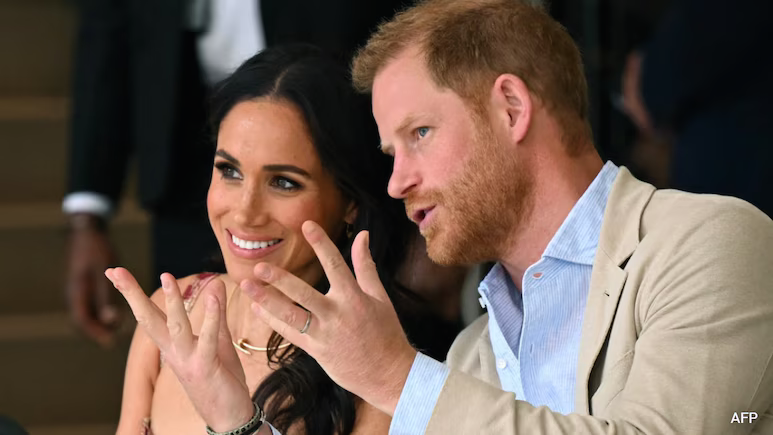
King Charles III has reaffirmed that Prince Harry and Meghan, the Duke and Duchess of Sussex, will continue to be treated as private citizens in the United Kingdom rather than members of the working Royal Family.
The clarification follows renewed attention surrounding the couple’s position in Britain and questions about whether their return could eventually lead to a restoration of their former royal responsibilities. According to guidance issued at the King’s direction, there has been no change to the Sussexes’ existing status.
Harry and Meghan stepped away from their roles as senior working royals in January 2020. The couple subsequently moved to the United States, where they established an independent life and pursued a range of commercial, media and charitable projects.
Their decision to spend more time in the UK has nevertheless prompted fresh speculation about their relationship with the monarchy. The latest guidance appears intended to remove uncertainty over whether their increased presence in Britain could affect their official standing.
The Sussexes retain their titles as the Duke and Duchess of Sussex. However, they do not use the styles “His Royal Highness” and “Her Royal Highness” in an official capacity following their decision to leave royal duties. Their current arrangement therefore remains separate from that of working members of the Royal Family.
The distinction is significant because working royals undertake official engagements on behalf of the monarch. Harry and Meghan’s public appearances, charitable initiatives and other activities are conducted independently and are not considered official duties representing King Charles.
The clarification was reportedly communicated to senior officials, including government and military representatives, to ensure that the Sussexes’ status is understood consistently. Their private-citizen position means that their presence in Britain does not give them the same official role or responsibilities held by working members of the monarchy.
Harry’s relationship with the Royal Family has remained a subject of considerable public interest since his departure from royal duties. His memoir, interviews and public statements have previously brought tensions within the family into the spotlight, while Meghan has also continued her own media and charitable work.
Despite the attention surrounding their relationship with the monarchy, the latest clarification does not indicate that Harry and Meghan are being brought back into the official royal structure.
Their return to Britain can therefore take place without changing the fundamental arrangement established in 2020. They may continue their personal, charitable and professional activities, but they will do so independently rather than as representatives of the King.
The development provides a clearer distinction between the Sussexes and the working members of the Royal Family. While Harry and Meghan remain closely connected to the monarchy through family ties and retain their Sussex titles, their official responsibilities remain unchanged.
For the moment, King Charles’ position is clear: the couple can live and operate in the UK as private citizens, but their return does not constitute a restoration of their former royal duties.
A 98-year-old billionaire with the means to enjoy virtually every luxury has instead become known for something far less extravagant: living simply and giving away a substantial share of his wealth. A reported donation of 233 billion Vietnamese dong has now drawn fresh attention to his unusual approach to money.
The elderly businessman’s lifestyle stands in sharp contrast to the fortune he has accumulated over decades. Despite having the resources to purchase luxury vehicles, expansive properties and other expensive possessions, he has reportedly avoided making material wealth the centerpiece of his everyday life.
His charitable contribution has further highlighted that philosophy. The reported 233 billion VND donation represents a significant amount of money and has raised interest in how the billionaire views his fortune and his responsibilities toward others.
Rather than focusing his wealth entirely on personal consumption, the tycoon has reportedly directed a large portion toward charitable activities. Such contributions can provide support for people facing financial hardship and organizations working in areas such as education, healthcare and social welfare.
The story has gained attention largely because of the contrast involved. Billionaires are frequently associated with private jets, luxury estates, expensive automobiles and high-profile spending. This 98-year-old businessman, however, is portrayed as someone who continues to favor a considerably more restrained lifestyle.
His reported habits demonstrate that immense wealth does not automatically translate into extravagant living. Even with the ability to purchase almost anything, he has apparently chosen not to make luxury a priority.
That approach has also prompted wider discussion about the meaning of financial success. For some, accumulating wealth is closely linked to enjoying increasingly expensive possessions. Others view financial security as an opportunity to support relatives, communities or charitable organizations.
The billionaire’s reported donation places him firmly in the latter conversation. By giving 233 billion VND to charity, he has demonstrated that a considerable fortune can be used to address needs beyond an individual’s personal lifestyle.
His age adds another notable element to the story. At 98, he has already spent decades building his financial legacy. Yet his reported reluctance to embrace excessive luxury suggests that his approach to money has remained consistent despite his extraordinary level of wealth.
The contrast between his financial position and his personal habits has helped make the story particularly compelling. Someone capable of purchasing dozens of luxury cars or owning lavish properties can still choose to live without constantly displaying that purchasing power.
The billionaire’s example also highlights the difference between possessing wealth and showcasing it. Financial resources can provide enormous freedom, but individuals ultimately decide how much of that wealth they want to spend on themselves and how much they wish to direct elsewhere.
For charitable organizations and the communities they serve, large contributions can make a meaningful difference. While the exact impact of the reported donation depends on how the money is distributed, its sheer size illustrates the potential influence wealthy philanthropists can have.
Ultimately, the 98-year-old billionaire’s story is not simply about a massive fortune. It is about the choices made alongside that fortune. His reportedly modest lifestyle and willingness to donate hundreds of billions of Vietnamese dong offer a striking alternative to the conventional image of billionaire excess.
At an age when he could comfortably indulge in almost any luxury, he has instead become associated with restraint and generosity. His story serves as a reminder that extraordinary wealth can be measured not only by what someone owns, but also by how willingly they use their resources to benefit others.