
Tensions between the United States and Iran have intensified after forces from both countries were involved in attacks targeting vessels in waters surrounding Iran, adding another dangerous development to an already volatile situation in the Gulf.
The latest confrontation has heightened concerns about maritime security and the potential impact on international shipping. The region includes some of the world’s most important routes for the transportation of crude oil and other energy supplies, making any prolonged disruption a major concern for global markets.
According to U.S. officials, Iran’s Islamic Revolutionary Guard Corps launched ballistic missiles toward two American Navy vessels operating in the region on Saturday, September 5. The U.S. military said the warships successfully avoided the incoming attacks and reported that no American personnel were hurt.
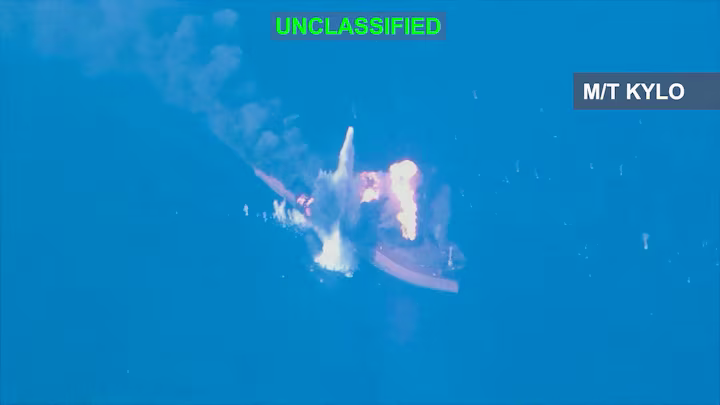
The United States subsequently carried out strikes against three Iranian oil carriers. American officials said the vessels were linked to networks associated with Iran’s Islamic Revolutionary Guard Corps. The reported targets included ships operating near Kharg Island, an important center for Iran’s oil exports, as well as another vessel near Jask. A third vessel was reportedly destroyed in the Gulf of Oman.
The exchange marks a further expansion of the conflict into the maritime sphere, where commercial vessels and oil tankers face increasing risks. Washington has sought to place greater pressure on Iran’s oil industry, while Tehran has continued to challenge American military activity and restrictions affecting Iranian shipping.
Iran has also reported attacks against vessels. Iranian authorities said their forces targeted three tankers that were traveling through routes they considered unauthorized in the Strait of Hormuz. Tehran additionally claimed that other vessels connected to the United States had come under attack. Some of those claims could not be independently confirmed.
The Strait of Hormuz remains at the center of international concern because of its importance to global energy transportation. The narrow passage links the Persian Gulf with the Gulf of Oman and serves as a critical route for oil shipments moving toward international markets.
Any sustained military confrontation in or around the waterway could have consequences well beyond the United States and Iran. Shipping operators may face higher insurance costs, longer routes and increased security requirements if threats to commercial vessels continue.
Energy markets are also monitoring the situation closely. A significant reduction in tanker traffic through the Gulf could affect crude supplies and potentially lead to higher oil prices. Even the possibility of prolonged disruption can create uncertainty for traders and governments dependent on stable energy supplies.
The latest maritime clashes follow a period of renewed military confrontation between Washington and Tehran. Both sides have continued to issue warnings and threats, with the United States signaling that attacks on American forces could prompt further military action.
Iran, meanwhile, has maintained that it has the right to defend its vessels and interests against what it considers hostile American operations. Tehran has warned that continued U.S. pressure could lead to stronger responses in the region.
The situation remains fluid, and the possibility of additional incidents at sea is creating concern among governments, shipping companies and international energy markets. Commercial vessels operating near Iranian waters are likely to face increased scrutiny as the confrontation develops.
For now, attention is focused on whether Washington and Tehran can prevent the maritime exchanges from becoming a broader campaign against shipping. Further attacks involving military or commercial vessels could significantly widen the conflict and increase risks across the Gulf.
As both sides maintain their military positions, international observers are closely watching developments around the Strait of Hormuz and other strategic waterways. The coming days could determine whether the latest confrontation remains contained or becomes another major escalation in the wider U.S.-Iran conflict.