
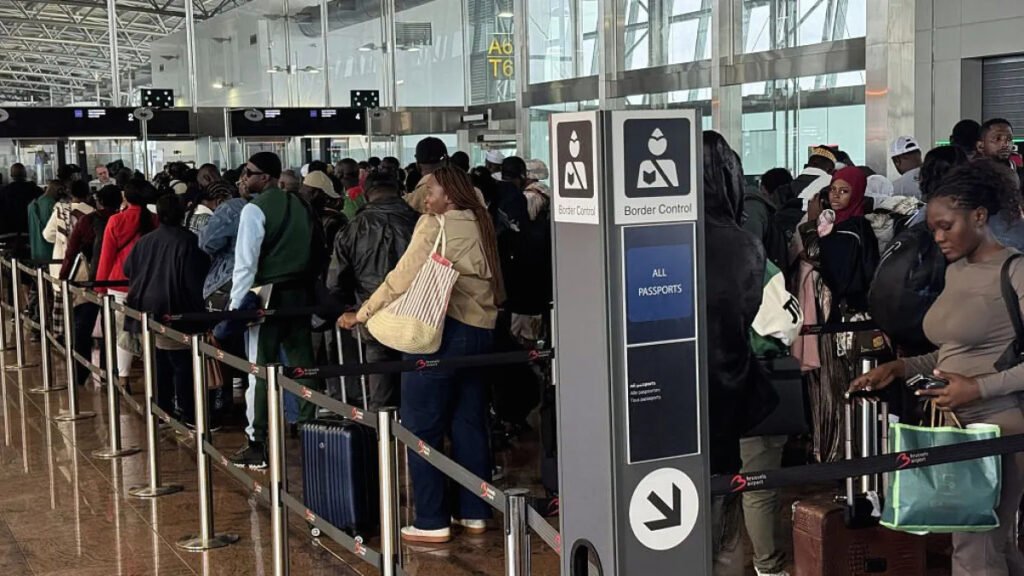
European airports are facing fresh concerns over lengthy border-control queues as the European Union’s Entry/Exit System (EES) moves into a stricter phase. The digital border system is expected to place continued pressure on airports, particularly during busy travel periods when large numbers of passengers arrive at the same time.
The EES is designed to modernize border controls across the Schengen area by replacing traditional passport stamps with a digital registration system. Non-EU travellers visiting for short stays are generally required to have their passport details recorded electronically, along with biometric information such as fingerprints and facial images.
Although the system is intended to improve border security and make passenger processing more efficient over time, its introduction has created challenges for airports and border authorities. The additional procedures can take longer, especially when travellers are completing their biometric registration for the first time.
Airports in popular destinations such as Greece, Spain and France are among those facing particular attention as authorities prepare for periods of increased passenger traffic. Several European airports have already experienced significant congestion during the rollout, with queues becoming especially difficult to manage when technology, staffing and passenger volumes combine to slow processing.
The situation could become more challenging as temporary measures introduced to manage exceptionally long queues are phased out. During earlier stages of the rollout, some countries were able to temporarily ease or suspend biometric checks when border areas became severely congested. Authorities are now expected to have fewer opportunities to use such measures, increasing concerns about how airports will cope during peak periods.
Airlines have also raised concerns about the effect of longer border checks on flight connections. Passengers who spend hours waiting to complete immigration formalities can miss onward flights, potentially creating further disruption across busy European airports.
Recent reports have highlighted the scale of the problem during the summer travel season. Some airports, including destinations such as Corfu and Tenerife, experienced pressure linked to the new border procedures. Airlines and industry representatives have warned that delays at immigration controls can have consequences well beyond the airport terminal, particularly when passengers are travelling on connecting itineraries.
The introduction of EES requires significant coordination between airport operators, border officials and technology providers. Adequate staffing and reliable biometric equipment are considered essential to preventing bottlenecks. Self-service facilities can also help reduce pressure by allowing eligible passengers to complete parts of the registration process before reaching a border-control officer.
Travel organizations have consequently called for authorities to ensure that airports are properly equipped before the system is applied without the same level of emergency flexibility. Industry representatives have emphasized the importance of sufficient personnel, functioning equipment and clear procedures for handling large passenger flows.
For travellers, the most important issue is uncertainty over how long border processing may take. While reports of potential five-hour queues have raised alarm, such delays are not expected to occur at every airport or on every day. The length of a wait can depend on passenger numbers, staffing, equipment performance and the time required to register new travellers.
Passengers heading to Europe are therefore being encouraged to allow additional time for immigration procedures, particularly if they are travelling through major airports or have a connecting flight. Tight connections could carry greater risks while airports and border authorities continue adapting to the new system.
European officials maintain that EES is ultimately intended to create a more secure and streamlined system for managing travel across the Schengen external border. Once the initial transition is complete, authorities expect digital records and biometric identification to make border management more consistent.
The immediate challenge, however, is ensuring that the transition does not create excessive disruption. As stricter EES procedures take effect, airports across Europe will be closely monitored to see whether they can handle heavy passenger volumes without a return to the lengthy queues seen during earlier stages of implementation.
For travellers, the message is straightforward: the new system is becoming an increasingly important part of European border checks, and allowing extra time at the airport could help reduce the risk of missed connections and unexpected delays.