
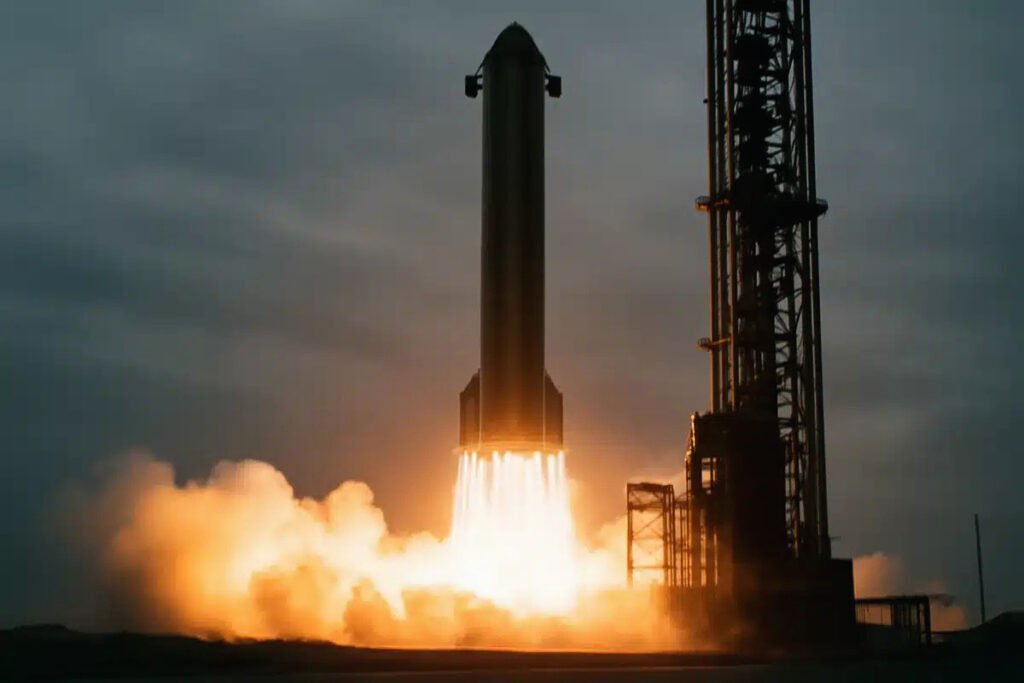
SpaceX has reached another important milestone in the development of its next-generation Starship system after Booster 21 completed a significant round of testing, bringing the massive vehicle closer to a potential orbital mission.
The latest achievement represents a key moment in the preparation of the Super Heavy booster, which forms the powerful first stage of SpaceX’s Starship launch system. Designed to generate the enormous thrust needed to send Starship away from Earth, the booster is expected to play a critical role in the company’s long-term ambitions for missions beyond low-Earth orbit.
Testing of Booster 21 focused on evaluating the vehicle and confirming that its major systems were functioning properly ahead of future flight operations. Although SpaceX has released limited information about the exact technical objectives, the completion of the test suggests the hardware has cleared another important stage in its path toward launch readiness.
The Super Heavy booster is powered by a large number of SpaceX’s Raptor engines and is designed to become one of the most powerful rocket stages ever built. Working alongside Starship’s upper stage, the system is intended to lift enormous payloads and eventually transport crews and cargo on missions to destinations far beyond Earth.
Booster 21 is part of the constantly evolving hardware being produced for the Starship program. SpaceX engineers have continued to refine the design following lessons learned during earlier flight tests and ground operations at the company’s Starbase launch and development site in South Texas.
Unlike traditional aerospace programs, SpaceX has adopted a rapid testing strategy for Starship. The company builds multiple versions of its hardware, subjects them to demanding tests and then uses the resulting data to make improvements. This iterative approach allows engineers to identify problems and implement design changes without waiting for years between major development stages.
The successful completion of a final major test is therefore particularly significant. Before a rocket can attempt an orbital mission, its engines, tanks, guidance systems and other critical components must demonstrate that they can function under demanding conditions.
Starship is being developed as a fully reusable launch system capable of carrying large amounts of cargo and eventually transporting humans into deep space. SpaceX has outlined plans for the vehicle to support missions to the Moon and Mars, while also potentially lowering the cost of delivering large payloads into orbit.
For a future orbital mission, Booster 21 is expected to operate with a Starship upper-stage vehicle, creating the complete launch system. Together, the two enormous vehicles form one of the largest rocket combinations ever constructed and represent the centerpiece of SpaceX’s future spaceflight strategy.
The transition from ground testing to an actual orbital attempt will present a far greater challenge. During launch, the system must endure extreme vibration, pressure and aerodynamic forces while its engines operate in coordination. Successful stage separation and guidance will also be essential to achieving the mission’s objectives.
Previous Starship test flights involving earlier hardware have provided valuable information for engineers. Even when missions encountered problems, the data collected has been used to improve future vehicles and refine launch procedures.
Booster 21’s latest progress has now increased anticipation about when the next major flight could take place. A confirmed launch date has yet to be announced, and the vehicle may still require additional inspections, technical preparations and regulatory clearance before it can leave the launch pad.
The Starship program is attracting significant international attention because of its importance to SpaceX’s future plans. NASA has selected a Starship-based lander to support upcoming Artemis missions to the Moon, while SpaceX views the vehicle as a key component of its long-term goal of enabling large-scale exploration of Mars.
A successful orbital mission involving Booster 21 would mark another major step for the program and demonstrate the progress of SpaceX’s newest generation of launch hardware.
For now, the completed test has moved the company closer to its next objective. Engineers are expected to examine the results and complete any remaining preparations before the vehicle advances further toward flight.
While an official countdown to launch has not yet been announced, Booster 21’s latest achievement has made the possibility of an orbital mission feel increasingly closer. With another major test now completed, SpaceX’s ambitious Starship program appears to be entering one of its most important phases yet.