
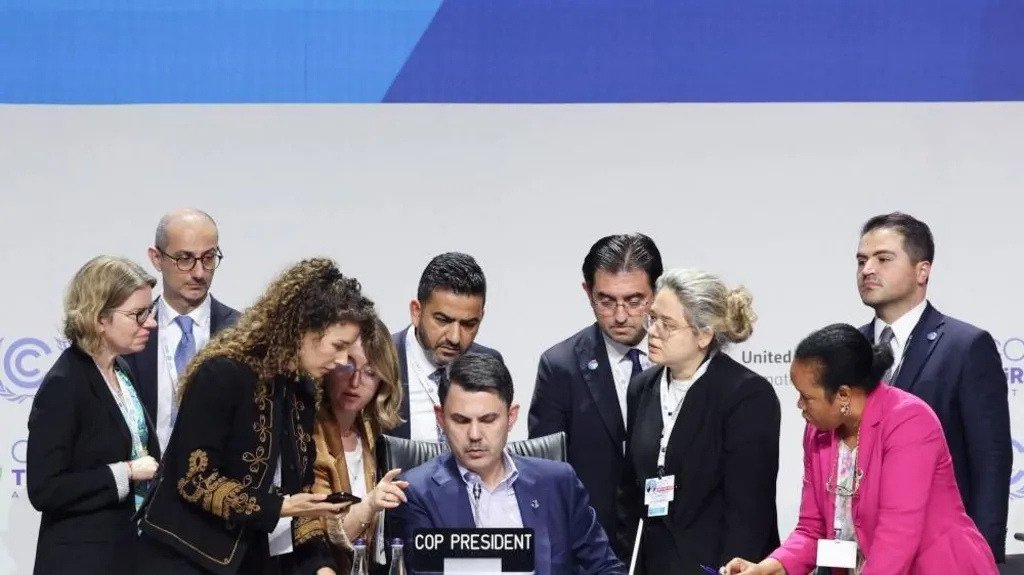
The COP31 climate conference in Antalya, Türkiye, ended on November 22 without delivering a major international climate agreement, highlighting the growing disagreements between participating nations over fossil fuel consumption, financial assistance and strategies for tackling global warming.
Representatives from nearly 200 countries gathered for the United Nations climate summit with the expectation of establishing stronger commitments to address environmental challenges. However, negotiations proved difficult as governments struggled to find common ground on several major issues. Discussions extended almost two days beyond the planned closing date, reflecting the complexity of reaching an agreement among countries with different economic priorities and energy policies.
A central point of disagreement involved the future of fossil fuels. More than 130 countries reportedly supported stronger commitments to reduce dependence on coal, oil and natural gas. These nations argued that limiting the use of fossil fuels is essential to achieving international climate targets and preventing further increases in global temperatures.
However, the proposed final agreement, referred to as the Antalya Pact, did not include a clear commitment to transition away from fossil fuels. This omission attracted criticism from several governments, including members of the European Union and the United Kingdom, which considered the proposed language insufficient to address the seriousness of the climate emergency.
Ireland’s Environment Minister Darragh O’Brien, representing the European Union, voiced concerns about the direction of the negotiations. He argued that the proposed outcome did not adequately recognise the importance of reducing fossil fuel dependence and lacked the ambition required to deliver meaningful progress.
Other countries, including Panama and the Marshall Islands, also expressed dissatisfaction with the draft. Nations particularly vulnerable to rising sea levels and extreme weather conditions warned that weaker international commitments could leave millions of people exposed to increasingly severe environmental threats.
Financial assistance was another major issue that prevented countries from reaching an agreement. Developing nations demanded more substantial support from wealthier economies to help them manage the consequences of climate change. Many countries with limited financial resources are already facing mounting costs from droughts, floods, heatwaves and other climate-related disasters.
Developing countries maintained that industrialised nations should accept greater responsibility for providing financial assistance because of their historical contribution to greenhouse gas emissions. However, disagreements over the scale of funding and the responsibilities of individual governments continued throughout the negotiations.
The proposed agreement also faced criticism for failing to establish sufficiently detailed financial commitments for climate adaptation. Without predictable funding, vulnerable countries fear they will struggle to strengthen infrastructure, protect communities and prepare for future environmental emergencies.
Despite the disagreements, the conference produced some progress in specific areas. Participating governments advanced discussions on a just transition mechanism designed to help workers and communities adjust as economies move towards cleaner energy sources. More than 80 countries also backed Türkiye’s target of increasing electricity’s share of global energy consumption to 35% by 2035.
United Nations Secretary-General António Guterres expressed disappointment over the failure to achieve a broader political consensus. He stressed that disagreements between governments should not weaken the international commitment to addressing climate change, particularly as scientific evidence continues to demonstrate the urgency of reducing global emissions.
The outcome of COP31 has once again exposed the difficulties associated with international climate diplomacy. Under the United Nations framework, major decisions generally require consensus, meaning disagreements between even a relatively small number of participating countries can complicate efforts to secure stronger commitments.
Attention is now shifting towards the next round of international climate discussions, with COP32 scheduled to take place in Ethiopia in November 2027. Governments will face renewed pressure to demonstrate that they can move beyond political disagreements and deliver practical measures to limit global warming.
Although several individual initiatives emerged from the Antalya conference, the absence of a comprehensive agreement has left major questions unresolved. Disputes over fossil fuel reduction and climate financing continue to stand in the way of stronger international cooperation, highlighting the difficult task facing world leaders as they attempt to turn climate promises into meaningful action.
You can watch the video below