
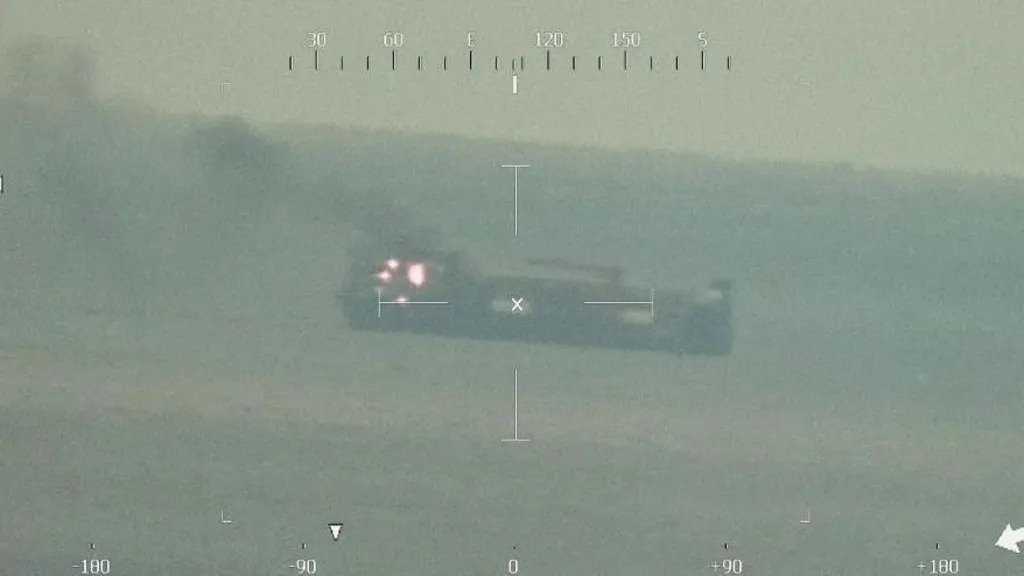
A cargo ship heading towards Russia’s Baltic exclave of Kaliningrad was damaged in a suspected drone attack in the Gulf of Finland on Saturday, November 21. The incident left the vessel on fire and prompted Finnish authorities to introduce precautionary security measures as the damaged ship entered Finnish territorial waters.
The vessel, known as the Sparta II, was reportedly struck by two drones while navigating international waters near Russia’s maritime boundary. The attack occurred west of Gogland Island, with the ship sustaining damage before a fire broke out onboard.
Leningrad Region Governor Alexander Drozdenko reported that the vessel had been targeted by two drones. Following the incident, the ship reportedly drifted towards Finnish waters, leading the country’s Defence Forces and Border Guard to coordinate an emergency response.
Authorities temporarily restricted certain maritime and aviation activities in the eastern Gulf of Finland to facilitate rescue operations and minimise potential risks to the surrounding area. The measures also reflected growing concerns about security in the Baltic region amid continuing tensions between Russia and Ukraine.
The condition of the crew became an immediate priority following the attack. Initial reports indicated that all 16 people aboard were being evacuated while emergency personnel assessed the damage. Finnish Border Guard officials subsequently confirmed that the crew had been transferred to another Russian vessel for transportation back towards Russia.
Although the fire continued onboard the damaged cargo ship, Finnish authorities reported no immediate environmental threat. Officials also indicated that the incident had not created an immediate danger for other commercial vessels operating in the surrounding waters.
Finnish military officials suggested that Ukraine was likely behind the drone operation, although Kyiv had not publicly confirmed responsibility. The circumstances surrounding the attack, including the intended target and the origin of the drones, remained under investigation.
Finland’s Prime Minister Petteri Orpo expressed concern about the incident, noting that the ongoing war was increasingly affecting security beyond the immediate conflict zone. He also reiterated Ukraine’s right to defend itself against Russian aggression.
The Sparta II has drawn particular attention because of its connection to Russia’s military transportation network. The vessel is associated with Oboronlogistika, a shipping company linked to the Russian Defence Ministry that provides logistical and transportation services.
The company and its operations have faced international sanctions. The Sparta II has also been targeted by sanctions imposed by the United States and Ukraine. However, the precise nature of the cargo onboard during the incident had not been independently established. Finnish authorities said military-related materials could not be excluded.
The situation also attracted attention from neighbouring countries as concerns over regional security increased. Sweden offered assistance to Finland, while Estonia monitored developments and supported maritime safety efforts. Finnish officials also shared information about the incident with international partners, including NATO.
The Gulf of Finland remains an important strategic shipping corridor connecting the Baltic Sea with the Russian port of St Petersburg. Its geographical position makes it particularly significant for commercial transportation and regional security.
The latest attack has raised further questions about the vulnerability of maritime routes as the Russia-Ukraine conflict continues. Increased drone activity and military tensions have placed additional pressure on countries bordering the Baltic Sea, particularly those maintaining close security cooperation with NATO.
Finnish authorities are continuing to monitor the situation while assessing the damaged vessel and the circumstances surrounding the strike. The ship’s eventual condition, the nature of its cargo and the origin of the drones remain important unanswered questions.
The incident highlights the growing challenges facing maritime security in northern Europe, where developments linked to the ongoing conflict are increasingly affecting international shipping and neighboring countries.
You can watch the video below