
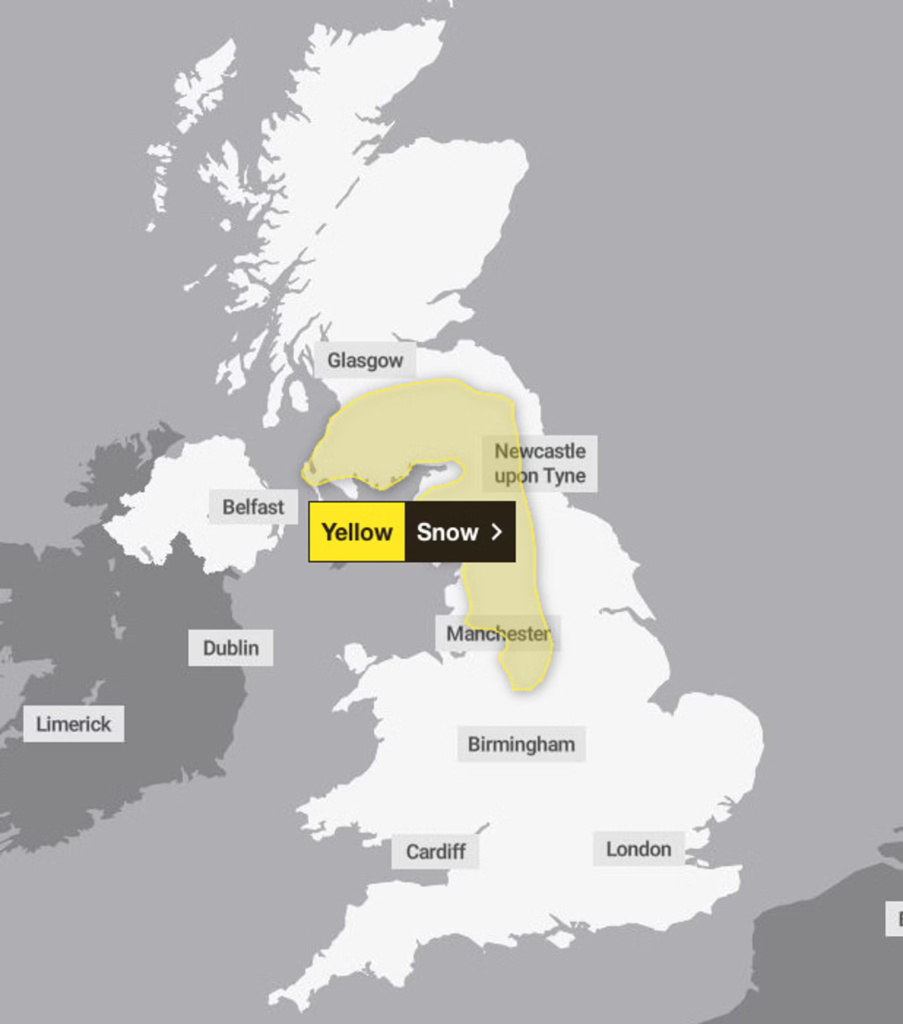
The British Red Cross is calling on people across the United Kingdom to prepare for potential emergencies by assembling household survival kits containing 14 essential items, as an approaching snow warning raises concerns about travel disruption, power outages and interruptions to basic services.
The warning comes amid forecasts of colder conditions across parts of northern England and Scotland, where snowfall could create hazardous roads and affect daily activities. Residents are being encouraged to take precautions in advance and consider how they would manage if essential services were temporarily disrupted.
The charity’s advice is part of a wider emergency preparedness initiative encouraging families to maintain enough supplies to last at least three days. The 72-hour recommendation is intended to help households remain self-sufficient during unexpected emergencies, including severe weather, flooding, electricity failures or disruptions to transport and communication networks.
The British Red Cross has outlined 14 items that households should consider keeping readily accessible. The checklist includes a written record of important contact numbers, a mobile phone charger, a portable power bank, cash, a torch with spare batteries and a battery-powered or wind-up radio.
Other recommended provisions include essential medication, copies of prescriptions, a first-aid kit, hand sanitiser, wet wipes, drinking water and long-lasting food. A tin opener is also advised for accessing canned meals. Households should additionally protect important documents in waterproof packaging and keep spare keys, a pen and paper available in case they need to leave home or manage unexpected circumstances.
These preparations could prove particularly useful if severe weather affects electricity supplies, limits access to shops or makes it difficult for people to communicate with family members.
Beyond the main checklist, the charity recommends considering extra provisions such as blankets, sleeping bags, warm clothing, toiletries, waterproof bags, whistles, spare glasses and duct tape. These items may offer additional comfort and practical assistance during prolonged disruptions.
The Met Office has warned that a band of rain moving northwards during Monday night and Tuesday morning could turn into snow as it encounters colder air. The possibility of settling snow is greatest in elevated locations, where conditions may become more challenging for motorists and pedestrians.
Some areas could receive between 1 and 5 centimetres of snow, while higher ground above 300 to 400 metres may experience accumulations of approximately 5 to 15 centimetres. Strong easterly winds could also cause snow to drift, increasing the risk of difficult driving conditions along exposed roads.
While the snowfall is expected to gradually transition back into rain during Tuesday, colder temperatures are forecast to persist across northern parts of the UK.
Health authorities have also raised concerns about the effects of cold weather. A yellow cold-health alert was issued for the North West, North East and Yorkshire and the Humber, highlighting the importance of protecting older people and others who may be more vulnerable to lower temperatures.
The Red Cross has stressed that emergency preparations should be tailored to individual household needs. Families with infants or young children may require extra supplies such as nappies, baby food, formula and medication. People with pets should also ensure they have sufficient animal food, drinking water, bedding and necessary medicines.
Drivers are advised to consider keeping winter essentials in their vehicles, including an ice scraper, de-icer, blankets, warm clothing, drinking water, snacks and a first-aid kit. A torch and portable phone charger could also help motorists cope with unexpected delays.
The charity has emphasised that preparing for emergencies does not necessarily involve expensive purchases. Many of the recommended supplies are everyday household items that can be gathered gradually and stored in an accessible location.
With winter weather potentially affecting travel and essential services, residents are being encouraged to check their supplies, plan ahead and take reasonable precautions. The Red Cross says being prepared in advance can help households cope more effectively with unexpected emergencies and reduce unnecessary stress when conditions worsen.
You can watch the video below