
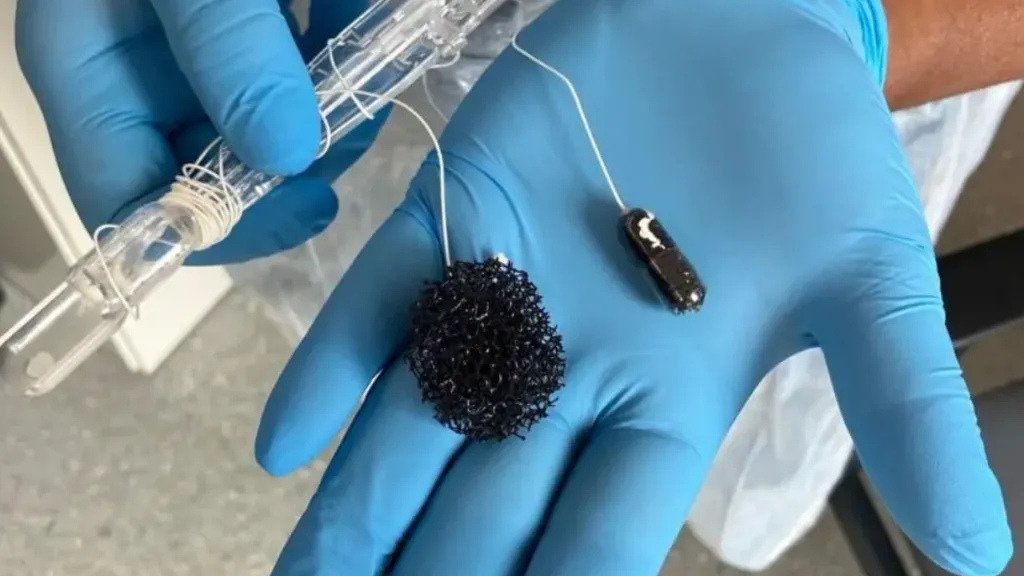
An innovative testing method designed to identify early signs of oesophageal cancer could become more accessible to people experiencing persistent acid reflux and indigestion in England. The National Health Service (NHS) is considering expanding the availability of capsule sponge testing following draft recommendations from the National Institute for Health and Care Excellence (NICE).
The proposed approach aims to help healthcare professionals recognise potentially harmful changes in the lining of the oesophagus, commonly known as the food pipe. These abnormalities can be associated with Barrett’s oesophagus, a condition that increases the likelihood of developing cancer in a small number of patients.
The technology, widely referred to as the ‘sponge on a string’ test, involves swallowing a small capsule attached to a thin thread. After reaching the stomach, the capsule dissolves and releases a tiny sponge. A healthcare professional then carefully withdraws the thread through the mouth, allowing the sponge to collect cells from the oesophageal lining.
The collected samples are sent to a laboratory for examination, where specialists look for unusual cellular changes that may require further medical investigation. The procedure generally takes around seven minutes and does not usually involve sedation, offering a less invasive alternative to conventional diagnostic examinations.
Two technologies, Cytosponge and EndoSign, are included in the proposed recommendations. Both are designed to assist in identifying Barrett’s oesophagus and determining which patients may benefit from additional testing or regular monitoring.
Barrett’s oesophagus can develop following repeated exposure to stomach acid, which gradually changes the normal cells lining the food pipe. Persistent acid reflux is commonly associated with the condition. Although most people diagnosed with Barrett’s oesophagus will not develop cancer, a small proportion may experience further cellular abnormalities that can eventually become cancerous.
The proposed guidance would make the tests available to selected individuals experiencing long-term acid reflux alongside additional risk factors, particularly when an urgent suspected cancer referral is not required. This could provide an additional option for assessing patients before more specialised investigations become necessary.
Oesophageal cancer remains a serious health concern because symptoms may not become obvious until the disease has progressed. Warning signs can include difficulty swallowing, unexplained weight loss, persistent indigestion and chest discomfort. Identifying abnormal changes earlier could give medical professionals more opportunities to arrange appropriate investigations and treatment.
NICE has highlighted the potential benefits of introducing the technology more widely, particularly in helping patients access initial assessments without placing additional pressure on hospital endoscopy departments. Traditional endoscopy requires a flexible camera to be passed through the mouth to examine the digestive tract. Although it remains an important diagnostic method, the procedure requires specialised equipment and trained medical personnel.
By comparison, capsule sponge testing could offer a more convenient initial assessment for eligible patients. It may also help healthcare services identify individuals who need further examinations while reducing the number of unnecessary endoscopy appointments.
However, the technology is not intended to replace conventional endoscopy in every situation. Patients whose samples reveal concerning abnormalities may still require additional examinations to establish a diagnosis and determine whether treatment is necessary. A negative result also does not automatically eliminate the need for further assessment when symptoms remain concerning.
The NHS has previously explored capsule sponge testing through pilot programmes to evaluate its usefulness in detecting oesophageal abnormalities and improving access to diagnostic services. Wider adoption could allow selected assessments to take place through GP practices and community diagnostic centres.
The recommendations are currently in draft form and remain subject to public consultation. NICE is expected to consider feedback before issuing its final guidance, which is anticipated in February 2027.
If approved, the proposed expansion could introduce a more accessible approach to identifying people at increased risk of oesophageal cancer. By improving access to initial testing and supporting earlier investigation of abnormal tissue changes, the initiative aims to strengthen cancer detection efforts and improve the delivery of healthcare services across England.
You can watch the video below