
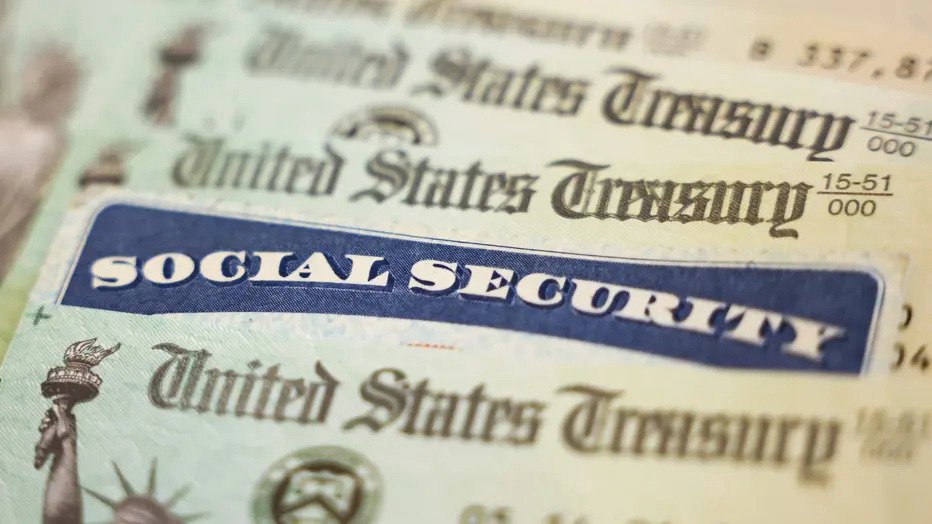
Millions of Americans who depend on Social Security as a primary source of retirement income could experience lower monthly payments beginning in 2032 if federal lawmakers fail to address the program’s financial difficulties. Recent projections from the Social Security and Medicare Boards of Trustees indicate that the retirement trust fund could exhaust its reserves by the final quarter of 2032, potentially leaving the program unable to distribute the full amount of benefits currently promised.
The warning has renewed discussions about the future of Social Security and the financial protection it provides to retired workers, eligible survivors and their families. For many older Americans, these monthly payments help cover essential expenses, including medical bills, groceries, housing and other everyday necessities.
Under the latest estimates, the Old-Age and Survivors Insurance (OASI) Trust Fund is expected to retain sufficient reserves to cover scheduled retirement and survivor payments through 2032. However, once its accumulated savings are exhausted, ongoing revenue from payroll taxes and other sources would only be enough to finance approximately 78% of scheduled benefits under existing law.
This could result in an automatic reduction of around 22% in retirement and survivor payments unless Congress approves changes to the program’s funding structure before the projected deadline.
One of the major factors contributing to the financial strain is the changing age structure of the American population. A growing number of people are reaching retirement age and becoming eligible for monthly payments, while the proportion of younger workers contributing to the system has not kept pace with the rising number of beneficiaries.
Social Security is largely supported through payroll taxes collected from employees and employers. These contributions provide the revenue needed to distribute benefits, while accumulated trust fund reserves help cover expenses when program costs exceed incoming income.
However, the growing difference between revenue and expenditure has increased the program’s dependence on its reserves. As withdrawals continue, the remaining funds are expected to decline, bringing the projected depletion date closer.
The latest assessment also indicates a change from earlier financial forecasts. The 2025 trustees’ report estimated that the retirement trust fund would exhaust its reserves during the first quarter of 2033. The newer projection moves that timeline to the fourth quarter of 2032, suggesting that the funding challenge could emerge earlier than previously anticipated.
Nevertheless, the depletion of the trust fund would not mean that Social Security payments would disappear completely. Revenue collected through payroll taxes would continue supporting the program, allowing a significant portion of scheduled benefits to remain payable. The concern is that beneficiaries could receive substantially less than the amounts they are currently scheduled to receive.
The disability program also has a different financial outlook. While the retirement and survivor trust fund faces a potential shortfall in 2032, the Disability Insurance Trust Fund is projected to maintain sufficient reserves throughout the 75-year forecast period. When both funds are assessed together, their combined reserves are projected to be depleted in 2034.
The approaching deadline places additional responsibility on Congress to identify measures that could strengthen Social Security’s financial position. Possible solutions include increasing payroll tax contributions, revising benefit calculations, adjusting eligibility requirements or introducing a combination of reforms.
However, reaching an agreement could be difficult because proposed changes may affect different generations of Americans in different ways. Lawmakers must balance the need to improve the program’s finances with protecting retirees who rely on their monthly payments.
The projections have also encouraged workers approaching retirement to pay closer attention to their long-term financial preparations. Although the estimated depletion date could change depending on economic conditions, employment trends and future legislation, the possibility of reduced benefits remains an important concern.
With several years available before the projected deadline, Congress has an opportunity to introduce reforms and reduce the likelihood of automatic payment cuts. The decisions made in the coming years could determine whether millions of Americans continue receiving their full scheduled Social Security benefits or face reductions in their retirement income.
You can watch the video below