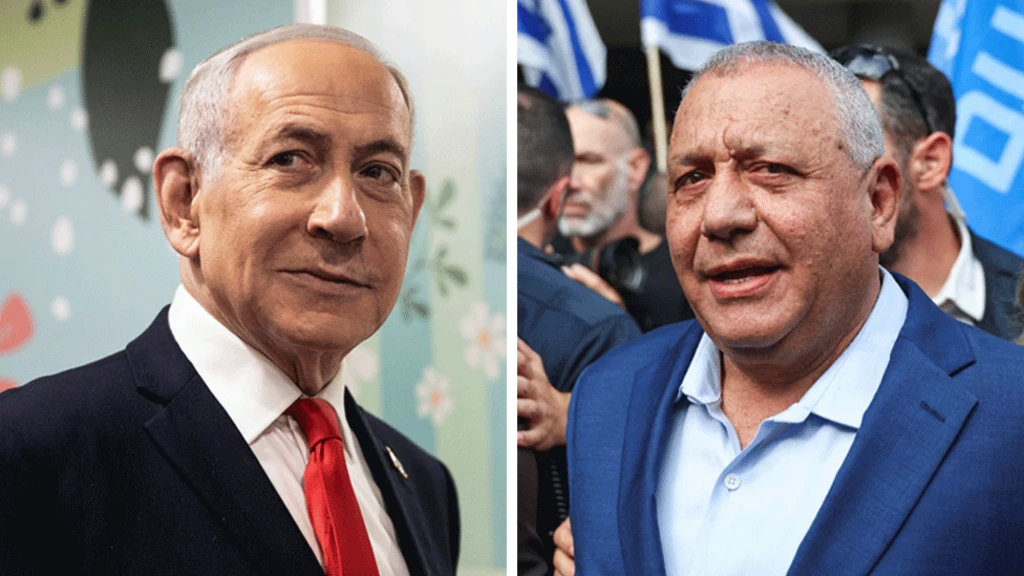
Israel’s latest parliamentary election has produced an inconclusive result, with preliminary exit polls placing the opposition alliance led by Gadi Eisenkot slightly ahead of the bloc supporting Prime Minister Benjamin Netanyahu. Despite the opposition’s projected advantage, neither side appears to have secured the parliamentary majority required to form a government without assistance from other parties.
The preliminary estimates released on October 27, 2026, suggest that Eisenkot’s alliance could obtain approximately 52 to 53 seats in the 120-member Knesset, while Netanyahu’s coalition may secure around 50. Arab-led parties are projected to win an additional 17 to 18 seats, potentially making their parliamentary representation important in determining the next government.
The figures remain preliminary, and the official results will establish the final distribution of seats.
Political Deadlock Follows Closely Contested Election
The projected outcome highlights the difficulty facing Israel’s competing political camps as they attempt to secure enough support to govern. Under the country’s parliamentary system, a government generally needs the backing of at least 61 lawmakers in the Knesset to command a majority.
Neither major bloc appears to have reached that number independently, meaning negotiations with smaller parties could determine the direction of Israel’s political future.
Eisenkot, a former chief of staff of the Israel Defense Forces and leader of the centrist Yashar party, has emerged as a prominent figure in the opposition’s effort to replace Netanyahu. His alliance brings together political groups with differing priorities but a shared objective of establishing an alternative government.
However, the narrow lead does not guarantee Eisenkot the premiership. The opposition will need to overcome policy disagreements and secure sufficient parliamentary backing before it can form an administration.
Netanyahu Remains a Major Political Force
Despite the apparent advantage held by the opposition alliance, Netanyahu’s Likud party is projected to remain one of the strongest individual parties in parliament.
Exit-poll estimates suggest Likud could win approximately 24 to 25 seats, while Eisenkot’s Yashar party may obtain between 21 and 23. The figures illustrate how an individual party can lead in seat numbers while its wider political alliance trails another coalition.
Netanyahu and his allies may attempt to negotiate agreements with smaller right-wing and religious parties to maintain their influence. Nevertheless, the projected parliamentary distribution could make it difficult for the incumbent prime minister to assemble a majority without support from additional lawmakers.
The final outcome will depend on the official count and the willingness of political parties to cooperate during coalition negotiations.
Arab-Led Parties May Influence Government Formation
Arab-led parties could become significant participants in the negotiations because their projected representation may affect the balance of power in the Knesset.
Their support could potentially help one of the major blocs approach the required parliamentary threshold. However, cooperation is far from certain, as disagreements over political priorities and government policies may complicate negotiations.
Another possibility is for smaller parties to provide external support to a government without formally joining the governing coalition. Such arrangements could help an administration survive parliamentary confidence votes, although their stability would depend on continued political cooperation.
If negotiations fail to produce a viable majority, Israel could face a prolonged political stalemate and the possibility of another election.
Security and Leadership Remain Central Issues
The election unfolded against a backdrop of continuing security concerns and debate over the government’s response to the Hamas-led attacks of October 7, 2023, and the conflicts that followed.
Netanyahu’s leadership has faced scrutiny over the security failures preceding the attacks and his administration’s subsequent handling of the crisis. Opposition parties have sought to attract voters dissatisfied with the government’s performance and approach to national leadership.
Eisenkot’s military experience has been an important element of his public profile. His opposition alliance has attempted to bring together voters seeking a different political direction while addressing concerns about security and governance.
These issues have contributed to the significance of the election, although the preliminary results alone cannot establish the reasons behind individual voting decisions.
Final Results Will Determine Israel’s Next Government
The latest exit polls point to a divided political landscape in which neither major alliance has a clear path to power. Eisenkot’s bloc appears to hold a modest advantage, but Netanyahu’s party remains influential, and the outcome of coalition negotiations is still uncertain.
Once the official results are confirmed, political leaders will face the challenge of assembling a government capable of maintaining parliamentary support. Smaller parties could gain considerable influence as the rival camps attempt to secure the necessary commitments.
Until a viable coalition emerges, Israel faces the prospect of continued political uncertainty. The election has established a close contest rather than a decisive victory, leaving the country’s next political chapter dependent on both the final count and negotiations among its competing parties.
You can watch the video below