
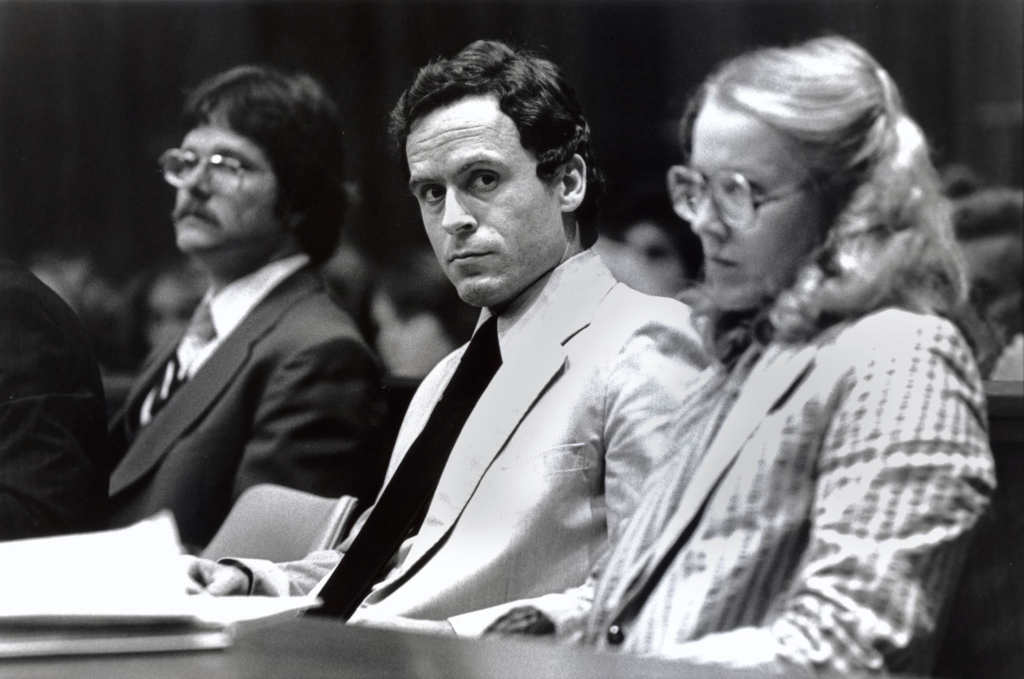
More than half a century after a Utah teenager was discovered dead, authorities have announced a major development in the investigation, identifying convicted serial killer Ted Bundy as responsible for her murder. On October 27, 2026, Summit County law enforcement confirmed that new forensic findings had linked Bundy to the 1974 killing of 17-year-old Melissa Ann Smith.
The announcement brings an end to a case that remained unresolved for 52 years. Investigators said advances in DNA technology, combined with comparisons to evidence from another confirmed Bundy murder, helped establish the connection and allowed authorities to officially close the investigation.
A Teenager’s Disappearance Leaves Questions Unanswered
Melissa Ann Smith, a resident of Midvale, Utah, disappeared on October 18, 1974. Her family became concerned when she failed to return home, prompting her mother to report her missing.
Nine days later, on October 27, hunters discovered her body in the Summit Park area of Summit County, near Park City. Despite an investigation, authorities were unable to identify a suspect whose involvement could be conclusively established.
Although Bundy eventually became a person of interest in the case, investigators lacked sufficient evidence to formally confirm his responsibility. As a result, Smith’s murder remained an open investigation for decades.
Summit County Sheriff Kacey Bates announced the case’s closure, recognizing the work of investigators who continued examining the evidence over the years. Their efforts to preserve and reassess material collected during the original investigation helped make the latest breakthrough possible.
DNA Analysis Provides a Critical Link
A significant development emerged from the investigation into the murder of another Utah teenager, Laura Ann Aime, who was also 17 years old.
Aime disappeared on Halloween night in 1974, and her body was discovered the following month near American Fork Canyon. Earlier in 2026, authorities linked Bundy to her killing after advances in forensic analysis provided new evidence.
Investigators subsequently compared evidence from Aime’s case with material collected during Smith’s autopsy. According to authorities, the analysis identified a closely matching male DNA profile in evidence associated with both victims.
Officials evaluated the genetic findings alongside other investigative details, including similarities between the circumstances of the two crimes. Summit County Attorney Margaret Olson said the combined evidence, including DNA findings and the assessment of the suspect’s motive, means and opportunity, established Bundy’s responsibility for Smith’s death.
The development demonstrates how scientific methods can help investigators resolve cases that remained beyond the reach of earlier forensic techniques.
Improved Forensic Technology Revives Cold Cases
Utah’s state crime laboratory introduced upgraded DNA testing technology in 2023. The improvements allow forensic specialists to examine biological samples that are degraded, mixed or too limited for conventional testing.
Such developments have created new opportunities to revisit historical investigations. Evidence collected decades ago can sometimes yield information that was previously impossible to obtain, allowing authorities to reconsider old leads and establish connections between separate crimes.
The Smith investigation highlights the importance of preserving evidence and maintaining cooperation among detectives, forensic experts and prosecutors. Continued examination of historical material helped investigators move beyond longstanding suspicions and reach an official conclusion.
Bundy’s Crimes Continue to Draw Investigative Attention
Ted Bundy was executed in Florida on January 24, 1989, after being convicted of murders committed in the state. Authorities have associated him with at least 30 killings across several states during the 1970s, although the precise number of his victims remains unknown.
Despite his execution, investigators have continued reviewing unsolved cases that may be connected to his criminal activities.
One unresolved Utah case concerns the disappearance of 16-year-old Nancy Wilcox in October 1974. Bundy reportedly confessed to killing her, but investigators have not established the case to the same evidentiary standard as Smith’s murder.
Authorities have emphasized that each investigation must be evaluated independently and supported by evidence rather than assumptions based on similarities to other crimes.
Official Closure Brings Long-Awaited Answers
Authorities have informed Smith’s surviving relatives about the latest findings. Although the announcement cannot reverse the loss suffered by her family, it provides an official resolution to an investigation that remained open for more than five decades.
The case also illustrates the growing role of forensic science in criminal investigations. Improvements in DNA analysis can help law enforcement revisit evidence, identify links between crimes and clarify cases that once appeared impossible to solve.
As investigators continue examining other unresolved disappearances and killings, the identification of Smith’s murderer underscores the enduring importance of preserving evidence and pursuing new investigative methods.
For Smith’s family, the announcement marks the end of a decades-long search for answers. For law enforcement, it demonstrates how advances in forensic technology can help bring historical investigations to a conclusion long after the original crime occurred.
you can watch the video below