
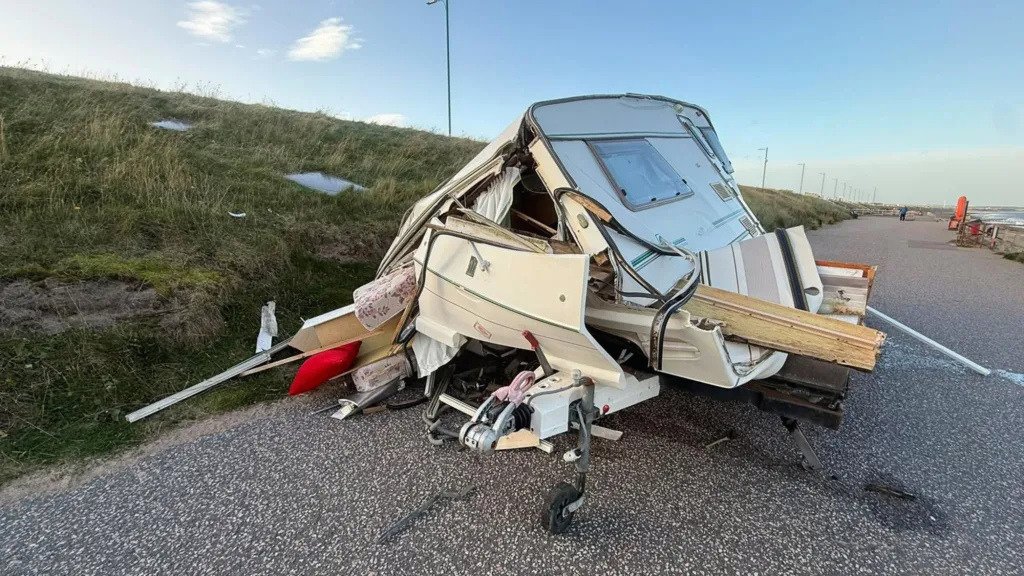
Scotland is facing a challenging recovery following Storm Boelo, which brought powerful winds, intense rainfall and flooding across several parts of the country. Photographs taken in the aftermath reveal damaged properties, flooded streets, disrupted transport services and debris scattered across affected communities.
The severe weather struck after a period of heavy rainfall associated with Storm Austen, increasing the risk of flooding in vulnerable areas. Wind gusts reached approximately 85 mph in exposed locations, prompting weather warnings and calls for residents to exercise caution while conditions remained dangerous.
Coastal communities experienced some of the most visible effects of the storm. In towns such as Largs and Saltcoats, floodwater spread across roads and commercial areas, affecting businesses and residential properties. Images showed streets covered in water, damaged premises and debris left behind as residents began assessing the losses.
Business owners faced the prospect of expensive repairs, with some commercial properties experiencing water damage to their interiors and equipment. The flooding also created difficulties for pedestrians and motorists, making several routes unsafe or temporarily inaccessible.
Aberdeen’s coastline was another area affected by the powerful winds. Near Aberdeen Beach, several caravans and mobile homes were overturned or severely damaged, while fragments of debris were scattered around the surrounding area. Sections of the coastal walkway were cordoned off as authorities assessed the situation and worked to protect the public from potential hazards.
Transport disruption added to the difficulties experienced across Scotland. Floodwater, fallen trees and damaged infrastructure affected several roads, forcing authorities to introduce closures and diversions. Routes including the A78 near Skelmorlie and the A8 through Port Glasgow experienced disruption, while flooding also affected the A82 near Dumbuck Quarry.
Railway services were similarly affected, with flooding reported at Dalmarnock station in Glasgow. Fallen trees and problems involving overhead electrical equipment also disrupted services elsewhere on the network. Ferry crossings were cancelled because of rough seas, while air passengers encountered further travel difficulties. Travellers were advised to check the latest service information before beginning their journeys.
Electricity outages presented another challenge for affected households. The Scottish Government reported on Sunday that approximately 40,000 customers had lost power, although around 26,000 had subsequently been reconnected. Repair crews continued working to restore electricity, with hazardous weather conditions complicating efforts in some locations.
Authorities coordinated their response as the extent of the damage became clearer. The Scottish Government’s Resilience Room met to review developments and organise support involving emergency services, transport authorities and other relevant organisations. Residents were encouraged to follow official weather updates and avoid unnecessary travel while dangerous conditions persisted.
The storm also resulted in a fatal incident. A 60-year-old man died after being struck by a falling tree near Castle Douglas in Dumfries and Galloway on Sunday morning. His death highlighted the potentially deadly consequences of severe winds, particularly in areas where trees and other structures could collapse unexpectedly.
As cleanup operations continue, photographs from across Scotland illustrate the difficulties facing communities recovering from the storm. Flooded streets, damaged coastal structures, obstructed roads and interrupted essential services have left residents and authorities with considerable work ahead.
While weather conditions were expected to improve temporarily, further unsettled weather remained possible early in the week. Officials urged the public to remain alert, follow safety guidance and take precautions around floodwater, unstable structures and fallen trees.
The full financial impact of Storm Boelo is still being assessed. For affected communities, the immediate priorities include restoring essential services, clearing damaged areas, repairing infrastructure and helping residents and businesses return to normal activities.
You can watch the video below