
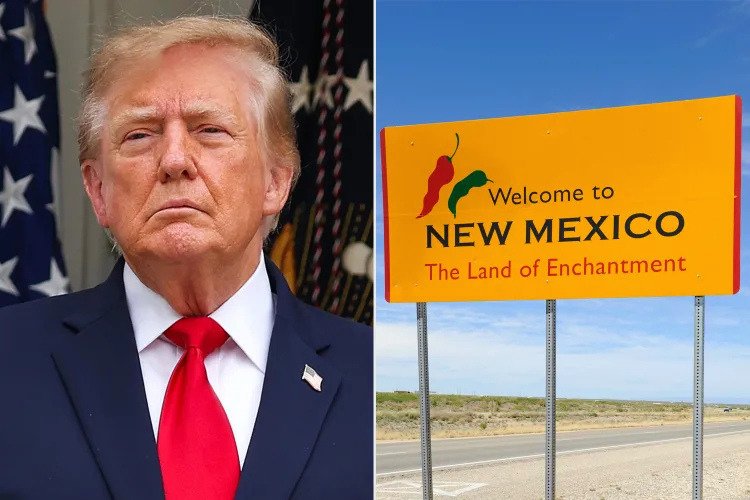
U.S. President Donald Trump has renewed his proposal to rename New Mexico as “New America,” calling for an immediate change and reigniting discussion about the state’s historical identity and political future. The suggestion, shared on his Truth Social platform on October 19, 2026, has drawn attention from political figures and residents, with critics questioning both its practicality and the reasoning behind it.
Trump argued that the state should adopt a name that more explicitly reflects its status as part of the United States. He also suggested that the proposed change could improve the state’s reputation, increase property values and raise incomes. However, he did not provide evidence demonstrating that a new name would produce those economic benefits.
The latest statement follows an earlier proposal Trump reportedly made in September 2026. By renewing the call, the president has brought the issue back into public discussion, despite resistance from officials who say the state’s existing name is closely connected to its history and cultural identity.
New Mexico has a distinctive past shaped by Indigenous peoples, Spanish settlement, Mexican governance and its eventual incorporation into the United States. The name itself reflects historical connections to the region and predates the establishment of the modern American state. For many residents, it represents a legacy that cannot be separated easily from the state’s identity.
Opposition to the proposed change has emerged among political leaders in New Mexico. Democratic Senator Ben Ray Luján has defended the state’s name and emphasized the historical significance it holds for residents. Other officials have questioned whether replacing it would offer any meaningful benefit to the population.
The proposal has also faced questions about its legal feasibility. Republican congressional candidate Greg Cunningham has reportedly highlighted the obstacles involved in changing a state’s official name, reflecting concerns that the process would be considerably more complicated than a presidential announcement.
Under the American system of government, a president cannot simply rename a state through an executive order. New Mexico’s name is established within its constitutional and legal framework, meaning a formal change would require action through the relevant state procedures and potentially federal involvement. Trump’s statement therefore represents a political demand, not an implemented government decision.
The debate also raises questions about the balance between national identity and regional heritage. Supporters of the suggested name may see “New America” as a way to reinforce the state’s connection to the country. Opponents, however, argue that the proposal could diminish the historical and cultural influences that distinguish New Mexico from other states.
Practical considerations would also accompany any official renaming. Government agencies could need to revise documents, public records, maps, educational materials and administrative systems. Businesses and local institutions might also face expenses associated with updating their names and official information. These potential costs would need to be weighed against any claimed benefits, for which Trump has not presented supporting evidence.
The proposal comes amid other naming initiatives associated with Trump’s administration. His government has promoted the use of “Gulf of America” instead of “Gulf of Mexico” in federal contexts, prompting separate discussions about geographic terminology, historical conventions and the reach of presidential authority.
Although such changes can influence federal usage, renaming a state presents a different legal and administrative challenge. The process would require more than a statement from the White House and would involve institutions beyond the president’s direct control.
For now, New Mexico retains its established name, and no formal change has taken place. The latest remarks have nevertheless renewed discussion about the relationship between political symbolism, local identity and historical preservation.
Whether Trump’s proposal will advance beyond public statements remains uncertain. Any serious effort to rename the state would face legal hurdles, political resistance and questions about its practical value. The episode demonstrates how a proposal involving a single name can develop into a broader debate about history, governance and the authority to redefine a place’s identity.
You can watch the video below