
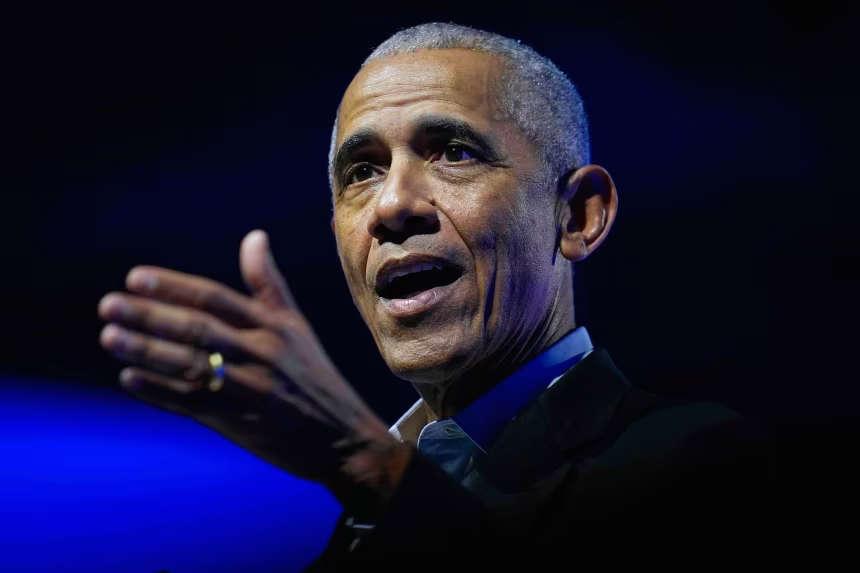
Former U.S. President Barack Obama has criticized the Trump administration’s investigation into Democratic Representative Ilhan Omar, calling the situation “appalling” and raising concerns about the possible use of federal authority against political opponents. His comments, reported on October 18, 2026, have added to the growing political debate surrounding the case as the United States approaches its November midterm elections.
The controversy follows a reported federal search of Omar’s Washington, D.C., residence on October 12. Agents from Homeland Security Investigations conducted the operation under a court-authorized warrant as part of an inquiry reportedly involving immigration and naturalization documents. Authorities have not publicly disclosed all the evidence or details connected to the investigation.
In his remarks, Obama expressed concern about the implications of government investigations involving elected officials who have openly criticized the president. He argued that the situation raised broader questions about democratic principles, accountability and the importance of applying the law fairly, regardless of political affiliation.
The former president’s intervention has brought additional attention to the case, which has already prompted criticism from Democratic lawmakers and civil liberties advocates. Some have questioned whether the investigation could undermine public confidence in the independence of federal law enforcement, particularly given its timing.
Omar, who represents Minnesota’s Fifth Congressional District, has frequently challenged Trump’s policies and statements. Born in Somalia, she came to the United States as a refugee and became a naturalized American citizen in 2000. She has denied allegations of immigration-related wrongdoing and described the scrutiny surrounding her background as politically motivated.
The investigation reportedly concerns claims about information connected to Omar’s immigration and naturalization history. Some allegations circulating in political discussions involve her age and documentation from the period surrounding her arrival in the United States. However, the existence of an investigation does not establish that the allegations are true or that a crime has occurred.
Omar and her legal representatives have questioned the government’s actions and raised concerns about the search and the handling of materials collected during the operation. Federal investigators, meanwhile, conducted the search under judicial authorization. Further information would be required to determine the precise legal basis and scope of the inquiry.
The case has become particularly contentious because it is unfolding shortly before the November 2026 midterm elections. Voters will decide the composition of both chambers of Congress, potentially changing the balance of power in Washington and influencing the administration’s legislative priorities.
Democratic officials have raised questions about whether the timing of the investigation could create the appearance of political interference. Department of Justice policies have historically sought to prevent law enforcement decisions from improperly affecting electoral outcomes. Nevertheless, assessing whether those standards were breached would require evidence about the investigation’s handling and the decisions made by officials.
The Trump administration has generally defended federal investigations as matters of law enforcement rather than political retaliation. At the same time, Trump has made public statements questioning Omar’s background and citizenship, contributing to scrutiny of the administration’s approach to the congresswoman.
Obama’s criticism has expanded the debate beyond the immediate allegations, placing the issue within a broader discussion about the relationship between political power and law enforcement. His intervention also underscores continuing disagreements between Democratic leaders and the Trump administration over the treatment of political critics.
The investigation has renewed attention to the legal protections surrounding American citizenship. Revoking naturalized citizenship, a process known as denaturalization, requires specific legal grounds and judicial proceedings. Political accusations alone are not sufficient to establish that a person obtained citizenship unlawfully.
As the inquiry continues, key details remain unresolved, including the evidence collected by investigators and whether prosecutors will pursue formal charges. Omar has not been convicted of wrongdoing in connection with the reported allegations.
Obama’s remarks have ensured that the case remains part of the national political discussion. With the midterm elections approaching, scrutiny is likely to continue over the investigation’s legal justification, its timing and the safeguards designed to keep federal law enforcement independent of partisan considerations.
You can watch the video below