
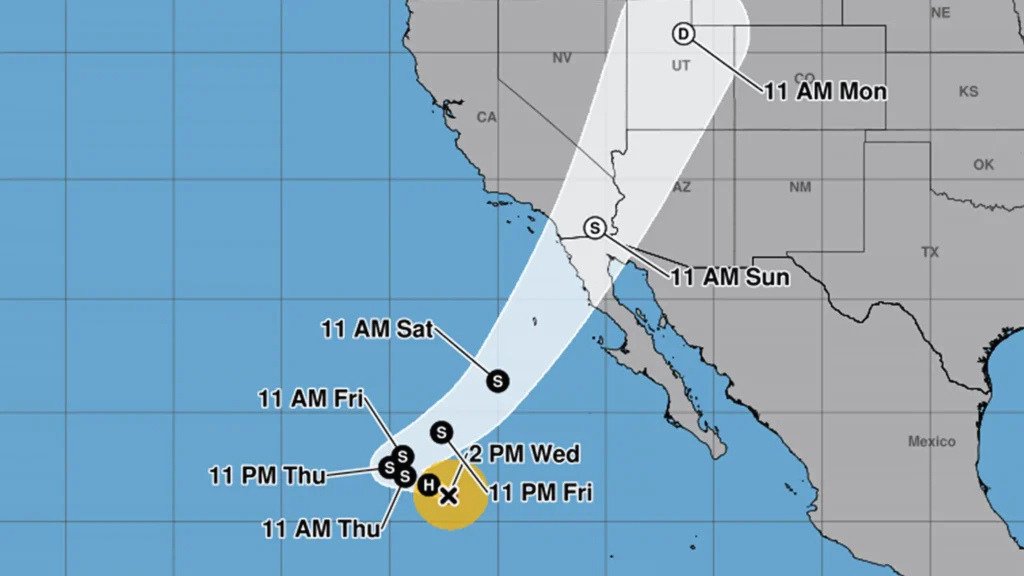
Southern California is being urged to keep a close watch on Hurricane Rachel as the Pacific storm moves through the region, with forecasters tracking the possibility of heavy rain, powerful gusts, rough seas and coastal hazards.
Rachel has weakened from its earlier strength, but the storm could still create dangerous conditions along parts of the California coastline. Large swells generated by the system may reach Southern California and northern Baja California, increasing the threat of powerful waves and strong rip currents.
The storm’s changing path is a major factor in determining its eventual impact. Forecast models have indicated that Rachel could turn toward the northeast after moving generally westward and west-northwestward. A shift in that direction could bring the storm’s remaining moisture closer to Southern California.
Even if Rachel loses additional strength before reaching the area, tropical systems can still produce significant weather after weakening. Moisture associated with the storm could contribute to periods of rainfall, while interactions with other atmospheric conditions could influence the intensity and location of precipitation.
Coastal communities are expected to remain particularly vulnerable. Large waves and elevated surf can create hazardous conditions for swimmers, surfers and people visiting beaches. Rip currents can also become stronger and more difficult to escape, creating serious risks for anyone entering the ocean.
Marine conditions could deteriorate as Rachel’s swells move toward the coast. Boaters may face rougher seas, while smaller vessels could be especially vulnerable to changing conditions. Officials may issue additional advisories if the storm’s track or strength creates a greater threat.
Strong winds are another potential concern. Gusty weather could affect coastal and exposed locations, while stronger-than-normal winds farther inland could cause problems such as falling branches and difficult travel. Power disruptions are also possible in areas that experience particularly strong gusts.
The potential for coastal flooding will depend largely on Rachel’s eventual distance from the coastline and its remaining strength. Storm surge can raise water levels along the shore, while large waves can worsen flooding and erosion in vulnerable coastal locations.
The National Hurricane Center has continued monitoring Rachel and has highlighted the possibility of dangerous surf along portions of the Southern California and northern Baja California coasts. The storm’s weakening trend does not necessarily eliminate coastal hazards, particularly because ocean swells can travel far from the storm’s center.
Residents should continue checking updated forecasts as meteorologists refine Rachel’s projected path. Earlier predictions can change considerably as tropical systems interact with surrounding weather patterns, making the latest official guidance more useful than older forecasts.
Beach visitors are also being encouraged to exercise caution if surf and rip-current advisories are issued. People who are unfamiliar with changing ocean conditions should avoid entering the water during periods of dangerous surf.
The storm’s eventual impact on Southern California remains dependent on its track, intensity and interaction with nearby atmospheric systems. Rachel could weaken substantially before approaching the region, but its remaining moisture and ocean energy could still produce disruptive conditions.
For Southern California, the immediate focus remains on coastal hazards, particularly high surf and dangerous rip currents. Rainfall, strong winds and possible coastal flooding will become clearer as Rachel’s movement is monitored in the coming days.
Residents and travelers should therefore remain attentive to official weather updates and be prepared for changing conditions. Authorities will continue assessing the storm as its trajectory develops, with additional warnings or advisories possible if Rachel poses a greater threat to the California coast.
You can watch the video below