
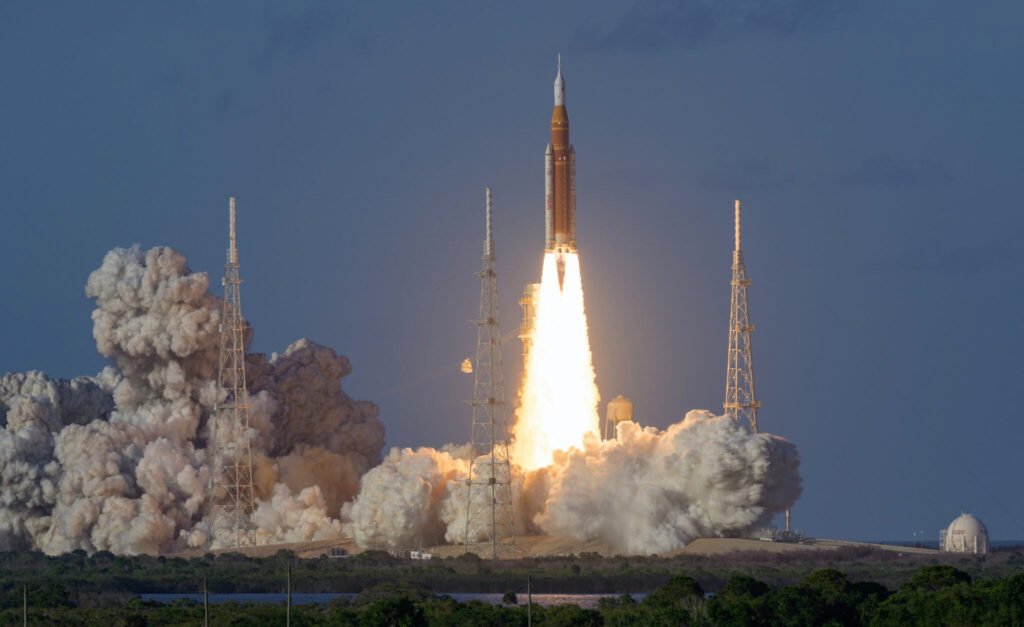
World Space Week 2026 is drawing attention to the rapid transformation taking place across the global space industry, with this year’s theme, “Rocket Revolution,” focusing on the technologies reshaping the way missions reach orbit and venture farther into space.
Observed internationally from October 4 through October 10, World Space Week provides an opportunity to recognize achievements in space exploration while encouraging greater interest in science, technology, engineering and mathematics. The 2026 theme places particular emphasis on rockets and the innovations that could influence the next generation of spaceflight.
The modern launch industry looks very different from the early years of the Space Age. Space exploration was once dominated by a relatively small number of national governments and established agencies. Today, commercial launch providers, private companies, research institutions, universities and emerging space nations are increasingly contributing to the development of launch technology and space missions.
This expansion has helped create a more competitive and diverse space sector. New launch systems are being developed with goals that include improving reliability, increasing launch frequency and reducing the cost of placing payloads into orbit.
One of the most important developments has been the growing use of reusable rocket technology. Instead of treating every launch vehicle as disposable, engineers are developing systems that can be recovered, refurbished and flown again. The approach has the potential to reduce costs and make access to space more frequent.
The consequences extend beyond rocket companies themselves. More accessible launch opportunities can help universities, startups and smaller organizations place scientific instruments and satellites into orbit. Such developments could support applications ranging from communications and Earth observation to scientific research and navigation.
World Space Week also places considerable emphasis on education. Events held around the world can include public exhibitions, classroom activities, lectures, competitions, science demonstrations and rocket-building projects. These programs are intended to introduce young people to space science and encourage them to consider careers in technical and scientific fields.
The dates of the celebration are themselves tied to major milestones in space history. October 4 marks the anniversary of the 1957 launch of Sputnik 1, the first artificial satellite to orbit Earth. That mission is widely regarded as the beginning of the Space Age. October 10, meanwhile, commemorates the 1967 entry into force of the Outer Space Treaty, one of the foundational agreements governing activities in outer space.
World Space Week therefore links the earliest achievements of human spaceflight with the technologies being developed today. The 2026 “Rocket Revolution” theme looks beyond historic accomplishments to consider how launch innovation could shape future exploration.
The changes taking place in the rocket industry are particularly relevant as countries and private organizations pursue ambitious missions involving the Moon and other destinations. More capable and reusable launch systems could help support increasingly complex projects and expand the number of organizations able to participate in space activity.
The celebration also highlights the people behind these advances. Engineers, scientists, researchers, technicians and entrepreneurs are all contributing to a space industry that is becoming increasingly diverse. For students interested in space, the current period offers opportunities that extend well beyond traditional astronaut careers.
World Space Week has developed into a major international platform for public engagement with space. Thousands of activities are organized across numerous countries each year, allowing communities to explore the scientific, technological and social importance of space exploration.
As World Space Week 2026 continues, the “Rocket Revolution” theme serves as both a celebration and a look toward the future. From reusable launch vehicles to new commercial missions and emerging space programs, innovation is changing the possibilities of spaceflight.
The message of this year’s observance is ultimately about expanding access, encouraging curiosity and preparing the next generation for a rapidly developing space economy. The rockets being designed and launched today could become the foundation for humanity’s next major chapter beyond Earth.
You can watch the video below