
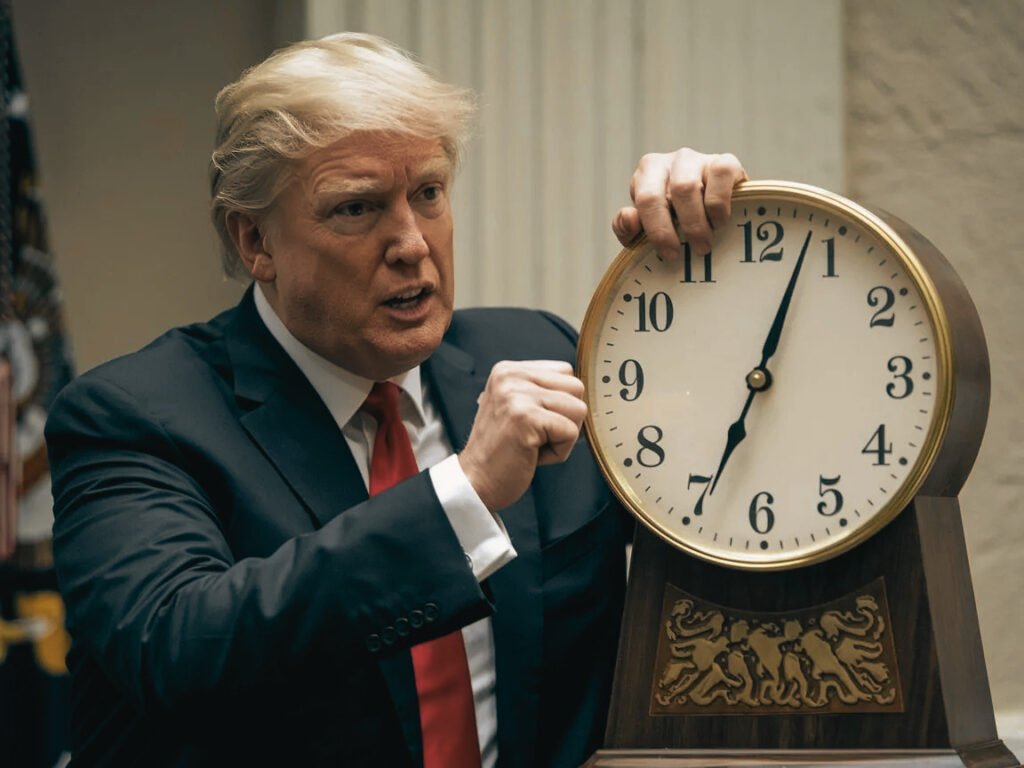
The House has approved the bill, but a ticking clock in the Senate stands between Americans and endless evening sunshine.
The long-standing legislative debate over U.S. time zones has reached a critical juncture. President Donald Trump has publicly aligned with lawmakers pushing to make daylight saving time permanent, calling on the Senate to finalize the Sunshine Protection Act. The issue has uniquely unified elements of both parties, culminating in a swift 308–117 approval in the House of Representatives. Trump noted that the disruption of switching time configurations twice a year costs millions of dollars in logistical adjustments for various cities and states.
Supporters of the legislation point to a wide array of societal benefits, ranging from public safety to health. The administration highlights that extended evening daylight reduces pedestrian accidents, deters crime, and provides families with more time to spend outdoors together. Tourism and recreation industries also heavily favor the change due to the economic boost provided by longer evening operational hours.
While many experts support ending the clock changes, they don’t necessarily agree with Trump’s preferred approach.
Sleep and health researchers say moving clocks twice a year disrupts the body’s circadian rhythm, which regulates sleep and other biological functions. The spring time change, when clocks move forward an hour, has been linked to sleep disruption, traffic crashes and increased health risks.
But many specialists argue permanent standard time, not permanent daylight saving time, would be the healthier option.
Erik Herzog, a biology and neuroscience professor at Washington University in St. Louis and former president of the Society for Research on Biological Rhythms, previously told USA TODAY that permanent standard time would better align with the body’s natural clock.
Public opinion polls suggest many Americans have grown tired of the twice-yearly ritual.
A 2023 YouGov survey found 62% favored eliminating clock changes. A January 2025 Gallup poll found 54% wanted to end the practice, though Americans were divided over whether the nation should adopt permanent daylight saving time or permanent standard time.
For now, the annual fall clock change remains on the schedule. Unless Congress acts quickly after returning from recess, Americans should still expect to turn their clocks back on Nov. 1.
Despite the executive push, the bill faces immediate legislative roadblocks. The Senate is on recess until September 14, leaving a narrow window to pass the measure before the upcoming November 1 deadline. Furthermore, Senate Majority Leader John Thune and other key members from agricultural states have expressed hesitation, citing the risks that later winter sunrises pose to farmers and school children walking in the dark. Whether the Senate will align with the White House or let the bill expire remains the central question on Capitol Hill.