
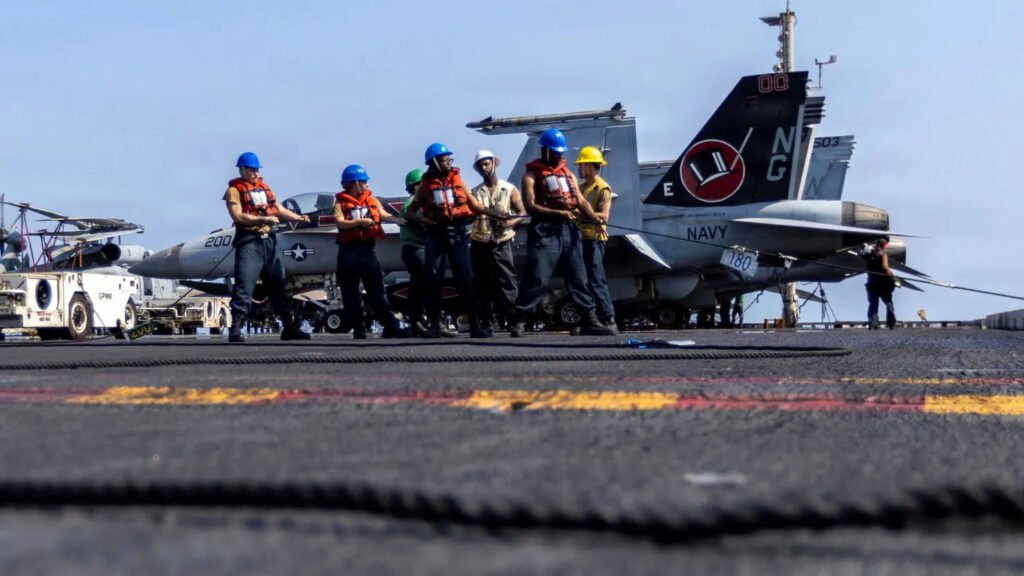
Top Navy Official Highlights Mental Health Needs Among USS Lincoln Sailors
A senior U.S. military leader has drawn attention to the mental health and overall welfare of sailors serving aboard the USS Abraham Lincoln as the aircraft carrier faces an exceptionally lengthy deployment in the Middle East.
Adm. Brad Cooper, commander of U.S. Central Command, recently visited the carrier and commended its crew for continuing to meet operational demands after spending months at sea. His remarks came as concerns have grown over the physical and emotional pressures associated with an extended deployment, including limited opportunities for rest, recreation and time away from the ship.
The USS Abraham Lincoln has remained deployed for more than 200 consecutive days, setting a modern record for the longest continuous period at sea by a U.S. Navy aircraft carrier. The vessel initially departed San Diego in November for routine operations before its mission was redirected toward the Middle East amid escalating U.S. military activity involving Iran. Approximately 5,000 sailors and Marines are aboard the carrier.
The unusually long mission has prompted increased discussion about the impact of sustained operational demands on the crew. Accounts from sailors and their families have pointed to exhaustion, prolonged separation from loved ones and limited communication. Concerns have also emerged regarding living conditions and the availability of mental health resources during such a demanding period.
Despite those concerns, Cooper praised the resilience demonstrated by the Lincoln’s crew and its leadership. According to reports, the commander said the carrier had the lowest number of mental health cases among the Navy’s 11 active aircraft carriers. He also credited the ship’s leadership with maintaining a strong focus on the well-being of personnel while continuing to fulfill its operational responsibilities.
Mental health support has remained an important component of the Navy’s approach to lengthy deployments. Sailors aboard the Abraham Lincoln have access to resources including mental health professionals, chaplains and resiliency counselors. Programs involving counseling and stress-management support are intended to help service members cope with anxiety, fatigue, isolation and the pressures that can accompany military operations.
Nevertheless, the situation aboard the carrier has attracted greater attention from military families, lawmakers and veterans. Some have called for more information about the conditions faced by sailors and questioned whether prolonged deployments without regular port visits could place additional strain on service members.
The discussion comes as the Lincoln’s deployment moves toward a possible transition. The USS George Washington is being prepared to take over the carrier’s mission, although questions remain over precisely when the Abraham Lincoln will be able to return.
Extended deployments can present a number of challenges for sailors. Long operational schedules, limited personal space, restricted communication and extended periods away from family can contribute to stress and exhaustion. Maintaining access to appropriate psychological care and ensuring sufficient opportunities for rest are therefore considered important not only for individual well-being but also for maintaining military readiness.
Even with the concerns surrounding the lengthy deployment, U.S. military officials continue to emphasize the Lincoln crew’s ability to perform its mission. Cooper’s visit provided an opportunity to recognize the sailors’ efforts while also underscoring the importance of supporting their physical and psychological welfare.
The situation aboard the USS Abraham Lincoln has consequently become part of a broader discussion about the demands placed on military personnel during extended operations. As the carrier’s deployment continues to receive public attention, the challenge for Navy leadership remains balancing operational requirements with the health, safety and well-being of the sailors carrying out those responsibilities.