
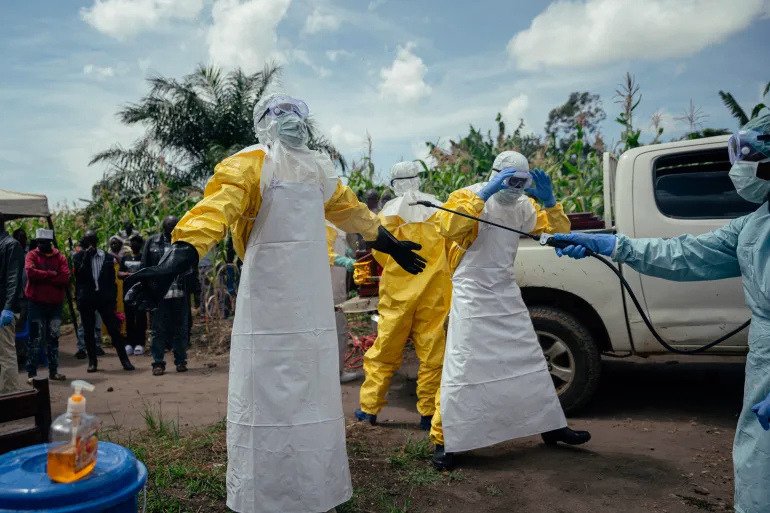
The ongoing Ebola epidemic in Central Africa has been traced to a new animal-to-human transmission event, rather than the flare-up of an old human outbreak. More than 2,000 people have died after contracting the latest strain of the Ebola virus.
According to a genomic study published in Nature Medicine, the fastest-moving Ebola outbreak on record was triggered by a fresh “zoonotic spillover” from an independent wildlife reservoir into the human population. Centered in the Democratic Republic of the Congo and spreading into Uganda, the epidemic is fueled by the rare Bundibugyo strain, which has already claimed more than 2,000 lives. Global health organizations warn that because there are currently no fully licensed vaccines or targeted treatments available for this specific strain, containment relies heavily on aggressive supportive care and rapid isolation as candidate vaccines undergo human safety trials.
Experts emphasize that this finding does not mean a mutant form of Ebola has evolved, nor does it mean the virus spreads through the air. Following the initial animal jump—likely from fruit bats or local wildlife—the rapid rise in cases has been driven entirely by conventional human-to-human contact via bodily fluids. However, combating the Bundibugyo variant presents severe public health challenges. Unlike the more common Zaire strain, which has established vaccine stockpiles, health agencies are forced to rely on experimental therapeutics while fast-tracking clinical trials on the ground to slow the spread.
The identification of a fresh spillover underscores that the battle against Ebola requires long-term environmental surveillance, not just reactive medicine. Until candidate vaccines for the Bundibugyo strain are fully deployed, global health agencies must prioritize deep community engagement, rapid diagnostic tracking, and cross-border cooperation to sever the remaining transmission chains. Ultimately, this outbreak serves as a stark reminder that as human activity continues to encroach on wildlife habitats, the risk of zoonotic spillover will persist, making permanent pandemic preparedness an absolute necessity.