
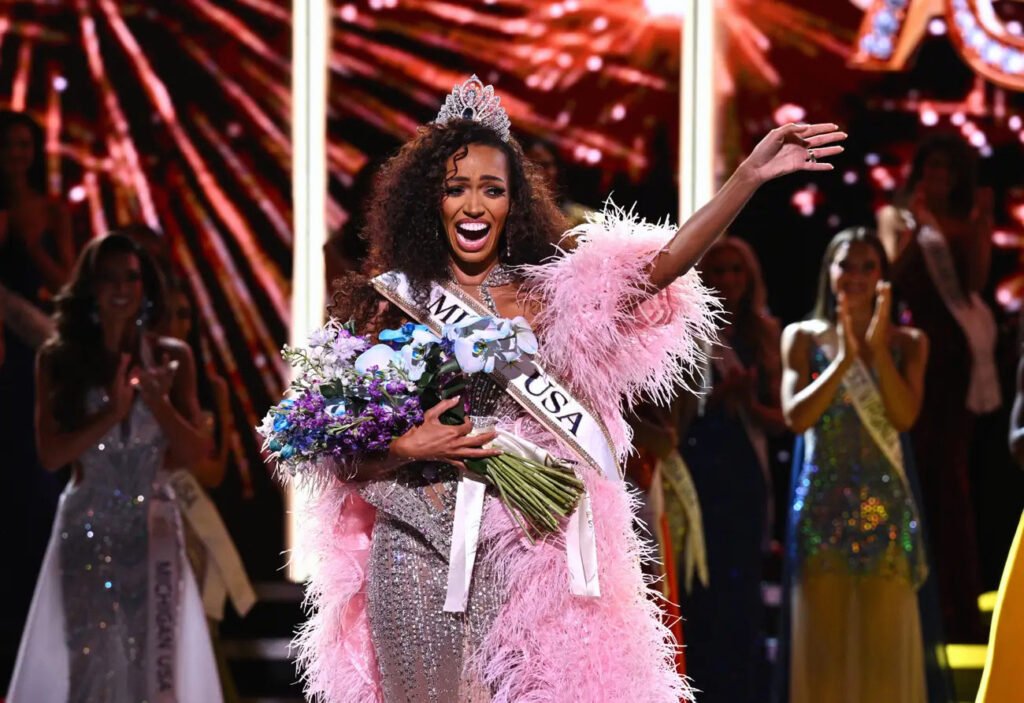
Miss Virginia has secured the Miss USA crown in a landmark victory, making history as the first married woman and mother to win the national pageant title.
Her achievement marks an important change in the long history of the competition, highlighting the evolving nature of modern pageantry and creating greater space for contestants with different personal and family backgrounds.
The Virginia representative emerged as the winner after competing against contestants from around the country. Throughout the competition, she stood out through her confidence, stage presence and ability to communicate effectively, ultimately earning the judges’ support and taking home the coveted crown.
Her historic achievement quickly became a major talking point among pageant followers. Supporters celebrated the result as an important milestone, particularly because of the significance of a mother and married woman reaching the top of one of America’s best-known pageant competitions.
For years, traditional pageant expectations placed restrictions on who could compete for certain titles. However, those standards have gradually changed, with competitions becoming more inclusive and recognising that contestants can bring a wide variety of experiences to the stage.
Miss Virginia’s win is a reflection of that transformation. Her status as both a wife and mother did not prevent her from competing at the national level or pursuing the title. Instead, those aspects of her life have become part of what makes her historic victory particularly significant.
Preparing for a national pageant requires considerable dedication. Contestants must prepare for interviews, appearances, stage events and other portions of the competition while developing a strong public profile. For Miss Virginia, that preparation took place alongside her responsibilities as a mother and wife.
Her success demonstrates the commitment required to balance family life with personal ambitions and the demands associated with competing for a national crown.
Winning Miss USA will now give Miss Virginia a much larger public platform. During her reign, she is expected to attend events, represent the organisation at public engagements and take part in community and charitable activities. She will also have an opportunity to bring attention to causes and issues that are meaningful to her.
The historic result could also spark wider conversations about the future of pageantry. As eligibility rules and expectations continue to change, more women with families and established personal lives may see national competitions as opportunities that are open to them.
For many supporters, the victory sends a message that marriage and motherhood do not have to stand in the way of ambition or achievement. It may also inspire women who have previously felt excluded from traditional pageant competitions because of their family circumstances.
Although her reign has only just begun, the significance of Miss Virginia’s victory is already clear. Her name has been added to the history of the Miss USA competition, and her achievement could become an important reference point for future contestants.
The win also represents a broader shift in how beauty pageants are viewed. Modern competitions increasingly place emphasis on personality, communication, advocacy and individual accomplishments alongside traditional elements of pageantry.
As Miss Virginia begins her time as Miss USA, attention will now focus on her upcoming appearances, initiatives and responsibilities as she represents the title nationally.
For her family, supporters and fellow pageant competitors, the victory is a moment to remember. By becoming the first married mother to win Miss USA, Miss Virginia has not only captured the national crown but also created a new milestone in the competition’s history.