
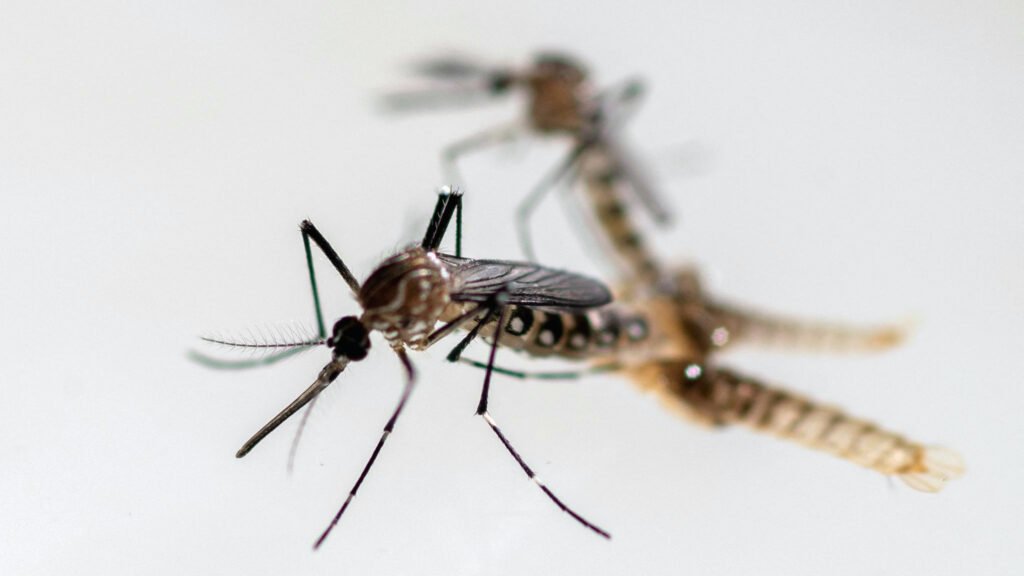
British health officials are stepping up mosquito monitoring after an invasive species capable of transmitting diseases such as dengue, Zika and chikungunya was discovered breeding in the country for the first time.
The mosquito, Aedes aegypti, was identified at residential properties in east London, where authorities also found larvae. The discovery was made through the UK Health Security Agency’s Mosquito Watch programme, which tracks invasive mosquito species across Britain.
Although Aedes aegypti has been detected in the UK on three previous occasions, the latest finding is different because it provides the first confirmed evidence that the species has reproduced in the country. Officials are now conducting additional surveillance to determine whether the insects are limited to the affected properties or have spread into surrounding areas.
The mosquito is attracting attention because of the number of potentially serious diseases it can transmit. In locations where viruses are circulating, Aedes aegypti can act as a carrier for dengue, Zika and chikungunya, as well as yellow fever.
However, authorities have emphasized that people in the UK currently face a very low risk. There is no evidence that the mosquitoes discovered in east London have infected anyone, and officials have not found evidence of the insects or their larvae in nearby public spaces.
According to the UKHSA, the mosquitoes are thought to have arrived through accidental introduction rather than as part of an established population. The species is known for its ability to travel with people and goods, making it possible for individual mosquitoes or their eggs to move between countries inside vehicles, luggage and shipments.
This ability has led to the insects being described as “hitchhikers.” Eggs can survive in small amounts of water, while adult mosquitoes may be transported unintentionally over long distances before finding suitable conditions in a new location.
Authorities have already begun measures designed to stop the insects from multiplying. Mosquito larvae are being targeted, while additional traps have been placed in and around the affected area. The enhanced monitoring is intended to establish whether a wider population exists and whether further intervention is required.
The discovery has also renewed discussion about the changing distribution of mosquito species in Europe. Scientists have increasingly monitored invasive mosquitoes as warmer temperatures and changing environmental conditions create opportunities for species traditionally associated with tropical and subtropical climates to appear farther north.
Aedes aegypti remains poorly suited to Britain’s climate, particularly during winter. UK health officials currently believe that the species is unlikely to establish a permanent population in England because it has not demonstrated an ability to survive northern European winters.
Researchers nevertheless consider early detection important. If invasive mosquitoes were eventually able to establish themselves, their presence could increase the possibility of locally transmitted diseases if infected travelers introduced viruses into the population.
Experts from the London School of Hygiene & Tropical Medicine have described the discovery as noteworthy but have also stressed that the immediate threat remains low. Preventing the species from becoming established is considered an important part of reducing potential future health risks.
People living in affected areas can also help by eliminating standing water around their homes. Containers, buckets, plant pots and other objects that collect stagnant water can provide breeding environments for mosquitoes. Removing such water can therefore help reduce opportunities for mosquito larvae to develop.
The east London discovery marks the fourth modern detection of Aedes aegypti in Britain, but it is the first instance in which breeding has been confirmed. The development demonstrates why continued surveillance is important as mosquitoes increasingly move across borders through travel and trade.
For now, officials are urging the public not to panic. The overall risk remains very low, while surveillance and mosquito-control measures are being used to prevent the insects from establishing a lasting presence in the UK.