
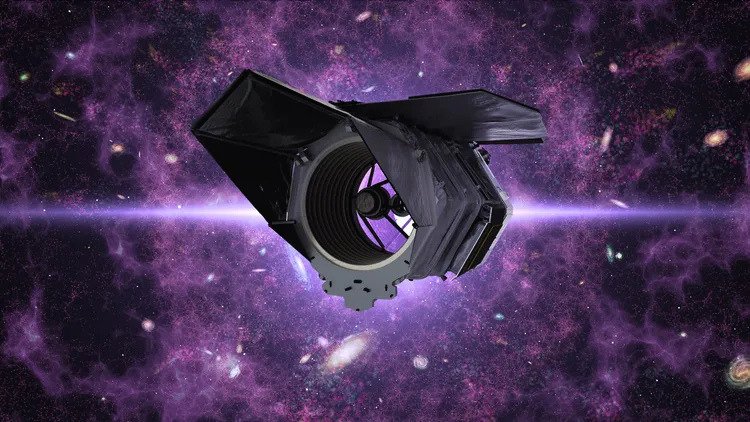
NASA’s Nancy Grace Roman Space Telescope is entering the final stages of a journey that has taken years of development, engineering and testing. The ambitious observatory is now moving closer to its launch, despite having previously faced the possibility of cancellation under proposed funding reductions during the Trump administration.
Once deployed, Roman is expected to give astronomers an unprecedented ability to examine vast areas of the universe. Rather than focusing primarily on individual celestial objects, the observatory has been designed to survey enormous sections of the sky, generating valuable information for scientists studying the evolution and structure of the cosmos.
The telescope carries the name of Nancy Grace Roman, a pioneering NASA astronomer who played an important role in establishing the agency’s space astronomy efforts. She is widely recognised for helping lay the groundwork for NASA’s major space telescope programmes.
Among Roman’s most important scientific goals is the investigation of dark energy. This poorly understood phenomenon is associated with the accelerating expansion of the universe. By observing huge numbers of galaxies and measuring how the universe has changed over time, researchers hope the mission will provide important evidence that could help explain this cosmic mystery.
Dark matter will also be a major focus. Although scientists cannot directly observe dark matter, they can study its gravitational effects on visible matter. Roman’s large-scale surveys could help researchers create more detailed maps of these effects and improve their understanding of how galaxies and other structures formed.
The observatory will also contribute to the search for planets outside our solar system. Using gravitational microlensing, scientists will be able to detect certain exoplanets that may otherwise be difficult to find. The technique can reveal planets when their gravity briefly alters the light from a more distant star.
Roman’s path to launch has not been completely smooth. Its future became uncertain when funding proposals during the Trump administration threatened to remove financial support for the mission. Scientists and supporters raised concerns that abandoning the project after years of work would result in substantial losses and postpone research into some of astronomy’s biggest unanswered questions.
The mission survived those challenges and continued through its development. Engineers have since concentrated on preparing the spacecraft and testing its systems to ensure that the telescope can function once it leaves Earth.
Such testing is particularly important for a space observatory. Once Roman is operating far from Earth, repairing or replacing equipment would be extremely difficult. NASA therefore carries out extensive checks before launch to identify technical problems and confirm that the spacecraft can withstand the conditions it will encounter in space.
Following deployment, Roman is planned to operate near the Sun-Earth Lagrange Point 2, approximately 1.5 million kilometers from Earth. The location provides an advantageous environment for astronomical observations and allows the telescope to maintain a broad view of space.
Roman is also expected to complement NASA’s James Webb Space Telescope rather than replace it. Webb is capable of carrying out highly detailed observations of particular astronomical targets, while Roman’s strength will be its ability to survey much larger portions of the sky.
Together, the observatories could provide scientists with both detailed close-up information and extensive cosmic surveys. Roman may also uncover phenomena that researchers are not currently expecting, as large-scale astronomical surveys often reveal previously unknown objects and events.
The telescope’s arrival in space will therefore represent a major opportunity for the scientific community. Its observations could help answer fundamental questions about dark energy, dark matter, galaxy formation and planets beyond the solar system.
For NASA, Roman’s progress is also significant because of the uncertainty that once surrounded its future. What began as a mission vulnerable to proposed budget cuts has continued through years of development and is now approaching its long-awaited launch.
As the remaining preparations move forward, scientists are looking ahead to the data Roman could eventually send back to Earth. If the mission performs as planned, the observatory could become a crucial part of humanity’s effort to understand how the universe works.
The telescope’s journey from a project facing cancellation concerns to a spacecraft nearing launch underscores both the challenges of developing major space missions and the scientific ambitions behind them. Once Roman begins surveying the universe, its discoveries could reshape scientists’ understanding of the cosmos and open the door to questions that have yet to be imagined.