
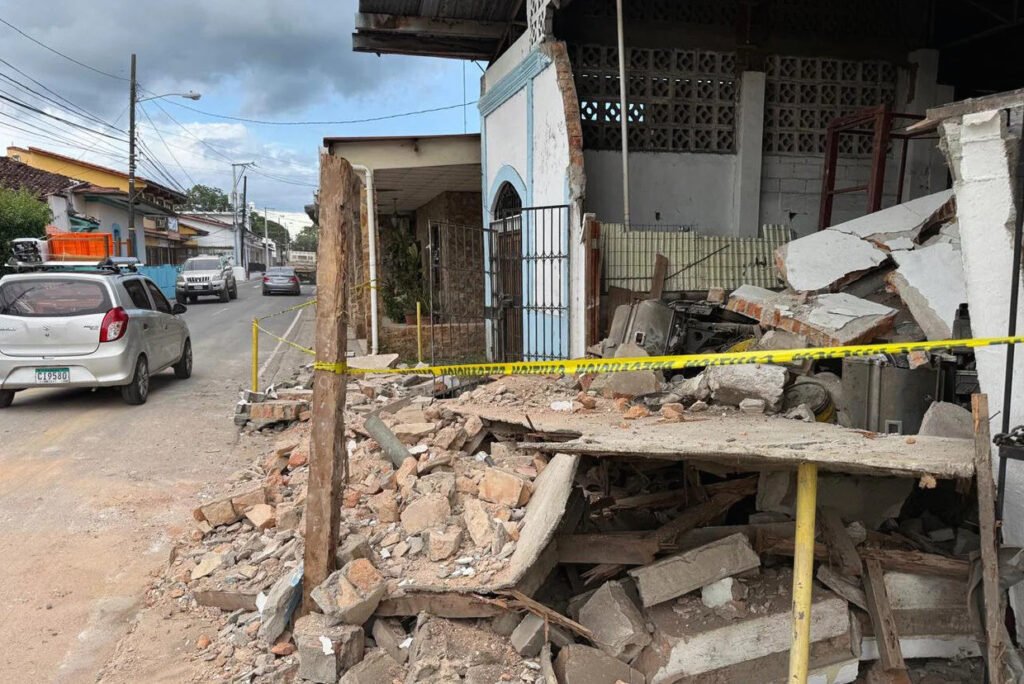
Panama has experienced two powerful earthquakes, bringing renewed attention to seismic risks across Central America. The tremors, reported by the United States Geological Survey (USGS), have highlighted the importance of earthquake monitoring, emergency preparedness and reliable information during periods of geological activity.
The reported earthquakes, measuring magnitudes 7.7 and 6.6, have raised concerns about their potential effects on buildings, infrastructure and nearby communities. Reports indicated that some structures sustained damage and evacuations took place as authorities responded to the situation. Meanwhile, the Panama Canal continued operating normally, according to reports from the Associated Press.
Earthquakes happen when stress accumulated within the Earth’s crust is released suddenly, generating waves that cause the ground to shake. Their effects can vary considerably depending on their magnitude, depth, distance from populated areas and the strength of local buildings.
The USGS plays an important role in identifying and analysing earthquakes around the world. Through seismic monitoring networks, the agency provides information about earthquake locations, magnitudes and depths. Such information helps scientists assess geological events and allows emergency officials to make informed decisions when public safety may be at risk.
Panama’s location in Central America makes earthquake monitoring particularly significant. The wider region is influenced by the movement of several tectonic plates, which interact along geological boundaries and contribute to seismic activity. Although earthquakes cannot currently be predicted with sufficient accuracy to identify their exact timing, location and magnitude in advance, scientific monitoring helps experts understand their characteristics and evaluate potential hazards.
The impact of an earthquake depends on more than its magnitude alone. A powerful tremor occurring far from populated areas may cause less damage than a smaller, shallow earthquake near a densely populated community. Ground conditions, building design and the quality of infrastructure can also influence the level of destruction.
When two earthquakes occur within a short period, scientists examine their timing, depth and location to determine whether they may be related. Some earthquakes are followed by aftershocks, which occur as the Earth’s crust adjusts following the initial rupture. However, additional seismic activity does not automatically mean that a more powerful earthquake will follow.
Following significant tremors, emergency authorities may assess damaged buildings, examine essential infrastructure and issue instructions to residents. Evacuations can be necessary when structures are unstable or when officials identify other potential dangers. People are encouraged to follow verified announcements rather than rely on rumours or unconfirmed information circulating online.
Earthquake safety measures remain important throughout the region. During shaking, people should drop to their hands and knees, take cover beneath a sturdy table or desk if possible, and hold on until the movement stops. Those outdoors should move away from buildings, power lines and other objects that could fall. After an earthquake, residents should avoid visibly damaged structures and remain alert to possible aftershocks.
The reported earthquakes also underline the importance of protecting critical infrastructure. The Panama Canal is a major international shipping route, making its continued operation an important consideration for global trade. Although reports indicated that the canal remained operational, authorities and relevant agencies must continue assessing conditions whenever significant seismic events occur.
Scientists will continue relying on seismic data and official reports to improve understanding of the earthquakes and their possible consequences. Confirmed information about damaged buildings, affected communities and any reported injuries will help establish the full extent of the situation.
The two powerful earthquakes have served as a reminder of the unpredictable nature of seismic hazards. While monitoring technology can provide rapid information after an event, preparedness, effective emergency responses and accurate public communication remain essential to reducing risks and protecting lives.
As further assessments become available, official updates from the USGS and Panamanian authorities will be important for understanding the earthquakes’ lasting effects and determining whether additional safety measures are necessary.
You can watch the video below