
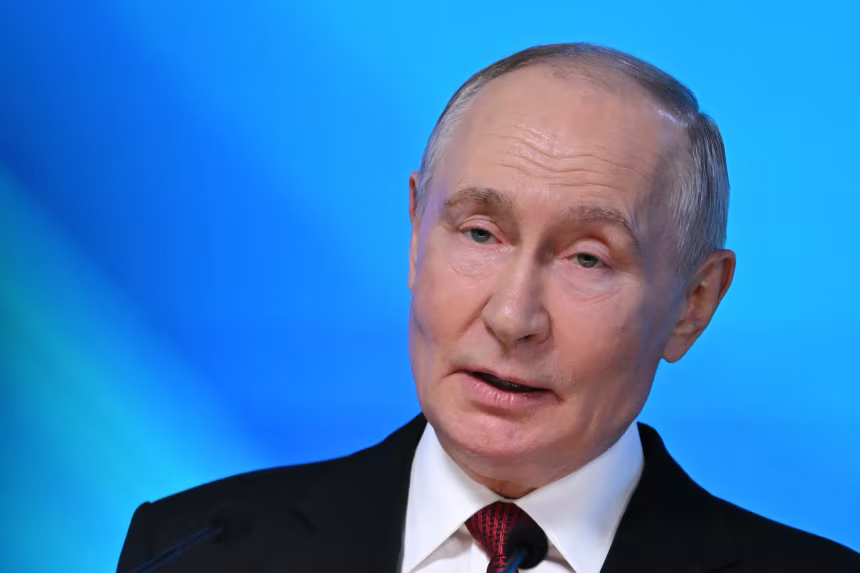
Russian President Vladimir Putin has stepped up his warnings to Western nations over the security of Kaliningrad, saying Moscow would respond with its full range of available weapons if Russian territory were directly attacked.
Putin made the remarks on October 1 while speaking at the Valdai Discussion Club in Moscow, where he addressed growing tensions between Russia and Western countries. He warned that any direct assault on Kaliningrad could trigger a serious military response and indicated that Russia’s broader arsenal could be brought into consideration.
The Russian president’s comments included references to nuclear weapons, adding to concerns over the increasingly forceful language being used by Moscow in its exchanges with Western governments. Putin argued that Russia had the means to defend its territory and warned against actions that could push the confrontation into a more dangerous phase.
Kaliningrad has become a particularly sensitive point in relations between Russia and NATO. The Russian territory is an exclave on the Baltic Sea, located between NATO members Poland and Lithuania. Its strategic position gives it considerable importance for Russia’s military presence in the Baltic region.
Moscow has repeatedly objected to what it describes as increasing military pressure around the territory. Russia recently sent a diplomatic note to NATO concerning the situation, according to the alliance, while Russian officials have also warned against any attempt to isolate or blockade Kaliningrad.
NATO has rejected suggestions that it is preparing an operation against the Russian territory. NATO Secretary General Mark Rutte has described the alliance as defensive and criticised Moscow’s nuclear rhetoric. At the same time, NATO members continue to support Ukraine as Russia’s war against the country continues.
Putin, for his part, said Russia does not seek a military confrontation with European countries. He maintained that Moscow’s objective is peaceful coexistence but argued that Russia would respond if its territory came under direct attack.
The dispute over Kaliningrad comes against the backdrop of the wider war in Ukraine, which has sharply worsened relations between Russia and Western governments. Since Russia launched its full-scale invasion of Ukraine in 2022, NATO countries have expanded defence measures along the alliance’s eastern flank while providing military and financial support to Kyiv.
The Baltic region has consequently become a major focus of European security concerns. Poland and Lithuania, which are both NATO members and border Kaliningrad, have strengthened their attention to regional defence as tensions with Moscow have continued.
Putin also warned that the confrontation between Russia and the West was reaching a particularly dangerous stage. He argued that continued escalation could eventually produce circumstances that would be difficult for governments to control, especially given the military capabilities of Russia and NATO members.
His comments came alongside remarks about the impact of the Ukraine conflict on Russia’s economy. Putin acknowledged that Ukrainian attacks on Russian oil-refining facilities had created economic difficulties, although he said Moscow was taking measures in response.
Despite his warnings, Putin indicated that Russia was not preparing to immediately attack European weapons-producing facilities involved in supplying Ukraine. The statement appeared to underline Moscow’s distinction between issuing warnings and announcing an immediate military operation.
The latest remarks nevertheless place Kaliningrad back at the centre of concerns over a possible confrontation between Russia and NATO. With the war in Ukraine continuing and military activity increasing across eastern Europe, statements from Moscow and NATO remain closely watched for signs of further escalation.
For now, both sides continue to publicly emphasize their respective security positions while warning that direct confrontation could carry serious consequences.
you can watch the video below